The book was reissued to commemorate the 60th anniversary of the Vietnam Fine Arts Museum. This publication is the result of research and conservation efforts by the museum's experts, aiming to explore the depth of heritage through Tu Binh paintings.
Many experts contributed to the compilation of the publication. The Han-Nom script translation was carried out by the Institute of Han-Nom Studies, while translator and artist Trinh Lu rendered the English version.
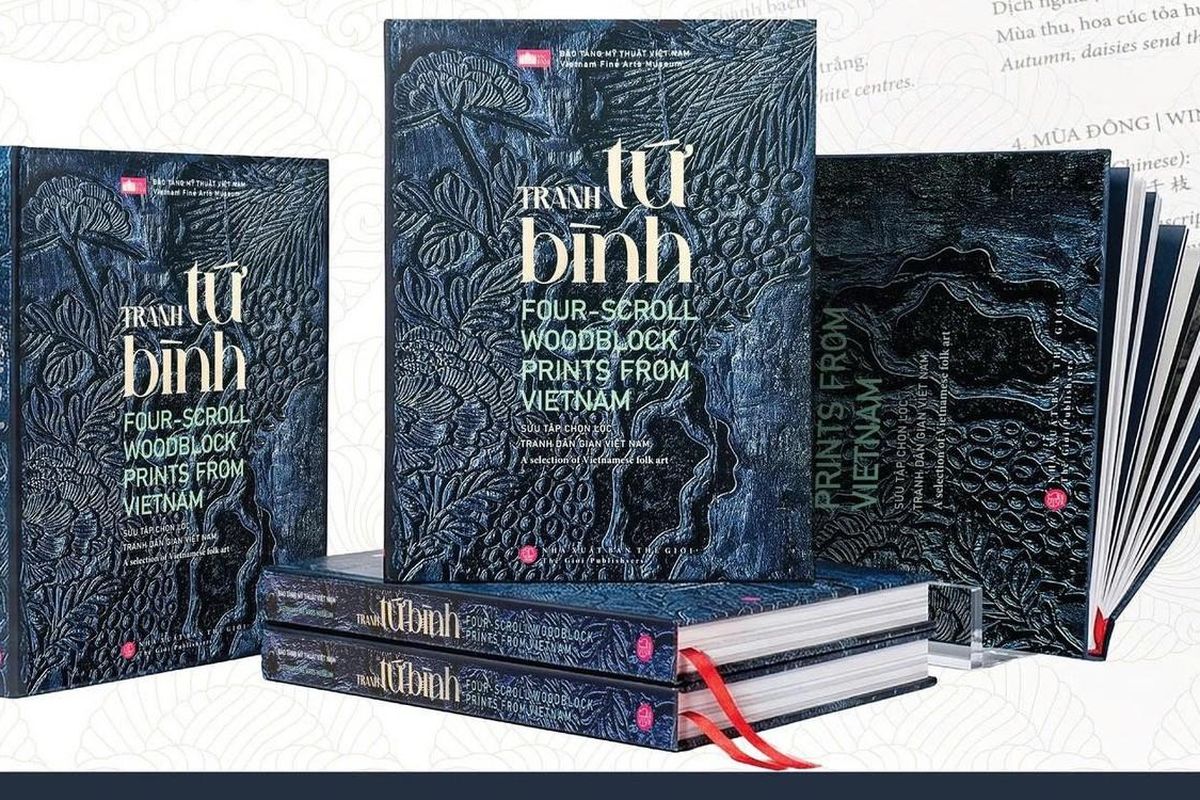 |
The book "Tu Binh Paintings - A Selected Collection of Vietnamese Folk Paintings", compiled by the Vietnam Fine Arts Museum and published in bilingual Vietnamese-English by The Gioi Publishers, was released on 9/6. *Photo: Provided by the museum.* |
Each Tu Binh set typically comprises four paintings, serving as metaphors for four seasons in a year, four stages of life, four anecdotes within a story, or four distinct beauties of a woman. Beyond reflecting perceptions of nature's cycles, the paintings also express the Vietnamese people's aspirations for peace and prosperity.
In addition to the 25 painting sets, the book also includes narrative paintings, historical paintings, and some woodblock prints, all selected from the museum's Tu Binh collection. The publication also clarifies the meaning of each painting theme, providing Han characters, romanized transcription, and translation for each set.
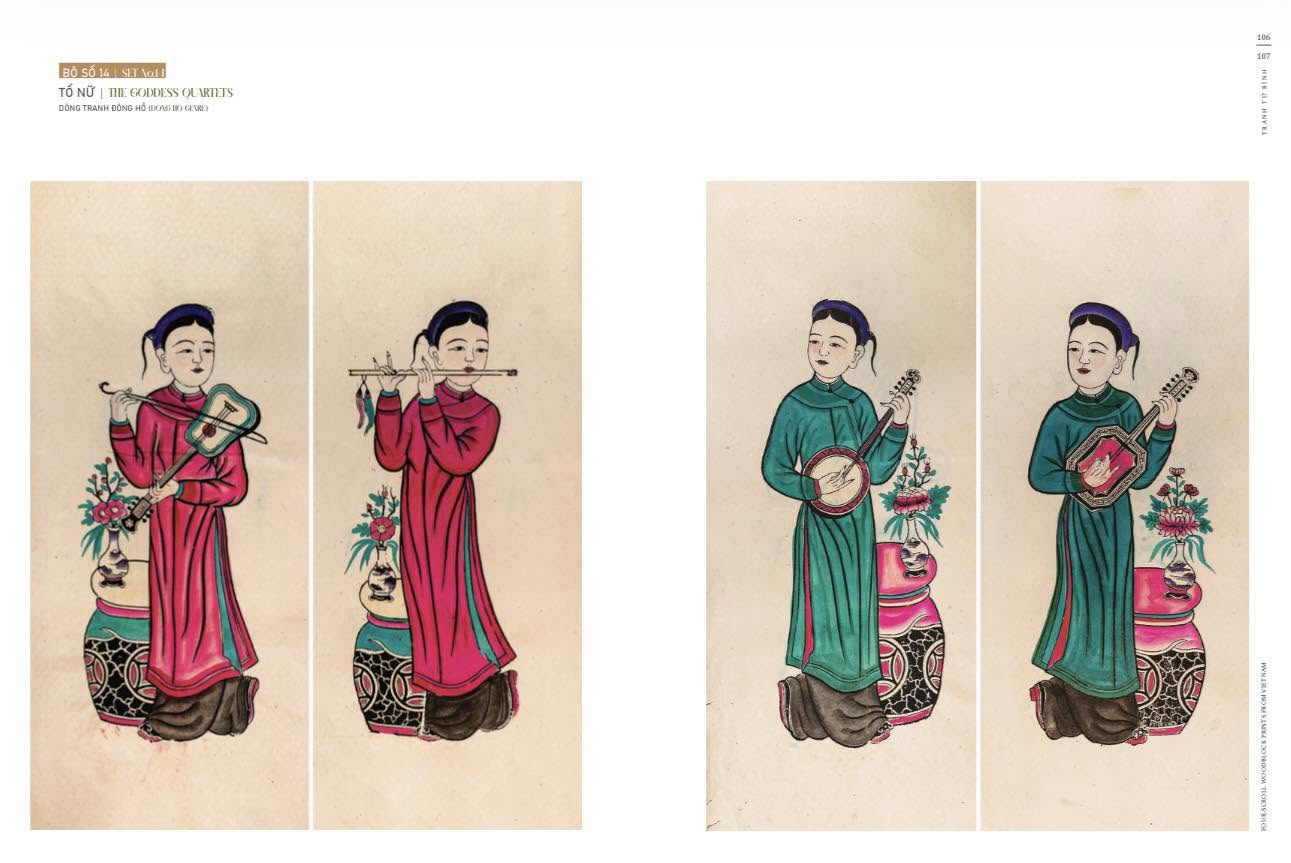 |
A "To Nu" set featured in the work. *Photo: Vietnam Fine Arts Museum.* |
In the publication, artist and researcher Phan Ngoc Khue writes about the Tu Quy set: "Tu Quy, representing the four seasons – spring, summer, autumn, and winter – is nature's annual cycle. Each season brings fragrant flowers and sweet fruits to life, despite enduring various harsh weather conditions. Similarly, a human life cycle mirrors this progression: childhood (spring), adulthood (summer), maturity (autumn), and old age (winter), reflecting the natural law of spring's birth, summer's growth, autumn's decay, and winter's end. Therefore, Tu Quy paintings symbolize wishes for a complete lifespan (100 – Tho, longevity), a happy family with many descendants (Phuc, blessings), and a peaceful, harmonious family life (Loc, prosperity)".
While Tu Quy often features plants and flowers symbolizing the four seasons and the spirit of a true gentleman, the Tu Dan set depicts four traditional livelihoods of ancient farmers: Ngu (fisherman), Tieu (woodcutter), Canh (farmer), and Doc (scholar).
Doctor Nguyen Anh Minh, Director of the Vietnam Fine Arts Museum, states that Tu Binh is a rare folk painting genre, embodying profound philosophies of human life and conveying messages and aspirations from ancient times. He hopes the book will not only serve as an art publication but also as a bridge to introduce these precious national paintings to international friends, helping to realize the ambition of bringing Vietnamese culture to the world.
Phuong Linh