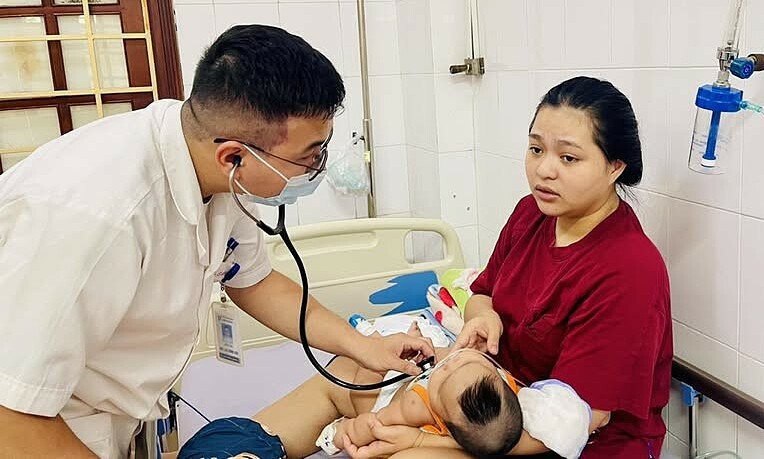
On 10/3, Dr. Nguyen Mau Trang, a resident physician in the Department of Laser and Skin Care at the National Hospital of Dermatology and Venereology, reported an examination revealed numerous genital wart lesions in the external genital area and vaginal wall. The patient underwent all necessary tests, including screening for other sexually transmitted infections, ensuring a comprehensive evaluation before intervention.
Following consultation with an obstetrician to assess fetal condition and maternal health, doctors prescribed treatment using liquid nitrogen spray (cryotherapy). This minimally invasive method is safe during pregnancy, particularly in the second trimester. After treatment, the patient remained at the hospital for three days of care and monitoring. Both mother and fetus stabilized, with no complications.
 |
Genital warts are caused by the HPV virus. *Photo: Guardian* |
Doctor Vu Huy Luong, Head of the Department of Laser and Skin Care, stated that genital warts are a sexually transmitted disease caused by the HPV virus. Pregnant women may contract HPV before or during pregnancy. During gestation, a mother's natural immunity declines, and increased blood vessel growth in the genital organs creates conditions for the virus to multiply rapidly. As a result, genital wart lesions often spread and grow quickly. Treating genital warts in pregnant women is a challenge, as few medical facilities in Vietnam possess the expertise to manage these cases.
Genital warts, a common sexually transmitted infection, have increased over the past 10 years. Pregnant women are a vulnerable group requiring attention. Lesions in pregnant women can increase risks of vaginal infections, ascending infections, and hemorrhage during pregnancy and labor.
While HPV does not directly transmit to the fetus during pregnancy, it can pass to the baby during a vaginal delivery. As the infant moves through the birth canal, it risks HPV infection of the skin, mucous membranes, or pharynx. Thus, treating genital warts during pregnancy requires careful consideration, with the second trimester typically being the safest time for intervention.
Associate Professor, Doctor Le Huu Doanh, Director of the National Hospital of Dermatology and Venereology, stated that treating sexually transmitted infections is one of the hospital's three core missions. The specialized clinic for sexually transmitted infections provides comprehensive, discreet examinations, fostering empathy and understanding. The hospital expands its network of specialized clinics within provincial dermatology systems, enabling people to access timely and effective treatment.
Le Nga