On 2/4, doctors from the Department of Neonatology, Hanoi Obstetrics and Gynecology Hospital, announced that premature twins made a remarkable recovery, weighing 3 kg each upon discharge, with stable health.
The mother was admitted at 27 weeks of pregnancy with cervical prolapse and Y-shaped dilation, showing critical signs of threatened premature birth. After 13 days of pregnancy retention, she went into labor. The baby girl weighed 950g and the baby boy 900g; both were weak, had skin as thin as paper, and underdeveloped internal organs.
Doctors immediately transferred the two babies to the Department of Neonatology. According to doctors, their lungs were not mature enough to take oxygen from the air independently, requiring lung surfactant administration and continuous mechanical ventilation. The baby girl suffered from respiratory distress syndrome grade IV (the most severe level), a severe coagulation disorder, and needed fresh plasma transfusions due to severe anemia and neonatal sepsis. The baby boy had respiratory distress syndrome grade III and an early-onset infection. Both could not be fed orally and were sustained by intravenous fluids.
After two months, both babies showed significant improvement and began kangaroo care with their mother. The baby girl weighed 1,8 kg; the baby boy was 1,75 kg. Currently, both babies have reached the 3 kg mark, looking healthy and thriving.
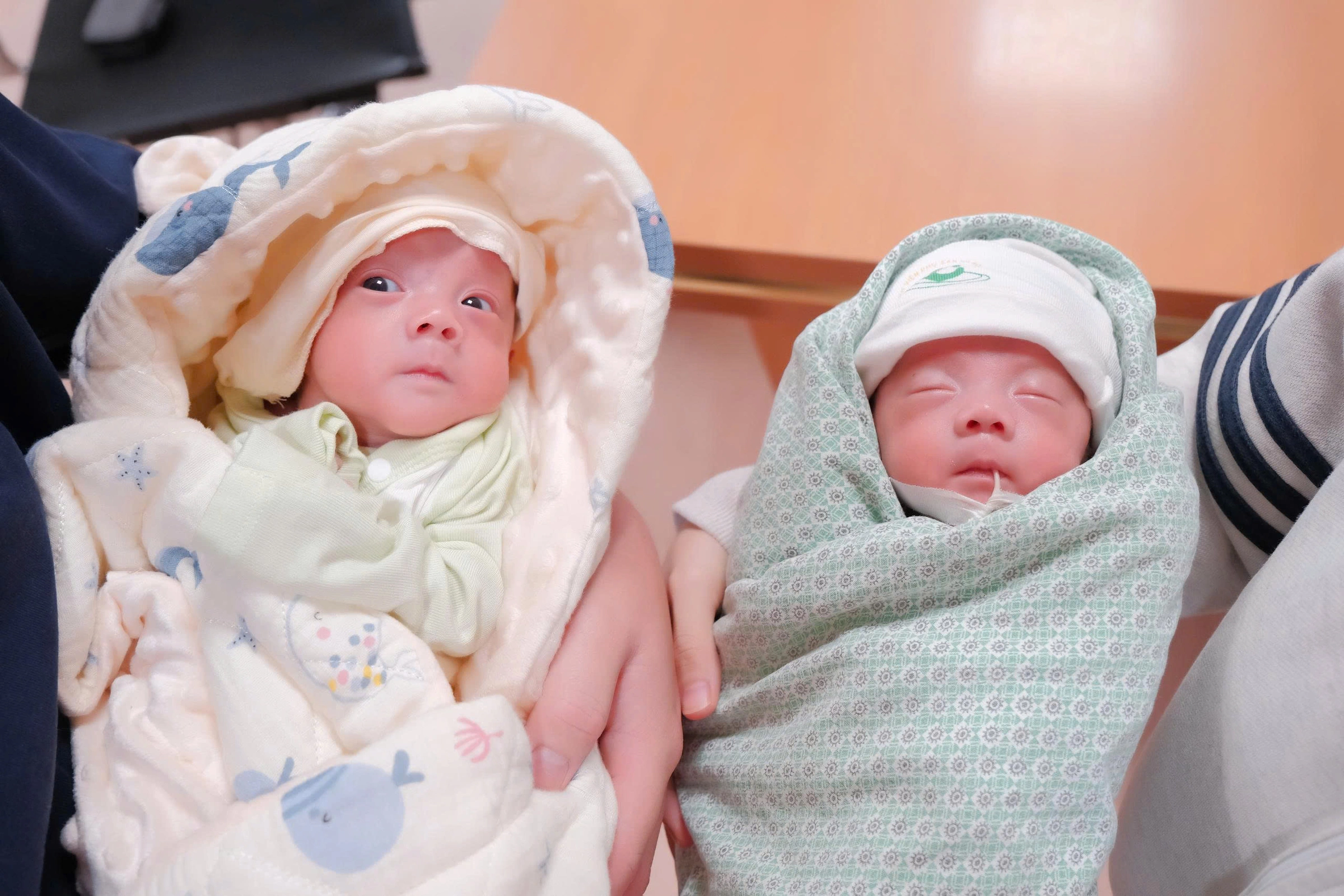 |
The two babies received intensive care and are now ready for discharge. *Photo: Hospital provided* |
Premature birth refers to babies born before 37 weeks. Babies born between 28 and before 32 weeks are considered extremely premature, carrying various health risks, such as: hypothermia, respiratory failure, metabolic disorders, neonatal sepsis, jaundice, anemia, brain hemorrhage, necrotizing enterocolitis, and hearing and vision problems.
The World Health Organization (WHO) estimates that approximately 15 million premature babies are born globally, a rate of one in ten newborns. This is considered the leading cause of death in children under 5 years old. Approximately one million premature babies die from complications. Many survivors face lifelong disabilities, including neurological, cardiovascular, visual, and auditory impairments.
In Vietnam, general reports indicate that the incidence of premature birth is increasing. Nationwide, the average premature birth rate is about 7% of all births, with approximately 100,000 to 110,000 premature babies born each year.
Cases of premature birth accompanied by multiple pathologies and complications further jeopardize the health of both mother and child. Doctors advise pregnant women who experience unusual symptoms, especially during the final three months of pregnancy, to seek close medical monitoring at a healthcare facility.