Cases of hand, foot, and mouth disease (HFMD) are rapidly increasing, with many severe instances reported. Since early 2026, the Pasteur Institute in Ho Chi Minh City has recorded 8 deaths. Among severe cases, the EV71 strain is the predominant cause. Many children experience rapid deterioration within 24 hours, requiring immediate emergency care and dialysis.
Doctor Bach Thi Chinh, Medical Director of the VNVC Vaccination System, explains that HFMD is caused by enteroviruses. EV71 is particularly concerning due to its rapid spread and potential for severe illness, including a high risk of death from direct attacks on the nervous system.
Both globally and in Vietnam, large HFMD outbreaks caused by EV71 have been documented. In China, between 2008 and 2015, over 13,6 million HFMD cases led to 3,322 deaths, with EV71 alone claiming over 2,000 lives, averaging over 260 fatalities annually. Vietnam also experienced major HFMD epidemics in 2011, 2021, and 2023, marked by a strong prevalence of the EV71 strain. In 2023 alone, Vietnam recorded over 180 cases of the disease, resulting in 31 deaths.
The virus enters the body through the mucous membranes of the mouth, throat, and intestines. It then travels to the lymph nodes and bloodstream before crossing the blood-brain barrier to invade the brain, leading to neurological, respiratory, and cardiovascular complications. These complications typically emerge early, from day 2 to day 5, and potentially up to day 7 of the illness.
Brainstem encephalitis is the most common neurological complication, accounting for over 50% of cases involving EV71 infection. The virus disrupts the autonomic functions of the central nervous system, increasing pulmonary capillary permeability. This leads to fluid accumulation in the lungs, causing hemorrhage or acute pulmonary edema. Children with this condition exhibit difficulty breathing, rapid breathing, cyanosis, and cough up pink frothy sputum or blood, requiring immediate emergency care and respiratory support. Most deaths from pulmonary hemorrhage in patients with EV71-induced brainstem encephalitis occur within 24 hours of hospital admission, or even within a few hours if not treated promptly.
According to Doctor Chinh, another common cardiovascular complication caused by EV71 is myocarditis, which can lead to arrhythmias and cardiovascular collapse. Affected children show profuse sweating, cold skin, a rapid pulse, and a sudden drop in blood pressure. This is a state of cardiogenic shock, which can cause circulatory arrest if not intervened quickly. Children with neurological damage accompanied by cardiopulmonary failure have a very high mortality rate.
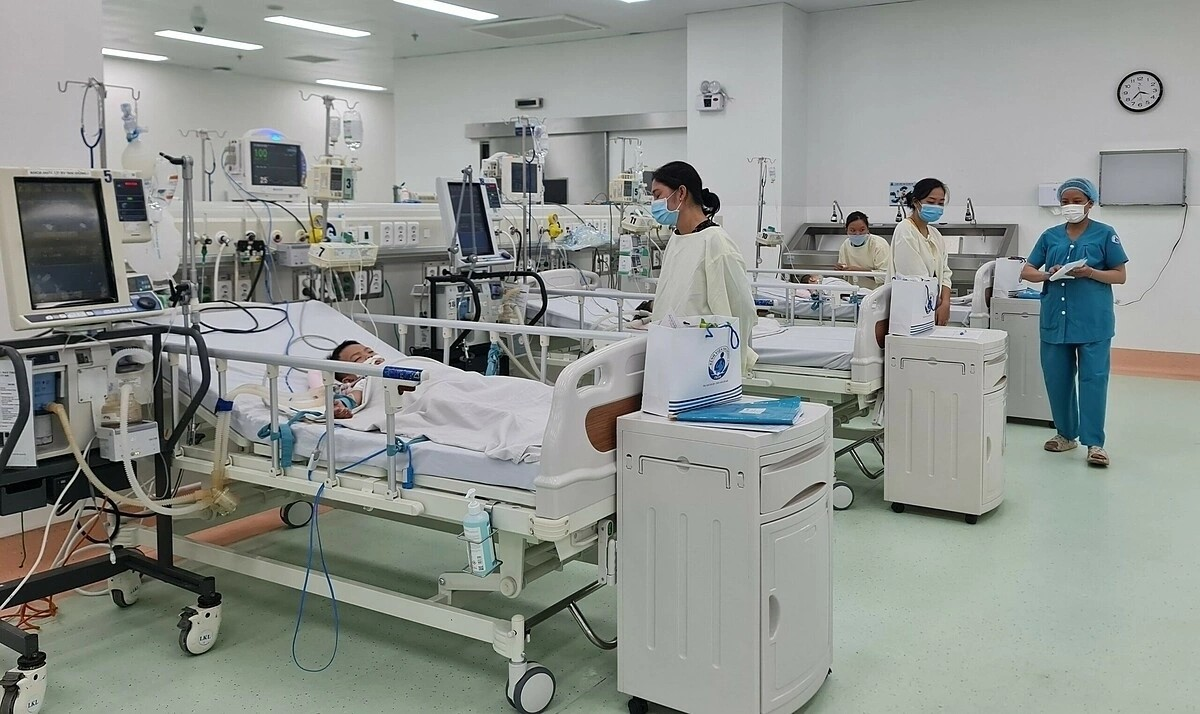 |
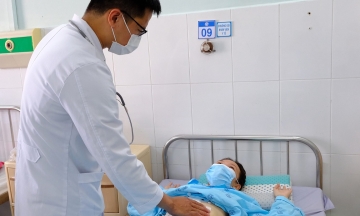
Children with severe hand, foot, and mouth disease requiring mechanical ventilation and dialysis at Children's Hospital 1. Photo: Le Phuong |
Additionally, children with HFMD, primarily due to EV71, may develop acute flaccid paralysis. This occurs when the virus attacks the anterior horn cells of the spinal cord, resulting in sudden weakness or flaccid paralysis of one or more limbs, reduced reflexes, often accompanied by startling and limb tremors. The disease can leave lasting sequelae such as muscle atrophy and prolonged limb weakness.
A study published in the US National Library of Medicine, based on data from 142 children with EV71-induced neurological damage followed for an average of 2,9 years, found that 28 children experienced polio-like syndromes, weakness, paralysis, and muscle atrophy, while 22 children suffered delayed neurological development.
"As the disease rapidly increases and progresses quickly, children need early detection of severe symptoms for timely intervention and treatment during the 'golden window'," Doctor Chinh emphasized.
Doctor Chinh noted that neurological complications in children with EV71-induced HFMD typically occur within two to five days after the onset of fever or the characteristic vesicular rash. Parents should observe for signs that warrant immediate hospitalization, such as muscle jerks, limb tremors, persistent high fever that is difficult to reduce, lethargy, drowsiness or unusual fussiness, frequent vomiting, significantly reduced eating, refusal to feed, and a bulging fontanelle in infants. Some children may develop neurological complications without the typical vesicular rash or mouth ulcers associated with HFMD.
Currently, there is no specific antiviral medication for HFMD. To protect children from the pathogen, Doctor Chinh advises parents to maintain good hygiene for themselves and their children, regularly clean homes and toys, and provide age-appropriate nutrition. They should also ensure food is thoroughly cooked and water is boiled.
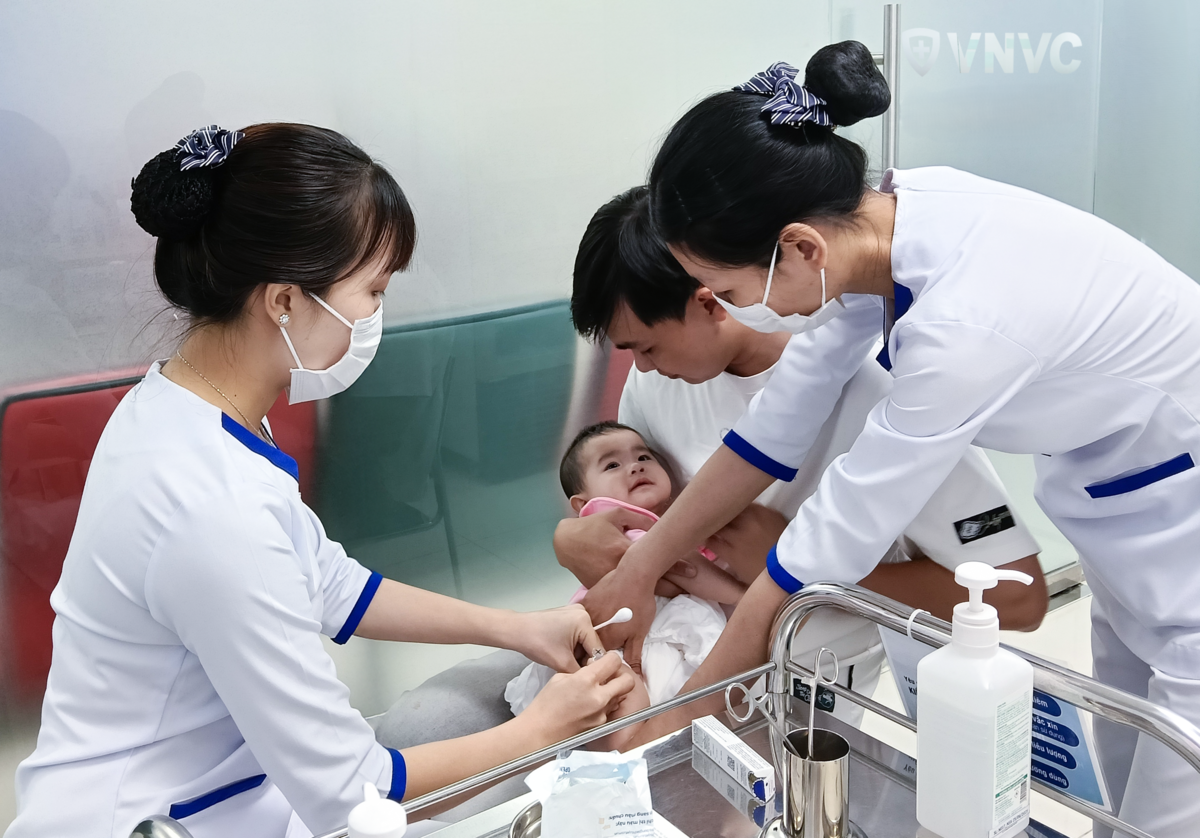 |
Parents bringing their children for vaccination against the disease at VNVC. Photo: Hoang Duong |
In March, the Ministry of Health approved an EV71 vaccine for HFMD, indicated for children from two months to under 6 years of age. VNVC is expediting efforts to roll out the vaccine soon.
Besides HFMD, Doctor Chinh also cautions that with the current hot weather, many other pathogens are circulating, including influenza, pneumococcus, chickenpox, meningococcus, respiratory syncytial virus (RSV), measles, and dengue fever. Parents should ensure their children receive all recommended vaccinations. Vaccines should be administered as early as possible to provide early protection for children.
Hoang Duong