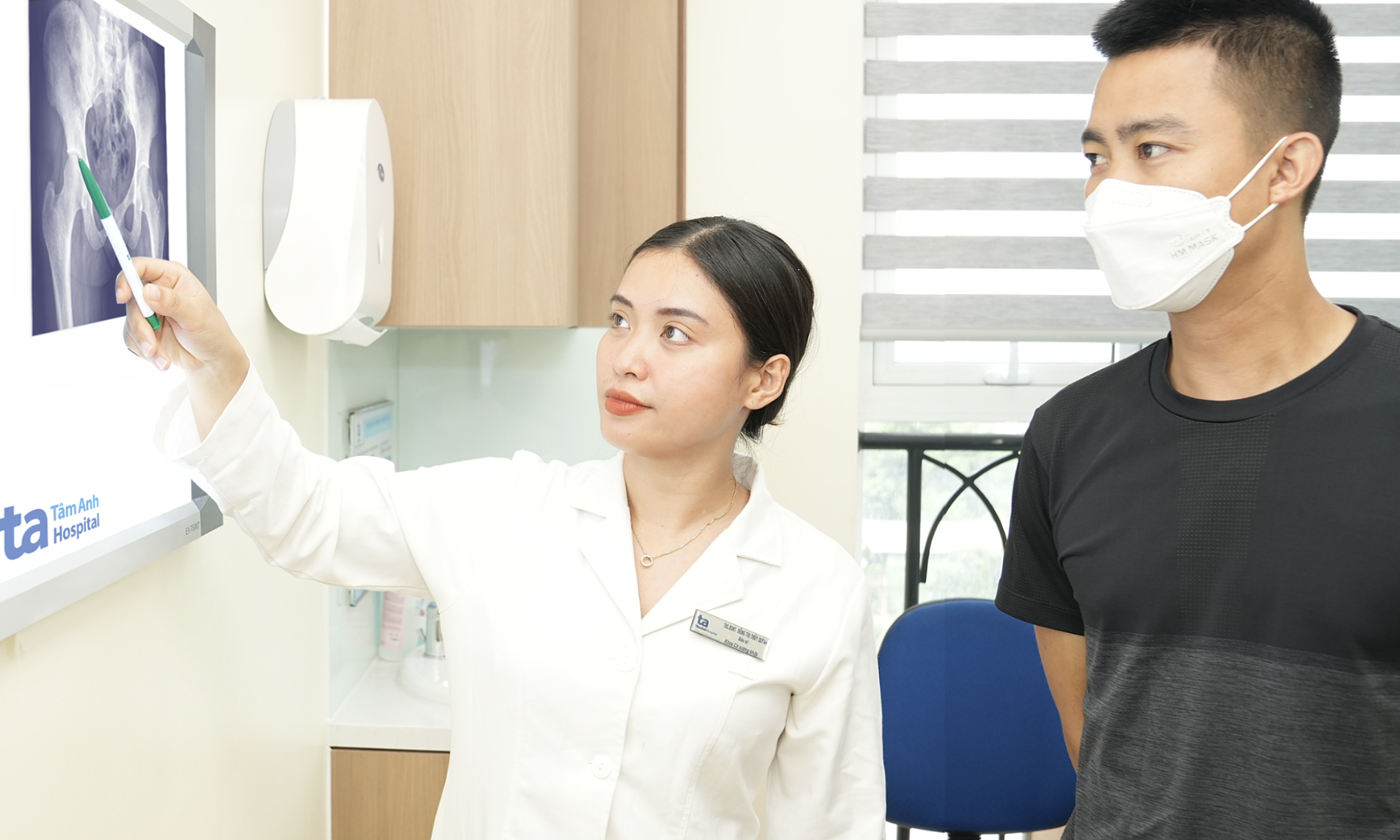
An's vision has recently deteriorated quickly despite wearing appropriate corrective lenses. Dr. Duong Minh Phuc, from the High-Tech Eye Center at Tam Anh General Hospital in Ho Chi Minh City, noted that An's left eye has 13 diopters of myopia, and his right eye has 14 diopters. The lenses in both of An's eyes are displaced from their normal position, shifting downwards towards the temples.
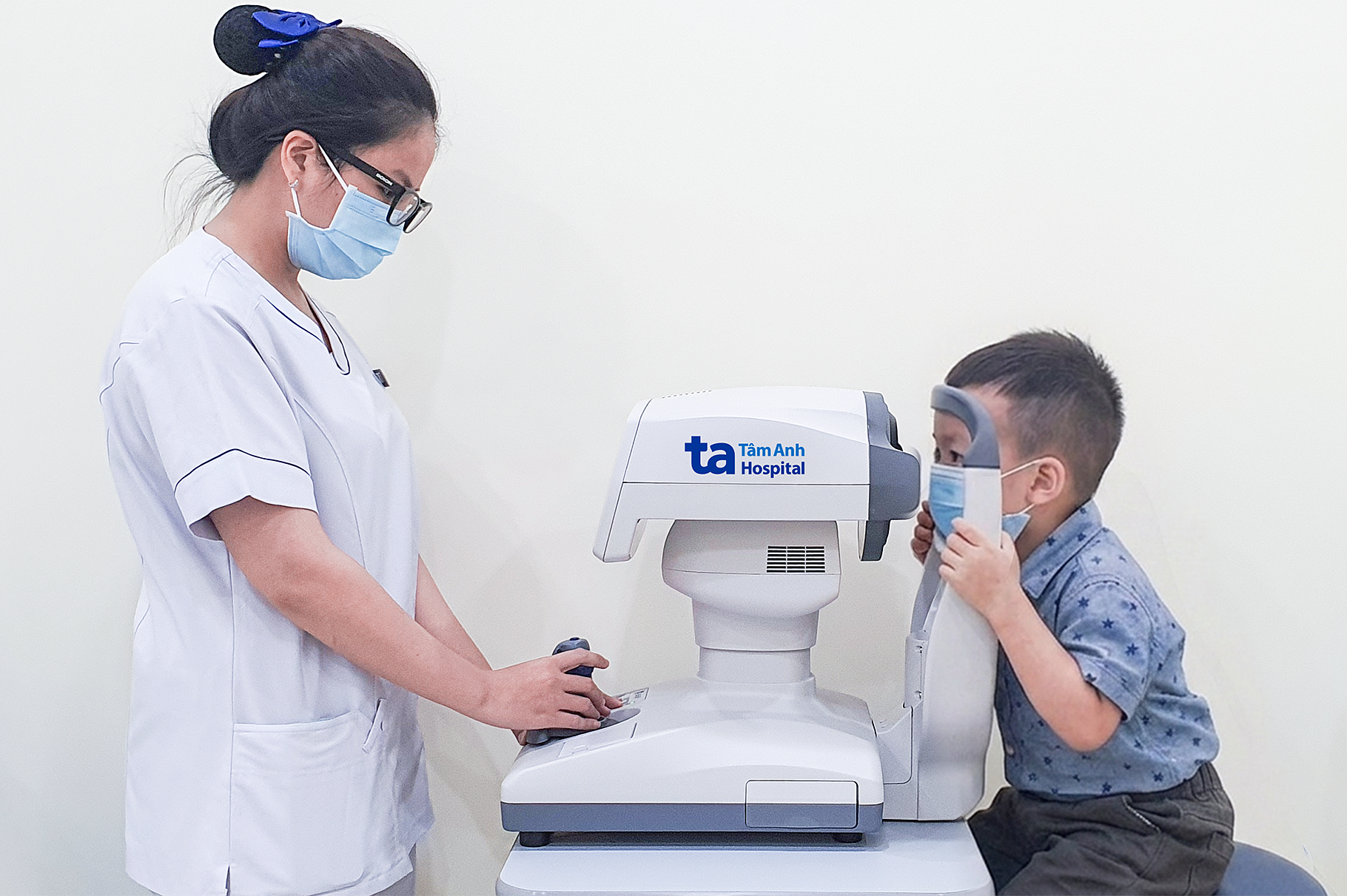 |
A nurse at Tam Anh General Hospital measures An's refractive error. Photo: Hospital provided |
A nurse at Tam Anh General Hospital measures An's refractive error. Photo: Hospital provided
According to Dr. Phuc, severe myopia at An's age is rare and differs from common school-age myopia. The cause is a dislocated lens, the part of the eye responsible for focusing light onto the retina. This displacement occurs because the supporting system of suspensory ligaments (Zinn's ligaments) is weakened or abnormal from birth.
When the lens is dislocated, light cannot focus accurately on the retina, causing blurred vision, distorted images, and a rapid increase in the degree of myopia. This explains why An's vision continues to decline even with correctly prescribed glasses.
Dr. Phuc added that congenital lens dislocation can be associated with certain genetic syndromes or other congenital abnormalities. Therefore, the family has been advised to undergo further screening to detect any potential underlying defects in the child.
If left untreated, this condition can lead to amblyopia, glaucoma, irreversible vision damage, or even permanent vision loss. Young children are particularly vulnerable because the period from 0 to 6 years old is a critical "golden window" for the complete development of visual function.
The proposed treatment for An is surgical lens suspension, which involves replacing the dislocated lens with a suitable artificial intraocular lens and securing it in the correct position. Early surgery is essential to improve vision and prevent amblyopia. However, because An is only three years old and his refractive error and eye structure are not yet stable, he will initially wear correctly prescribed glasses for three months for observation. If his condition does not improve, doctors will consider surgery.
Dr. Phuc advises parents to seek early eye examinations for children exhibiting symptoms such as an unusually rapid increase in myopia, poor vision despite wearing glasses, frequent squinting, leaning close to objects when looking, or rubbing their eyes often. Regular eye check-ups every 6-12 months help detect dangerous vision abnormalities early.
Ngoc Kim Tham
*Patient's name has been changed.
| Readers can send questions about ophthalmic diseases here for doctors to answer. |