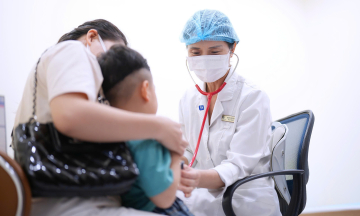
On 12/2, Dr. Tran Thi Van Anh, Deputy Head of the Department for Treatment of Skin Diseases in Women and Children at the National Hospital of Dermatology and Venereology, shared details of this unusual case. The boy is the first child, born at full term via natural delivery, weighing 3 kg, and showed no abnormalities after birth. Notably, his mother did not undergo routine syphilis screening during pregnancy. The family also has no history of miscarriages or other specific medical conditions.
Approximately five months before bringing their son for examination, the boy's parents discovered they had syphilis through tests conducted for overseas employment applications. Both received treatment, but not according to the standard protocol. Recognizing the risk of mother-to-child transmission during pregnancy, the family proactively brought the boy to the National Hospital of Dermatology and Venereology for screening.
Serum test results confirmed the boy was positive for syphilis, with a high RPR antibody titer, and specific tests yielded similar results. He was admitted for treatment and monitoring. Despite the diagnosis, the boy remains alert, with pink skin and mucous membranes, no fever, good appetite, and age-appropriate physical development. Clinical examinations have not revealed any lesions on the skin, eyes, ears, bones, teeth, or nervous system – common manifestations of congenital syphilis.
Dr. Van Anh noted this is a case of congenital syphilis detected late but without clear clinical manifestations. If not diagnosed and treated promptly, children risk developing severe late complications such as neurosensory deafness, interstitial keratitis leading to vision impairment, bone deformities (saber shins, frontal bossing), neurological damage resulting in intellectual developmental delays, and even cardiovascular and joint damage. Many of these complications are difficult to fully recover from.
Penicillin is the only medication proven effective and safe for treating congenital syphilis. The boy is currently receiving intravenous penicillin at an appropriate dosage. He will undergo clinical monitoring and regular serum tests at 3, 6, and 12 months post-treatment. Antibody titers need to decrease by at least four times or become negative over time to assess treatment response.
Dr. Van Anh stated, "If treated thoroughly before clinical symptoms appear, children can fully recover and develop normally, without lasting sequelae." This case serves as a crucial reminder of the importance of timely syphilis screening and treatment to protect children's health.
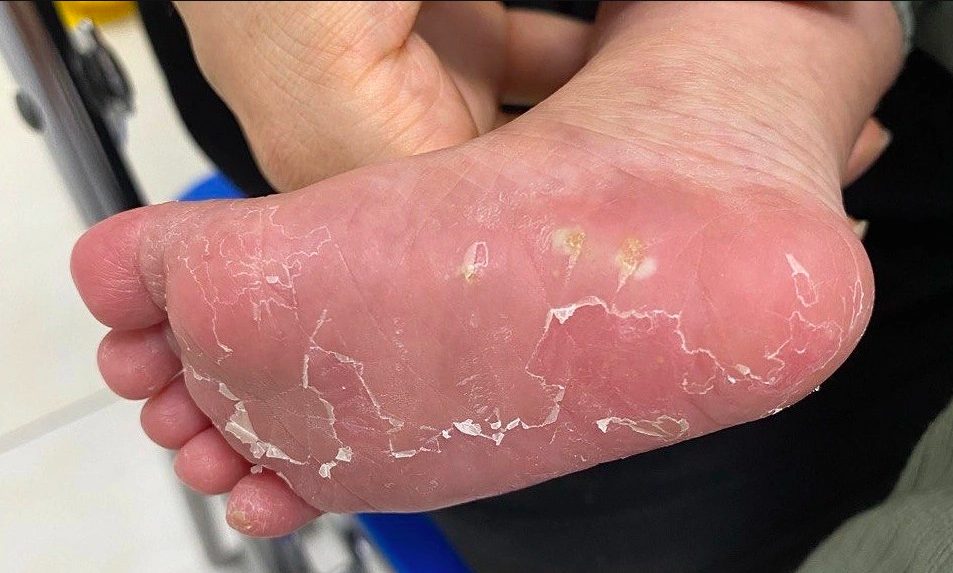 |
A baby with peeling skin on hands and feet shortly after birth – a sign of congenital syphilis. Photo: Thu Ngo |
Congenital syphilis is a condition where a fetus is infected with the Treponema pallidum spirochete from the mother during pregnancy. According to the World Health Organization (WHO), an estimated 700,000 cases of congenital syphilis occurred globally in 2022, causing over 200,000 stillbirths, neonatal deaths, or births with severe birth defects. The risk of mother-to-child transmission depends on the mother's stage of the disease, potentially reaching 70–100% in early syphilis, about 40% in early latent stage, and approximately 10% in the late stage.
In Vietnam, the number of adult syphilis cases is rising, leading to an increase in congenital syphilis cases, especially at tertiary hospitals. Many cases are detected late because pregnant women do not receive adequate screening, particularly at grassroots healthcare facilities.
Experts say that if a mother is diagnosed and fully treated with benzathine penicillin at least 30 days before birth, the risk of transmission to the child can be reduced to below 1–2%. This simple, low-cost test can prevent severe, lifelong consequences for children.
The National Hospital of Dermatology and Venereology currently coordinates multidisciplinary efforts across dermatology, obstetrics, and pediatrics. It is promoting early screening and participating in the national program "Eliminating Mother-to-Child Syphilis Transmission" for the 2018–2030 period, aiming to screen at least 95% of pregnant women.
Doctors recommend that pregnant women be tested for syphilis at least once during the first trimester, again at weeks 28–36, and at birth, especially for high-risk groups. If results are positive, immediate penicillin treatment according to the correct protocol is essential; both partners should be screened and treated if necessary. It is crucial not to wait for symptoms to appear, as syphilis can progress silently with severe consequences.
Le Nga