"This marks the first time this technique has been implemented in Vietnam, offering new hope for patients with osteoarthritis," said Doctor Do Van Minh, Deputy Head of the Department of Orthopedics and Sports Medicine at Hanoi Medical University Hospital.
The patient endured chronic pain for years, with no relief from various traditional and Western medical treatments. This condition severely hampered her daily activities, especially during winter. "Every time I held my knees, I just wished I could bend them to sit and walk like a normal person," the patient recounted.
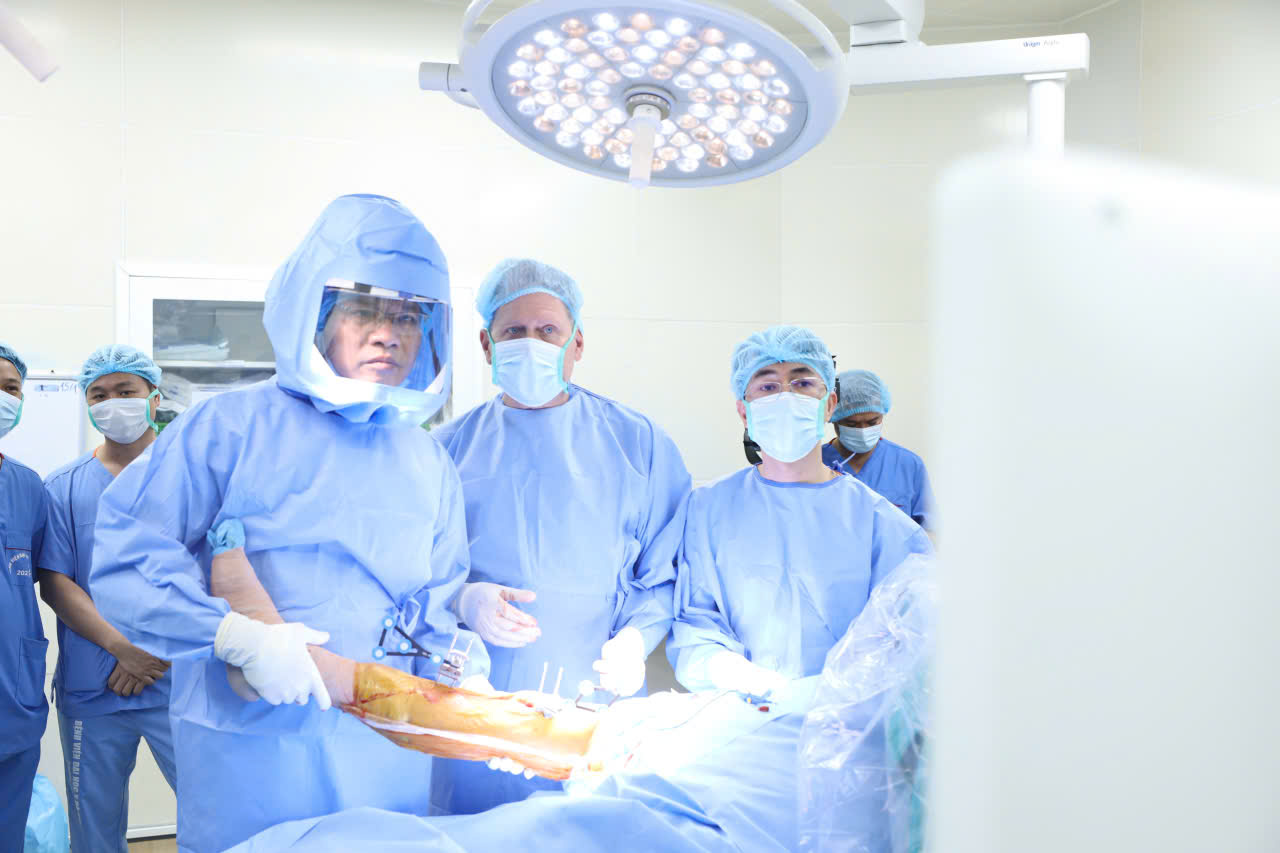 |
Doctors using the CORI robot for patient surgery. Photo: Hospital provided. |
After examination and consultation, doctors decided to perform a total knee replacement using the CORI robot. Doctor Minh stated that this was a typical case of late-stage knee osteoarthritis, where medical and rehabilitation treatments were no longer effective.
The CORI robot is a modern orthopedic surgical system, assisting surgeons in planning, bone cutting, and implanting artificial joints based on individual patient anatomy and biomechanics. A core benefit of CORI is its ability to collect anatomical data directly in the operating room, removing the need for pre-operative CT or MRI scans. This saves time, reduces costs, and minimizes patient radiation exposure. The device helps surgeons accurately identify and remove damaged bone with precision, with deviations under 1 mm.
The surgery was successfully completed in about one hour. Just 4-6 hours later, the patient was able to stand and begin walking with assistance from medical staff. After more than two weeks of intensive rehabilitation, the patient is walking relatively well, with stable knee function, significantly reduced pain, and a noticeably improved quality of life.
Knee replacement surgery is typically indicated for patients with stage 3-4 knee osteoarthritis, where severe damage significantly impacts daily activities and medical treatment is no longer effective. This robotic system is currently used only in joint replacement surgeries, including for patients with a history of knee injuries leading to severe degeneration.
According to the World Health Organization (WHO), 528 million people globally lived with osteoarthritis in 2019, with the over-55 age group accounting for 73%. In Vietnam, an aging population, coupled with increasing rates of obesity and injuries, is making this condition more prevalent.
Healthcare professionals advise that knee osteoarthritis often progresses silently, causing no pain while at rest, making it easy to overlook. Many patients, fearing surgery, delay treatment, leading to a worsening of their condition. People should maintain a scientific diet and exercise regimen, and visit a medical facility immediately if they experience unusual signs of swelling, pain, or joint stiffness for timely intervention.
Thuy An