On World Hypertension Day on 17/5, Professor Pham Manh Hung, Director of the National Institute of Cardiology - Hospital 198, stated that hypertension is a "silent killer." The disease often progresses unnoticed for many years but can lead to severe complications such as cerebral stroke, myocardial infarction, heart failure, atrial fibrillation, chronic kidney failure, blood vessel damage, and early death.
In Vietnam, the prevalence of hypertension in adults is about 25-30%, affecting tens of millions of people. Worryingly, the disease is rapidly affecting younger individuals due to sedentary lifestyles, prolonged stress, salty diets, obesity, and high alcohol consumption.
The 2021 National Non-Communicable Disease Risk Factor Survey (STEPS) by the Ministry of Health revealed that the average daily salt intake for Vietnamese people is about 8,1 g. While a decrease from 9,4 g in 2015, this figure remains nearly double the World Health Organization's (WHO) recommendation of less than 5 g per day. Approximately 8,7% of the population regularly consumes processed foods that are high in salt.
Nutrition experts warn that a salty diet is a primary cause of hypertension and a range of dangerous cardiovascular diseases. Master of Science, Doctor Ngo Thi Ha Phuong, from the National Institute of Nutrition, explained that sodium, a key component of salt, is an essential mineral for maintaining fluid balance, nerve transmission, and muscle activity. However, excess sodium beyond recommended levels increases vascular permeability and tone, causes cellular water retention, and heightens peripheral resistance, ultimately leading to hypertension.
 |
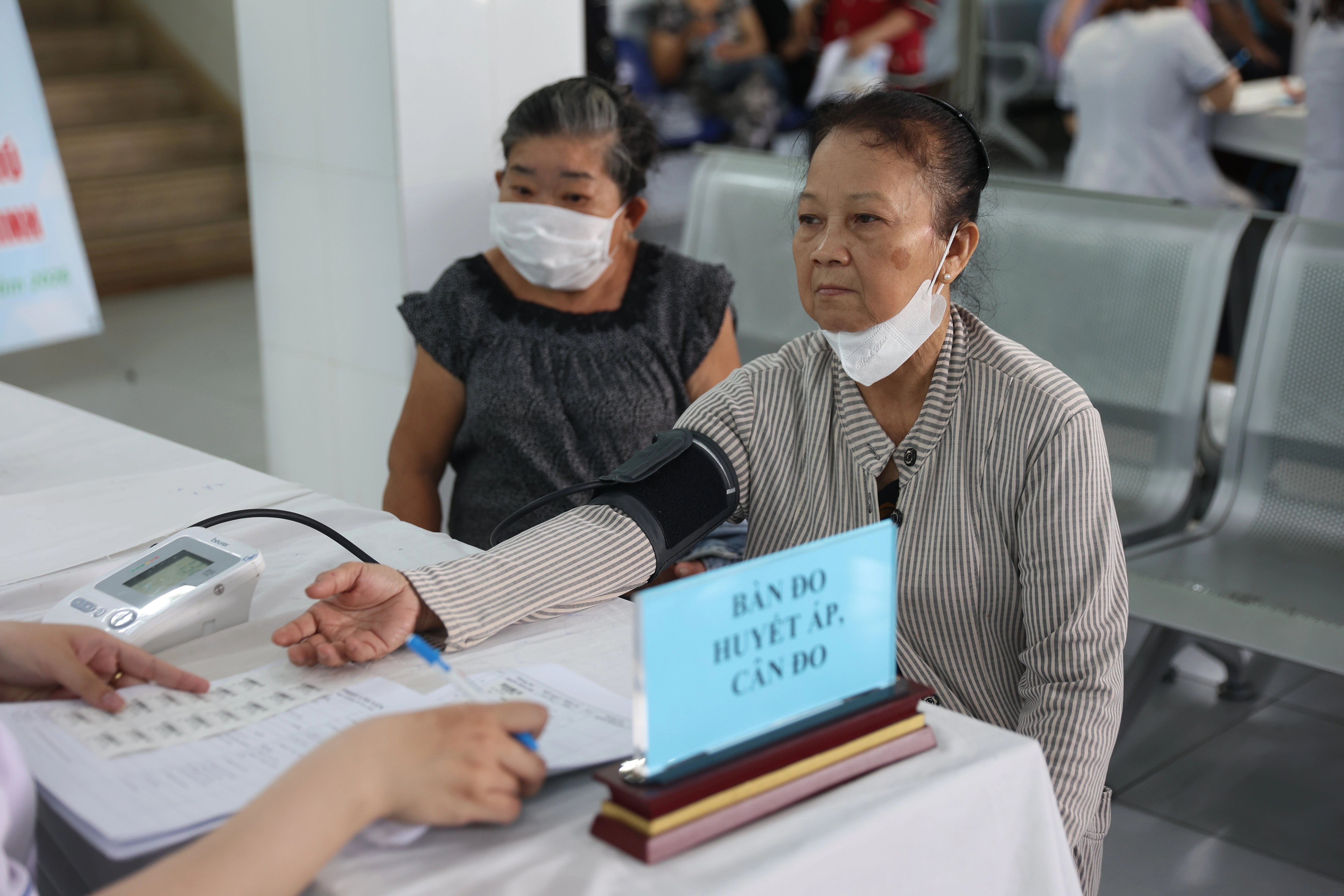
People measure blood pressure at Tang Nhon Phu ward health station, TP HCM in 4/2026. Photo: Quynh Tran |
Doctor Phuong noted that hypertension caused by salty eating often develops silently over many years. Long-term consumption of high sodium from salt, spices, and salt-containing foods increases blood pressure in most individuals. It also interacts with metabolic pathways related to obesity, insulin resistance, and kidney damage.
Many believe that healthy kidneys can adequately excrete excess salt, making a salty diet less concerning if the body is otherwise healthy. However, when a large amount of salt is consumed over a prolonged period, the kidneys must work continuously to excrete sodium and water. This sustained overload leads to declining kidney function and simultaneously increases the risk of hypertension.
Furthermore, a high-salt diet reduces the effectiveness of antihypertensive medications, especially diuretics. Persistently high blood pressure damages blood vessel walls, promotes atherosclerosis, and increases the risk of stroke, heart failure, and coronary artery disease.
According to a 2011 study, about 80% of sodium in the Vietnamese diet comes from seasonings added during cooking and direct dipping sauces such as fish sauce, seasoning powder, soup powder, shrimp paste, and soy sauce. The remaining 20% originates from processed foods like sausages, cold cuts, canned goods, snacks, instant noodles, and naturally occurring salt in various foods. Many popular dishes served at restaurants and eateries also contain high amounts of salt due to a cultural preference for strong, rich flavors. This often leads many individuals to unintentionally exceed the recommended daily salt intake without realizing it.
Research indicates that controlling daily salt intake to 5-6 g can decrease blood pressure by 2-8 mmHg. Maintaining a low-salt diet long-term also significantly reduces the risk of cardiovascular disease and stroke.
Experts recommend that people change their eating habits early to prevent hypertension and cardiovascular disease. The most important measures include: gradually reducing salt in food preparation, limiting processed foods, and curbing the habit of adding extra dipping sauces during meals. When buying packaged foods, it is important to check the sodium content on nutrition labels.
World Salt Awareness Week takes place from 11–17/5. This year's campaign advocates for reducing salt in processed and packaged foods.
Le Nga