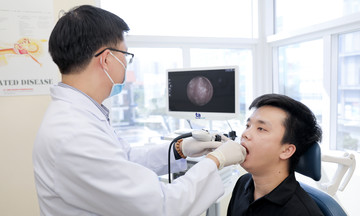
Exercise helps individuals with osteoarthritis (OA) or rheumatoid arthritis (RA) reduce pain, increase range of motion, and improve overall mobility. For those with knee arthritis, physical activity not only promotes stronger muscles and more flexible joints but also enhances endurance, blood circulation, cardiovascular health, and weight management. However, patients must choose suitable, low-impact exercises that do not worsen symptoms.
The following knee-strengthening exercises target the muscles in the thighs and calves. Individuals with knee arthritis should begin with 10 repetitions per exercise, for a maximum of three consecutive sets, performing them 3-5 times each week. If pain occurs, stop exercising and consult a doctor.
Knee extension
This exercise strengthens the quadriceps muscles at the front of the thigh. These muscles help move the hips forward and straighten the knee.
Begin by sitting with a straight back, both feet flat on the floor. Straighten one leg as much as possible. Hold this position for 2-3 seconds, then slowly lower it. Repeat with the opposite leg.
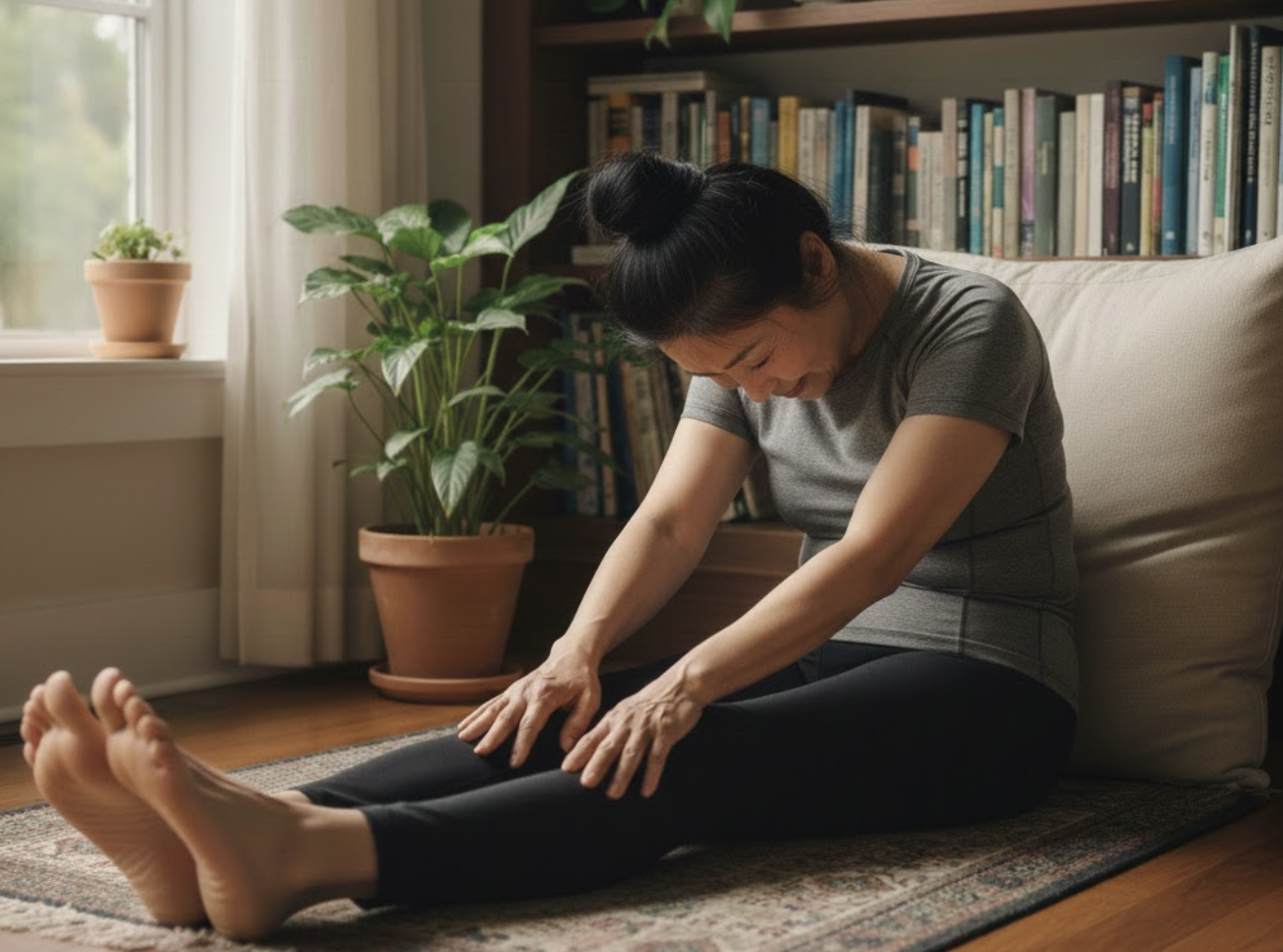 |
The knee extension exercise is beneficial for people with knee arthritis. *Illustration created by AI*.
Leg curl
Leg curls help strengthen the hamstring muscles at the back of the thigh. These muscles are responsible for pushing the hips backward and bending the knee. Stand in front of a sturdy chair, especially if you have difficulty with balance. If standing is too painful, patients can perform this exercise while lying prone.
Stand with feet hip-width apart. Bend one knee, bringing your heel towards your buttocks. Only move as far as your knee allows, keeping your back straight and avoiding leaning forward.
Hold the position for 2-3 seconds, then slowly lower your leg. Repeat with the opposite leg.
Calf raise
In addition to lifting the body onto the toes, the gastrocnemius muscle (the muscle at the back of the calf) also helps straighten the knee. Patients can perform calf raises while seated if standing is too difficult or painful.
Place your hands on a sturdy surface for support. Rise onto your toes by lifting your heels. Hold for 2-3 seconds, then slowly lower yourself. Calf raises can also be performed one leg at a time.
Mini squat
Mini squats strengthen the knee muscles that assist in standing up from a seated position. For additional support, patients can lean their back against a wall while performing this exercise.
Stand with your feet shoulder-width apart. Push your hips back as if you are about to sit in a chair, bend your knees, and slowly squat down. Stop before your thighs are parallel to the ground. Extend your arms straight out in front of you for balance or place your hands on the back of a chair. Hold for 2-3 seconds, then stand up.
During periods of knee pain flare-ups, patients can perform low-impact exercises such as: using an elliptical machine or a stationary bicycle, instead of higher-impact activities like walking or jogging. Aquatic exercise is also a beneficial option, as it builds muscle while reducing pressure on painful joints.
Anh Ngoc (Source: Verywell Health)
| Readers can ask questions about musculoskeletal diseases here for doctors to answer |