The stories of Thuy and Vinh were featured in episode 11 of the talk show "Than Khoe - Doi Vui" (Healthy Kidneys - Happy Life), titled "Following the Journey of Hemodialysis Patients". The episode aired on HTV7 at 5 PM on 14/12 and included Associate Professor, Doctor Pham Van Bui, Chairman of the International Society of Hemodialysis (2023-2027) and Chairman of the Ho Chi Minh City Hemodialysis Association. He was joined by Master, Doctor Vu Thi Minh Hoa, Vice Chairman of the Ho Chi Minh City Hemodialysis Association and Head of the Nephrology - Hemodialysis Department at Nguyen Tri Phuong Hospital (Ho Chi Minh City).
The "Than Khoe - Doi Vui" talk show series is a collaboration between the Ho Chi Minh City Hemodialysis Association, Nipro Medical Corporation, and FPT Healthcare Technology Unit. It addresses the rapid increase and younger demographic of chronic kidney disease patients, aiming to provide expert knowledge and raise public awareness about the condition.
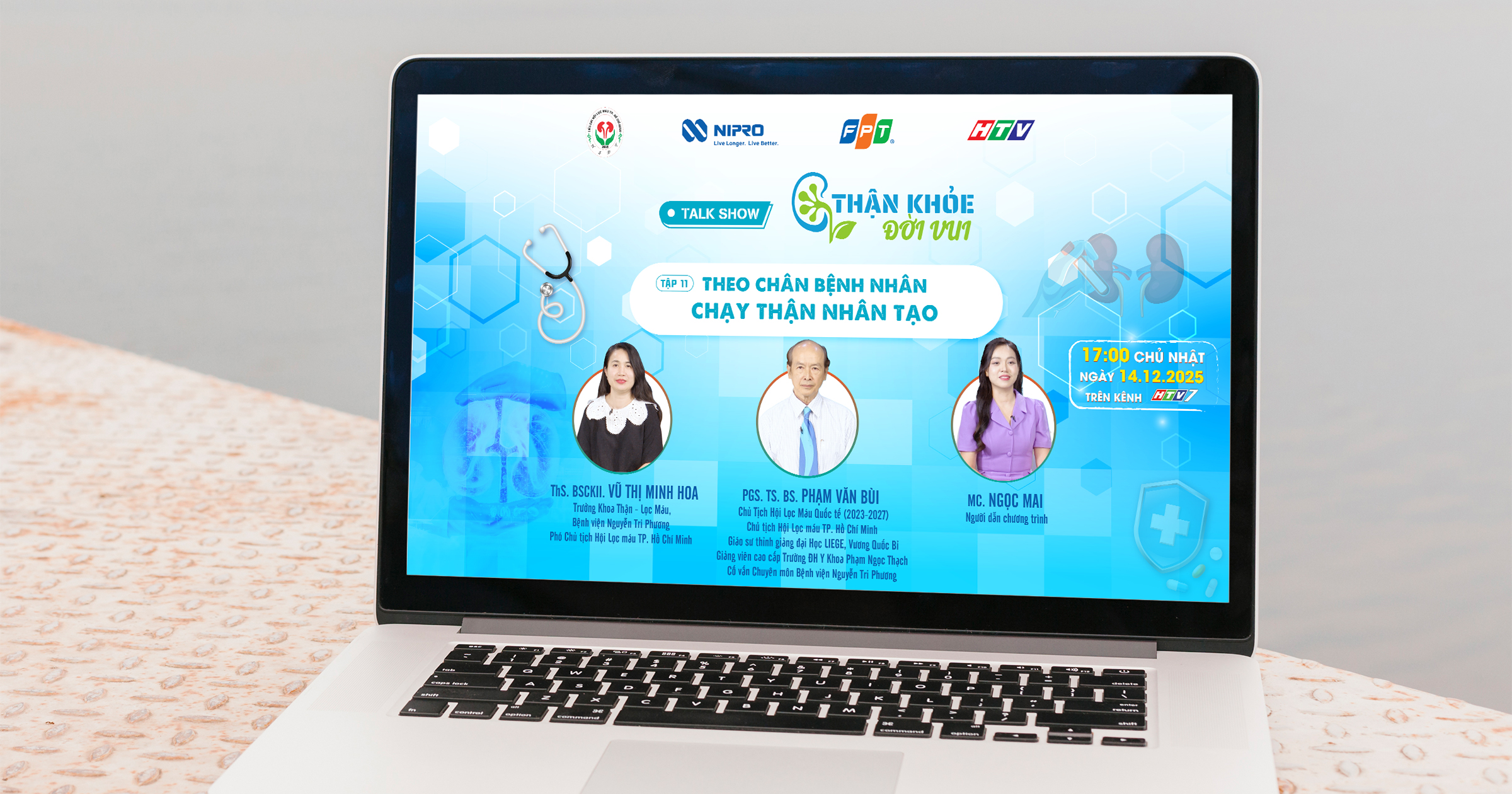 |
Khan gia dang theo doi doan video gioi thieu tap 11 cua chuong trinh "Than khoe - Doi vui". Anh: FPT
Both Thuy and Vinh were diagnosed with end-stage kidney disease when they first sought medical attention, necessitating hemodialysis. This news came as a shock to them. In the initial period of hemodialysis, they experienced various complications, with Thuy notably suffering from severe hypotension.
Thanks to their adherence to medical treatment, Thuy continues to work an office job. Her company accommodates her regular dialysis sessions, ensuring she can maintain her work performance. Vinh, a former long-haul driver, experienced a reduction in income due to dialysis but was fortunate that health insurance covered most costs, easing his financial burden.
Many people are complacent about kidney disease
According to experts, kidney disease often presents with no symptoms or atypical symptoms, leading many patients to be complacent. By the time they discover their condition, it has typically progressed to the end stage, requiring kidney replacement therapy. Hemodialysis is the most common method among these.
Furthermore, some individuals diagnosed with early-stage kidney disease pursue unscientific treatments, neglect healthy lifestyles, or fail to actively manage underlying medical conditions, especially cardiovascular diseases and diabetes – common conditions that cause kidney complications. This leads to severe disease progression, ultimately necessitating hemodialysis.
Hemodialysis is one of the three current kidney replacement therapies, alongside peritoneal dialysis and kidney transplantation. While kidney failure patients may not be lifelong dependent on a dialysis machine, they will certainly require one of these three replacement therapies. This is because when chronic kidney disease reaches its end stage, kidney function significantly declines, almost completely ceasing, making replacement therapies essential to perform kidney functions (filtering waste, toxins, removing excess water) and sustain life.
 |
Benh nhan chay than nhan tao tai Benh vien Thong Nhat, TP HCM. Anh: Phung Tien
Common issues for patients starting hemodialysis
Hemodialysis can cause several complications for patients. The less common but dangerous group primarily includes cardiovascular incidents, which can be life-threatening.
The second group consists of common but less dangerous complications, such as muscle aches and, notably, hypotension. Hypotension is the most frequent complication because patients starting hemodialysis may not yet have their dry weight (the body's ideal weight without excess fluid) accurately determined. This can lead to excessive weight loss and fluid removal during dialysis, often resulting in hypotension accompanied by symptoms like nausea and headaches. Doctors advise patients to adjust their diet and avoid excessive fluid intake before dialysis to mitigate these common complications.
How long can hemodialysis sustain a patient's life?
According to experts, there is no precise answer to this question, as many factors influence the health of hemodialysis patients. These factors include the timing of when a patient begins hemodialysis (early or late), the quality of water, filters, and dialysis equipment, the presence of co-existing medical conditions, and patient adherence to doctor's treatment orders.
Nevertheless, experts affirm that hemodialysis significantly prolongs patient life. Modern hemodialysis treatment has advanced considerably, featuring more sophisticated machines, improved filters, tubing, and dialysate. Many patients undergoing hemodialysis live an additional 10 to 20, or even 30 years. Regular hemodialysis patients who adhere to their treatment can still work and travel, provided their destination has a dialysis unit that can accommodate them.
Experts also hope that future medical advancements will lead to better medications and treatment methods for patients.
 |
Benh nhan chay than nhan tao dinh ky van co the di du lich, chi can dia diem den co don vi chay than nhan tao cho benh nhan. Anh minh hoa: Pexels
In episode 11, experts also highlighted the importance of psychological care for patients undergoing hemodialysis. Many patients and their families often experience psychological distress upon receiving this diagnosis.
*Names of individuals have been changed.
Kim Anh
For more information about kidney disease, readers can follow the "Than Khoe - Doi Vui" program. Produced by the Ho Chi Minh City Hemodialysis Association in collaboration with Nipro Medical Corporation and FPT Healthcare Technology Unit, and featuring leading experts in nephrology and dialysis, the show airs every Sunday at 5 PM on HTV7.
The "Than Khoe - Doi Vui" program addresses questions and provides useful information about kidney health, a vital yet often overlooked organ. Viewers can interact with the program via its official Fanpage for a chance to win prizes. A QR code appears on screen at the end of each episode, allowing viewers to submit questions directly for experts to answer in future installments.
Episode 11, "Following the Journey of Hemodialysis Patients", will also be re-uploaded to the program's official Fanpage.