During hot weather, ultraviolet (UV) index levels are consistently high. According to pharmacist Do Xuan Hoa from the Medical Information Center, Tam Anh General Hospital TP HCM, direct exposure to UV rays promotes oxidation, increases free radical production, breaks down collagen structures, causing skin to lose elasticity. It also stimulates melanin production, leading to darkening and hyperpigmentation.
Implementing direct sun protection measures, maintaining a scientific diet, and ensuring adequate vitamin C intake can help mitigate the impact of UV rays on the skin. Vitamin C possesses antioxidant properties, neutralizing free radicals and contributing to slowing skin aging, preventing the formation of melanin pigments that cause darkening and hyperpigmentation. Additionally, vitamin C participates in collagen production, helping maintain skin structure and elasticity.
Here are some vitamin C-rich fruits that can be added to your daily diet:
Guava
100 g of guava provides 228 mg of vitamin C. You can eat guava directly or use it to make juice to supplement your daily vitamin C intake.
Papaya
100 g of ripe papaya contains about 88 mg of vitamin C, along with many natural enzymes that help improve dull skin. Ripe papaya also contains beta-carotene, which participates in collagen production and protects skin cells from ultraviolet damage. Papayas have yellow, orange, or red flesh; prioritize naturally ripened fruits from clear origins and consume about 100-200 g daily.
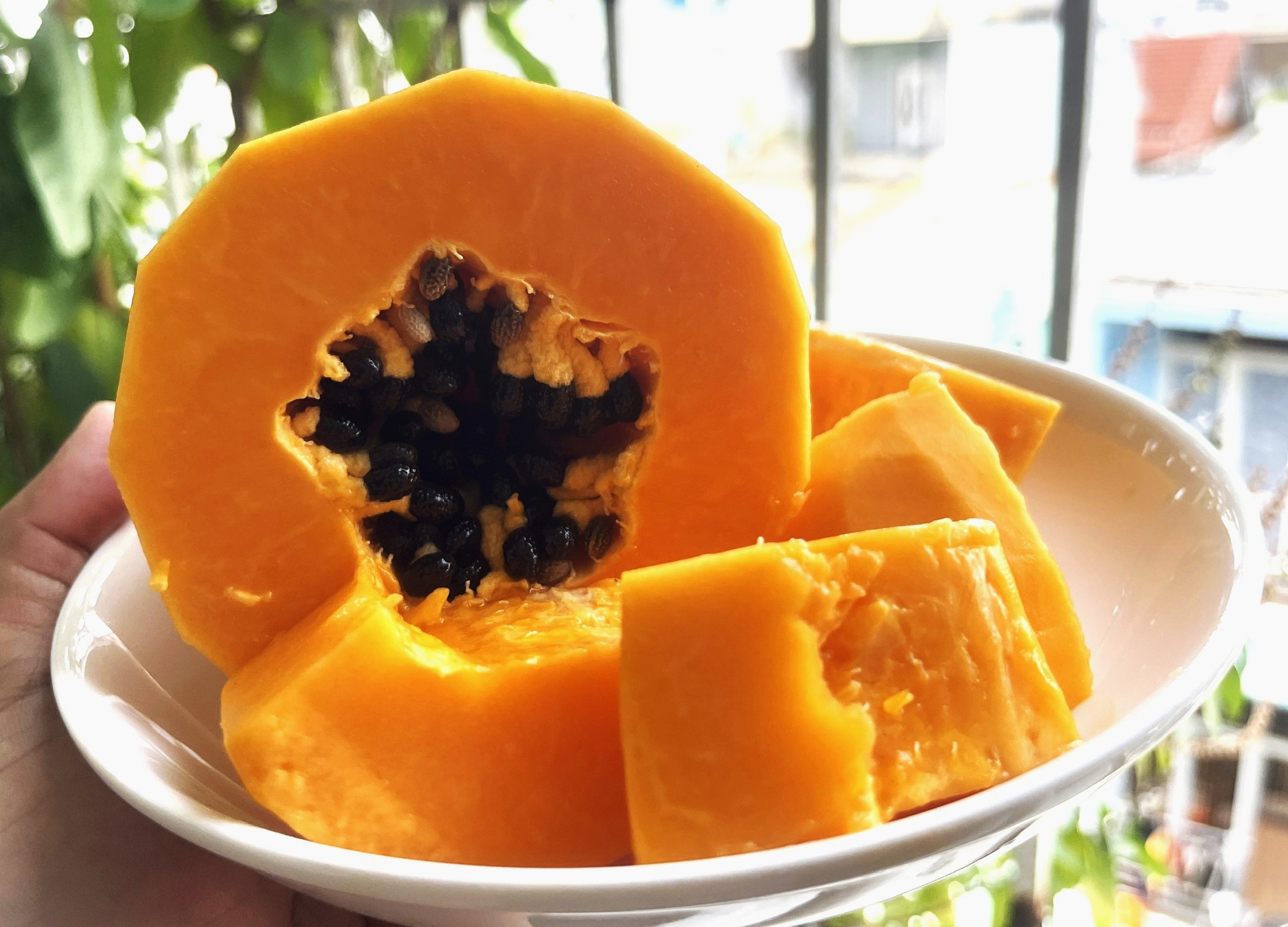 |
Vitamin C in papaya can protect skin and reduce signs of aging. Photo: Dinh Dieu |
Strawberries
Each 100 g of strawberries provides about 97 mg of vitamin C, along with potent antioxidants that help limit melanin formation, treat acne, improve skin, and slow the aging process. You can eat strawberries directly, mix them into yogurt, make smoothies, juice them, or combine them with other foods to enhance flavor.
Tomatoes
100 g of tomatoes contain 40 mg of vitamin C, along with beta-carotene, lycopene, and potent antioxidants. Tomatoes can be eaten raw, blended into smoothies, juiced, or used in salads to maximize vitamin C absorption.
Pomegranate
Pomegranates contain numerous vitamins, minerals, and antioxidants such as: polyphenols and punicalagins, which help reduce UV damage, inhibit melanocyte activity, decrease melanin production that causes darkening and hyperpigmentation, promote collagen production under the skin, improve radiance, and fade brown spots and dark scars. It is recommended to eat whole pomegranates or combine them with unsweetened yogurt, other vegetables, and fruits.
Supplementing with red pomegranate extract combined with cherry blossom, yellow lemon, mulberry leaves, grape seeds, and fern can help protect skin, fade hyperpigmentation, combat aging, and promote brighter, healthier skin.
Pharmacist Hoa notes that vitamin C does not replace sunscreen but serves as internal support for skin protection. In addition to incorporating vitamin C-rich foods into your daily diet, it is essential to combine this with direct skin protection, such as applying sunscreen, covering up thoroughly when outdoors, and limiting sun exposure during peak hours.
Dinh Dieu