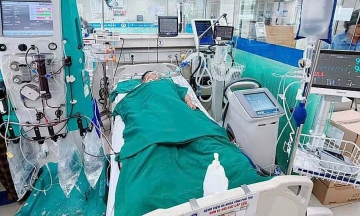
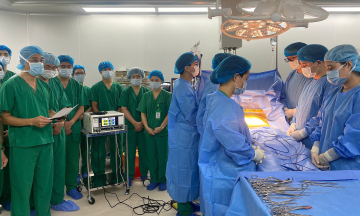
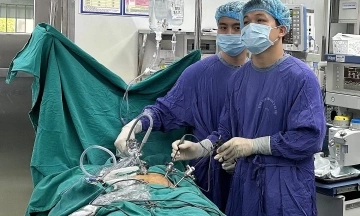
Of the 21 patients, 19 received organs from three brain-dead donors. These included five liver transplants (two for pediatric patients), two heart transplants, one lung transplant, ten kidney transplants, and one trachea transplant. Additionally, the remaining three patients underwent kidney transplants from living donors.
Doctor Duong Duc Hung, Director of Viet Duc Hospital, stated that "these 21 transplants mark a milestone for the large number of patients receiving transplants in a short time". He added that the hospital also successfully performed many complex transplant techniques during this period, involving various organs such as the heart, lung, trachea, liver, and kidney.
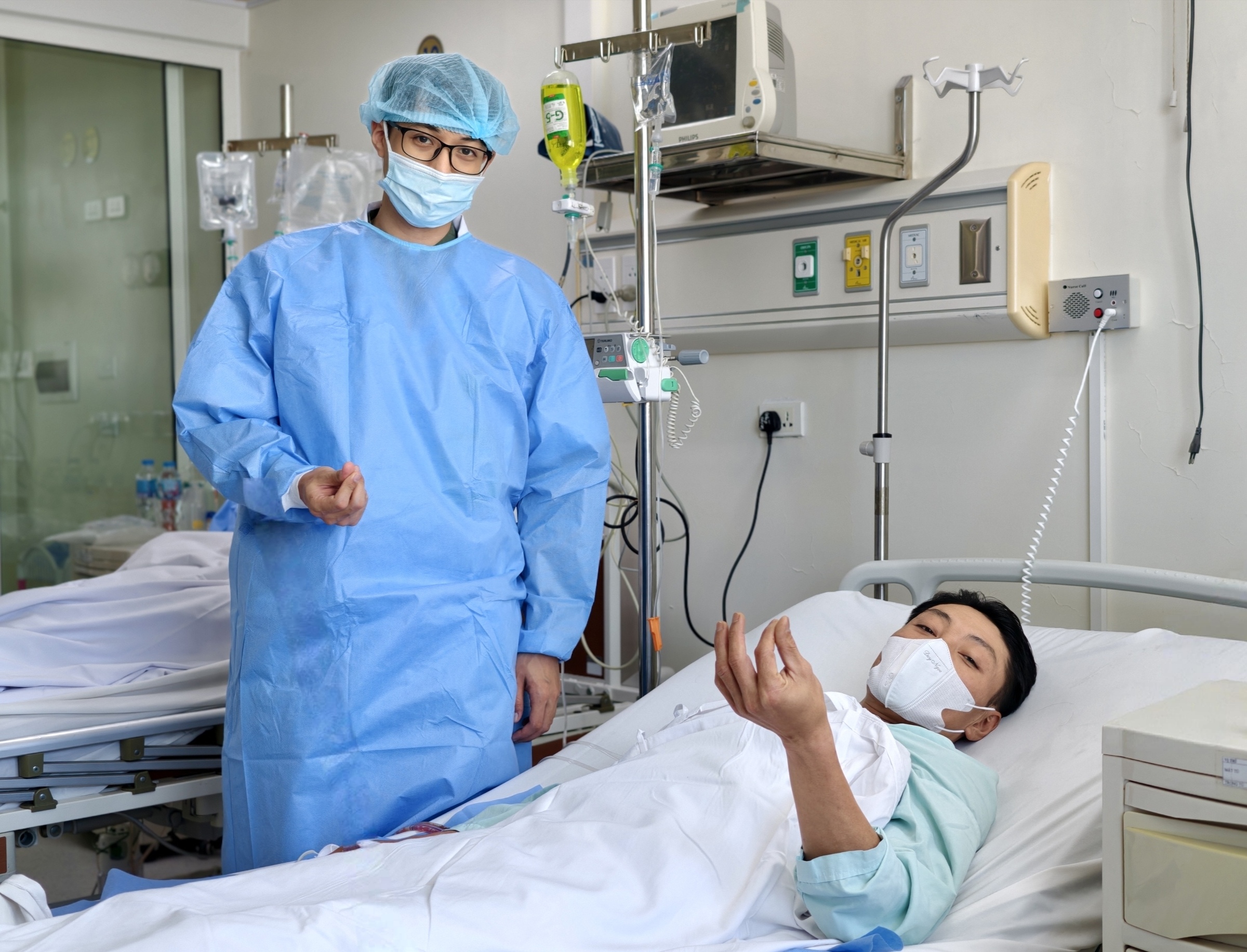 |
A patient receiving a kidney transplant from a brain-dead donor. Photo: Thao My
In lung transplantation, the hospital achieved a breakthrough by applying laryngeal mask anesthesia for the first time in Vietnam. This technique, a significant advancement in specialized organ transplantation and resuscitation anesthesia, helps limit airway invasion, reduces the risk of respiratory complications, and supports early post-transplant recovery.
Organ transplantation stands as one of humanity's most important medical achievements since the 20th century, often being the only life-saving measure for patients in end-stage organ failure. To date, Vietnam has performed nearly 10,000 transplants involving six types of human organs, with the country's medical teams achieving standards comparable to developed nations.
Currently, the Ministry of Health has licensed about 30 organ transplant centers nationwide.
Le Nga