Dr. Truong Tri Khoa, a specialist in internal medicine and musculoskeletal disorders at Tam Anh General Clinic, District 7, states that osteoporosis is a silent disease, mostly asymptomatic, and often only discovered once complications have arisen. Early detection of osteoporosis and identification of risk factors are crucial for timely disease management and prevention of complications, most notably fractures.
Dr. Khoa highlights several warning signs of osteoporosis:
Gradual height loss
Patients may lose 4 cm or more in height compared to their youth, or 2 cm compared to their most recent measurement. This occurs due to declining bone density, leading to vertebral compression fractures. This process is often subtle, so many people do not realize it until their height noticeably changes.
According to Dr. Khoa, about two-thirds of patients with vertebral fractures are only incidentally diagnosed via X-ray, without experiencing any symptoms. As osteoporosis progresses, vertebral compression becomes more severe, and the spine can no longer maintain its straight posture, potentially leading to kyphosis (hunchback).
Persistent back pain
Osteoporosis can cause small, unnoticed fractures in the spine. Over time, these minor injuries accumulate and cause prolonged, dull pain that gradually intensifies. Patients may mistake this for common muscle pain.
 |
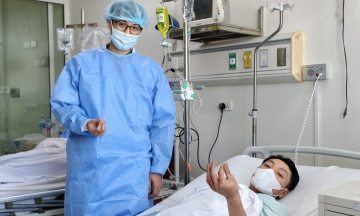
Dr. Khoa assesses a patient's joint function. *Photo: Tam Anh General Clinic, District 7* |
According to Dr. Khoa, osteoporosis cannot be fully cured. The treatment goals are to prevent fracture complications and improve bone mineral density, primarily through the following methods:
Daily lifestyle changes: Increase intake of calcium and vitamin D-rich foods to provide materials for bone regeneration and enhance bone strength. Patients should exercise regularly (under the supervision of a physical rehabilitation specialist) at a moderate intensity to improve bone strength, maintain muscle strength and function, stabilize posture, balance, and gait.
Medication: Treatment involves drugs that inhibit bone resorption or stimulate bone formation, administered orally, by injection, or infusion. Among these, anti-resorptive injections or infusions are more commonly used than oral medications due to their convenience. Patients only need to receive them once every 6 or 12 months, depending on the type of drug. This method provides continuous effectiveness, avoiding missed doses or improper medication use, especially for individuals with multiple underlying conditions who take various medications.
Elderly individuals or those at risk of osteoporosis, such as postmenopausal women, those with a history of heavy alcohol consumption and smoking, long-term corticosteroid use, or existing conditions affecting bone density, should undergo regular bone density measurements once every 1-2 years. Currently, Dexa scanning is a diagnostic method for osteoporosis that provides quick, high-quality, and clear bone images, according to Dr. Khoa.
Phi Hong
| Readers can submit questions about musculoskeletal diseases here for a doctor's response |