A sprain occurs when ligaments, the bands of tissue connecting bones in a joint, are overstretched, leading to a partial or complete tear. This injury often results from sudden trauma such as falls, slips, sports activities, occupational accidents, or the accumulation of repetitive microtrauma to the joint.
Doctor Nguyen Ngoc Tiep, a specialist in Orthopedic Trauma at Tam Anh General Hospital Hanoi, notes that certain joints in the body have a higher risk of sprains than others, necessitating proactive prevention and protection.
Wrist joint
In daily life and traffic accidents, people often instinctively brace themselves by putting their hands down. This can cause the wrist joint to move beyond its normal range of motion, overstretching the ligaments and resulting in a sprain. Excessive or sudden force applied to the wrist during sports like gym workouts, tennis, badminton, or pickleball can also overstretch ligaments and lead to sprains.
Ankle joint
The outer ligaments of the ankle are the most vulnerable, commonly injured when misstepping or twisting an ankle, particularly for women wearing high heels. Situations involving single-leg landings during sports also increase the risk of ankle twists and sprains, especially if the playing surface is uneven or the landing technique is poor.
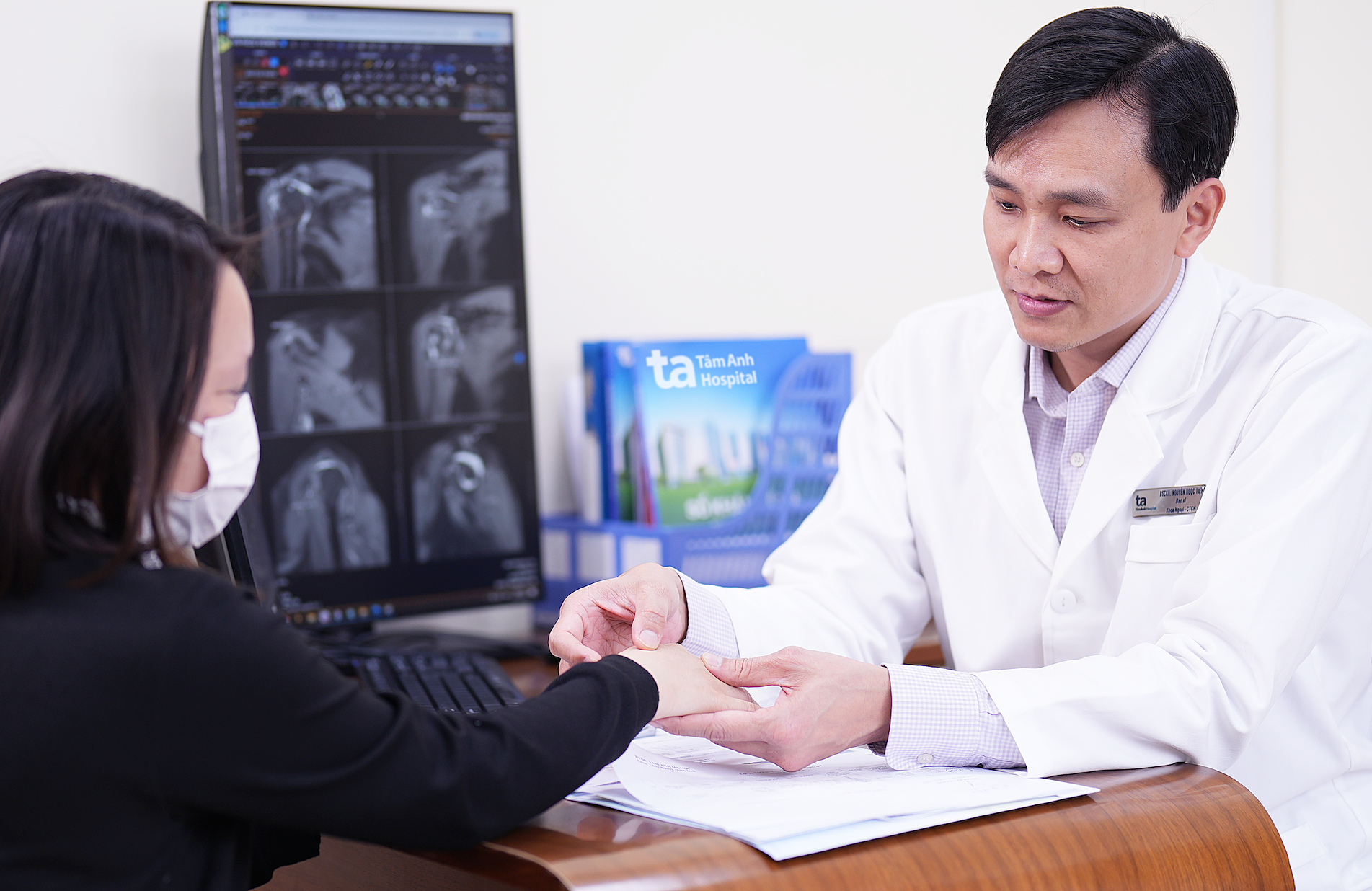 |
Doctor Tiep examines a patient with a sprain. Photo: Tam Anh Cau Giay General Clinic
Knee joint
Knee sprains are common among athletes participating in sports such as football, basketball, and running. Sudden twists, rapid changes in direction, or improper landings can cause the ligaments around the knee, especially the collateral ligaments, to overstretch, tear, or sustain severe damage.
Shoulder joint
This joint has a wide range of motion, making it susceptible to injury when lifting heavy objects, performing gym exercises with incorrect technique, or falling. Sprains occur when the shoulder ligaments are overstretched due to forceful rotation or sudden jerking movements.
Finger joints
The small ligaments in the finger and toe joints are easily overstretched by strong, unexpected impacts. Finger sprains often happen when fingers get caught in hard objects, heavy objects fall on the hand, or during sudden wrist twists while catching a ball. Toe sprains can occur when running, jumping, or kicking hard objects, causing the toes to bend or extend excessively.
According to Doctor Tiep, to prevent sprains in common joints during work and sports, it is essential to wear properly fitted shoes and appropriate protective gear such as ankle braces, knee pads, and gloves. Replace protective equipment when it becomes worn out or no longer effective.
Always warm up thoroughly for 5-10 minutes to prepare muscles, increase blood circulation, and improve ligament flexibility. Avoid twisting movements, improper landings, and sudden application of force. Exercise caution when moving on slippery or uneven surfaces, or during wet weather, as these conditions increase the risk of falls.
Regular exercise enhances overall health and physical fitness, strengthening muscles, ligaments, and the musculoskeletal system for better stability and load-bearing capacity. A balanced diet providing sufficient protein and essential nutrients supports strong tendons and muscles. Avoid intense activity or overexertion when feeling fatigued or exhausted. Adequate rest allows ligaments time to recover, increasing their stability and preventing tears.
Individuals experiencing signs of a sprain, such as pain, swelling, or bruising around a joint, should stop activity, rest, apply ice, compress the area, and elevate the injured limb above heart level. If symptoms do not improve, patients should seek early examination, diagnosis, and treatment at a specialized hospital.
Thanh Long
| Readers can submit musculoskeletal questions here for doctor consultation. |