During summer, hot weather encourages children to spend less time outdoors and more indoors. School holidays disrupt routines, often leading to late nights and prolonged use of phones or tablets.
According to Master, Doctor Phung Van Thanh of the High-tech Eye Center, Tam Anh General Hospital Hanoi, myopia is common in children and often progresses rapidly during developmental stages. Beyond genetics, factors such as: prolonged near vision, insufficient natural light exposure, and irregular daily habits can accelerate myopia progression, particularly during the summer months.
Doctor Thanh highlights several common summer habits that can exacerbate myopia.
Watching too much TV and using phones excessively
During summer, many children spend significant time entertaining themselves with televisions, phones, or tablets. Prolonged screen viewing forces the eyes into continuous adjustment and reduces the normal blink rate. This not only causes eye fatigue but also accelerates myopia progression if not managed effectively. Parents should restrict children's electronic device usage, ideally to no more than one to two hours daily depending on age. They should also remind children to maintain a proper viewing distance and ensure their eyes rest for 20 minutes after every screen session.
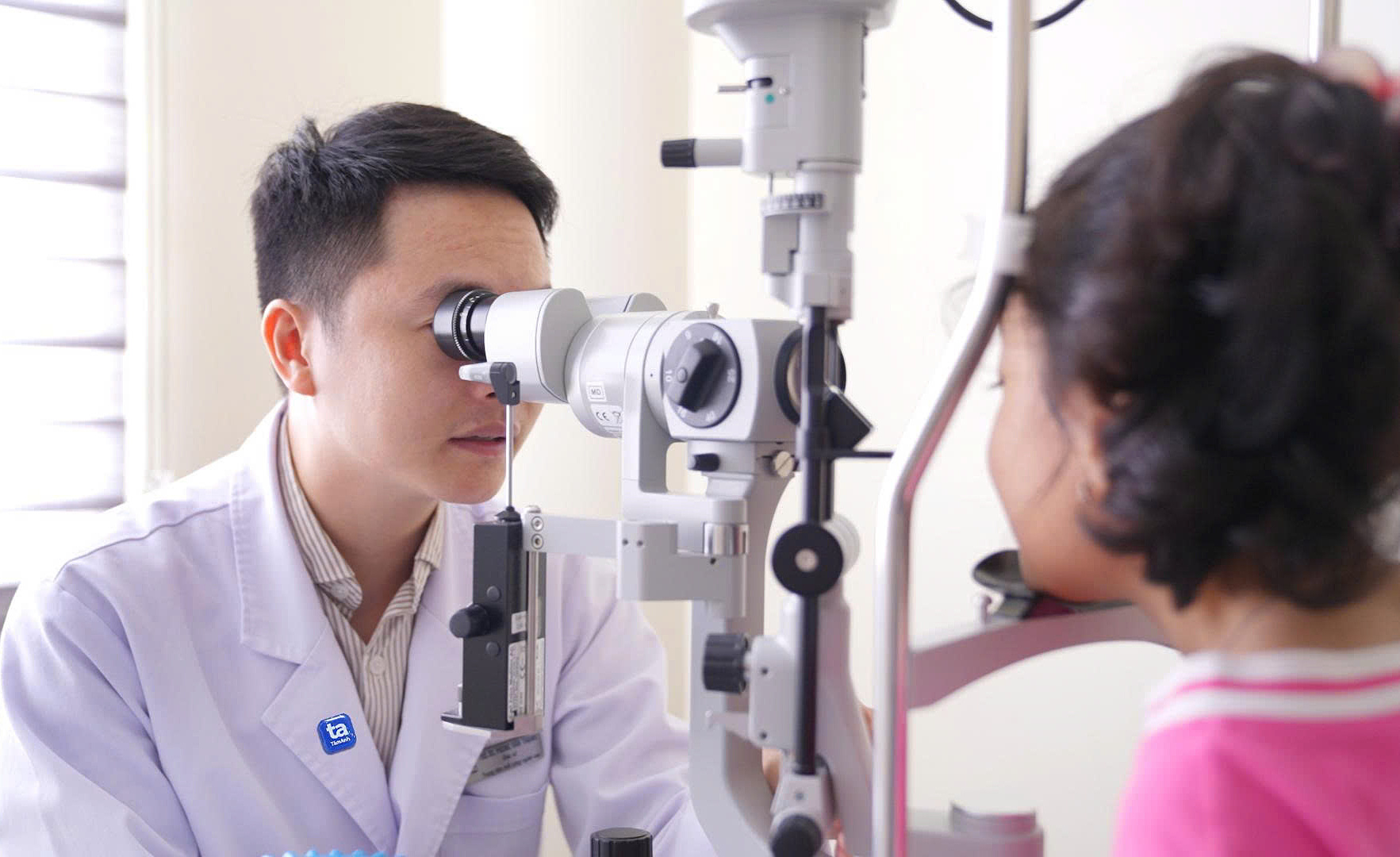 |
Doctor Thanh examines a young girl's eyes. Photo: Tam Anh General Hospital |
Limited outdoor activities
Natural light is a crucial factor in managing myopia progression in children. Insufficient exposure to outdoor light increases the risk of worsening myopia. Experts advise children to engage in outdoor activities for about one to two hours daily to support vision protection.
Late bedtimes
During summer, many children tend to stay up late, wake up late, or use electronic devices before bed. Insufficient or irregular sleep deprives eyes of adequate rest, leading to fatigue and reduced accommodative ability. Prolonged, this can impair visual quality and contribute to faster myopia progression.
Progressive myopia not only impacts daily life but also elevates the risk of eye complications if left unmanaged. Doctor Thanh advises parents to help children maintain healthy habits: limiting electronic device use, increasing outdoor activities, and ensuring adequate sleep. If children exhibit signs such as: squinting, blurred vision, leaning close while reading, or complaining of eye fatigue, they should promptly see an eye specialist for examination and advice to prevent long-term vision impairment.
Thu Giang