Endocrine test results for Ms. Minh revealed prolactin levels, a hormone associated with milk production, to be 8 times higher than normal. Magnetic resonance imaging (MRI) further confirmed a pituitary tumor measuring 12x10x7 mm.
Dr. Phan Ngoc Quy, a specialist at the Center for Reproductive Assistance, Tam Anh General Hospital Hanoi (IVF Tam Anh), explained that the pituitary gland is a small endocrine organ at the skull's base. It regulates crucial hormones, including reproductive hormones. A tumor, typically one that secretes prolactin, can disrupt pituitary function, leading to uncontrolled high prolactin levels.
This condition caused Ms. Minh to experience abnormal nipple discharge and inhibited her reproductive endocrine axis. It led to ovulation disorders, reduced egg quality, and impaired conception. This likely contributed to her two failed intrauterine insemination (IUI) attempts.
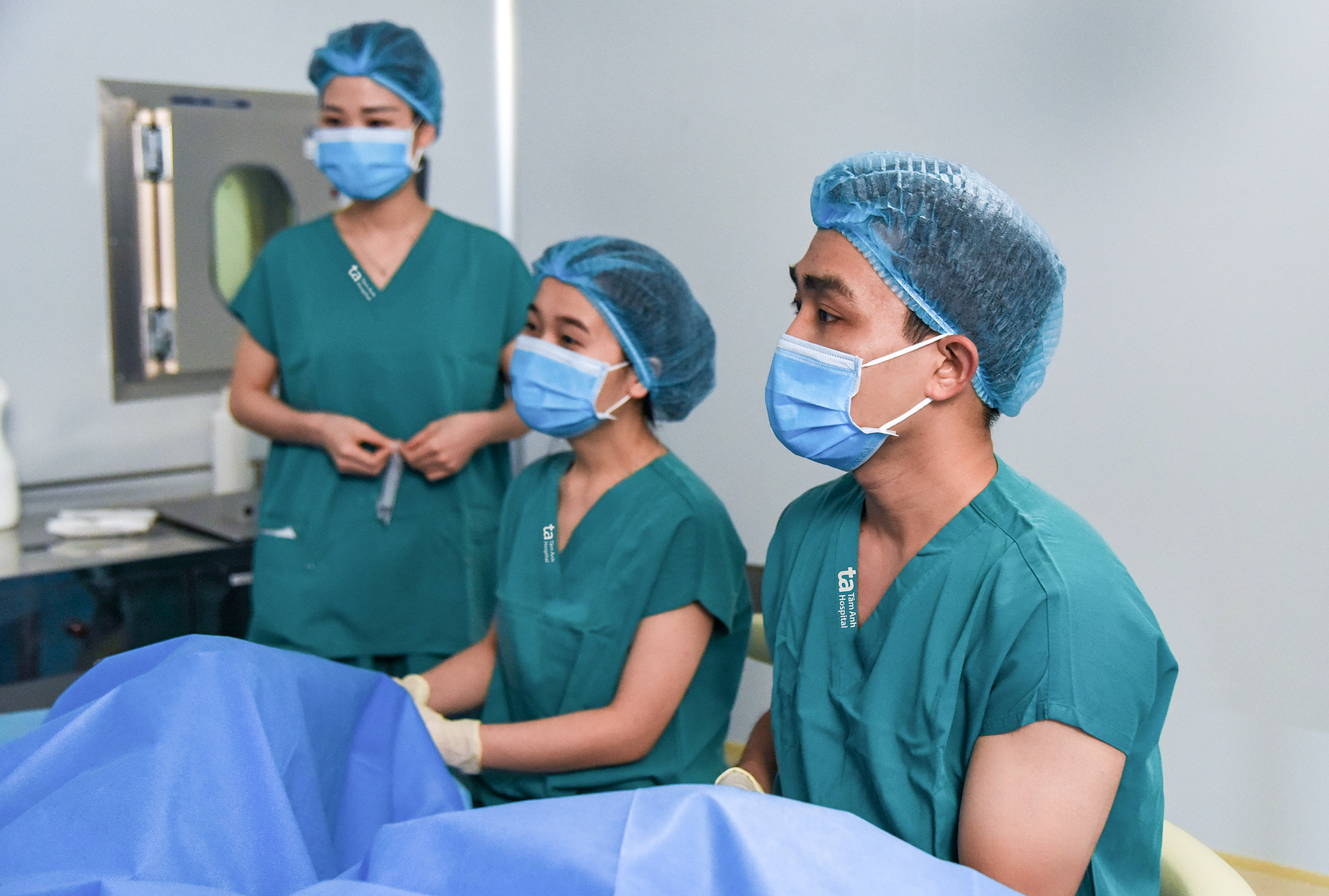 |
Dr. Quy performing egg retrieval for the patient. *Photo: Tam Anh General Hospital* |
An endocrinologist treated Ms. Minh with medication for 4 years, with regular follow-ups to monitor tumor size and hormone levels. Following treatment, her prolactin levels dropped to a safe range, the tumor shrank, and her health stabilized. Despite this, the couple tried to conceive naturally for an additional 3 years without success.
Dr. Quy then recommended in vitro fertilization (IVF) to Ms. Minh to expedite pregnancy and enhance success rates. She underwent ovarian stimulation, leading to the retrieval of 17 mature oocytes. These were fertilized using intracytoplasmic sperm injection. The resulting embryos were cultured in a time-lapse incubator, which featured continuous camera monitoring and artificial intelligence software, yielding 11 high-quality embryos.
Ms. Minh conceived successfully on her first embryo transfer, delivering a healthy baby girl at 39 weeks.
According to Dr. Quy, numerous endocrine conditions can subtly impair fertility. Patients with pituitary tumors might experience symptoms like abnormal nipple discharge, menstrual irregularities, persistent headaches, or vision changes.
For infertility linked to endocrine disease, stabilizing hormone levels is crucial before implementing assisted reproductive techniques. This approach enhances success rates and minimizes the risk of pregnancy complications.
Couples who have been trying to conceive for one year (or 6 months if the female partner is over 35) without using contraception should seek early reproductive health evaluations to identify potential causes and receive timely treatment.
Van Anh
*Patient's name has been changed