Office workers often sit for 7-8 hours daily, which constitutes a significant portion of their workday. Habits during this time can affect both physical and mental health. Common mistakes are listed below.
Eating too much and skipping lunch breaks
The lunch break is a time for the body and brain to recover after many hours of work. If individuals rush through eating to continue working or engaging in other activities, their bodies will not have enough time to relax.
According to Everyday Health, the habit of eating through breaks without resting can affect digestive system function, increasing the risk of bloating, indigestion, fatigue, and reduced nutrient absorption. Daily, one should allocate 20-30 minutes for lunch, avoiding eating while working to allow the body to rest and the digestive system to function more efficiently.
Prolonged sitting
Sitting for over 8 hours daily, especially frequently crossing legs or maintaining a single posture, can reduce blood flow back to the heart, impacting circulation and increasing the risk of varicose veins. Prolonged sedentary habits are also linked to metabolic disorders such as cardiovascular disease and type 2 diabetes.
Slouching, excessive leaning, or unsuitable desk and chair arrangements place greater pressure on the spine, particularly the lower back and neck, easily causing aches, pains, and musculoskeletal disorders. Additionally, continuously typing or using a mouse for many hours keeps muscles in the neck, shoulders, lower back, and wrists in a tense state, increasing soreness and fatigue.
To mitigate these harms, one should stand and move every 30-60 minutes, walk around, or perform light stretching exercises. While working, maintain a straight back, relaxed shoulders, and use a support pillow for spinal alignment. Also, stretch arms, rotate wrists, and relax shoulders for about 10 seconds before continuing to type to reduce muscle tension and prevent aches.
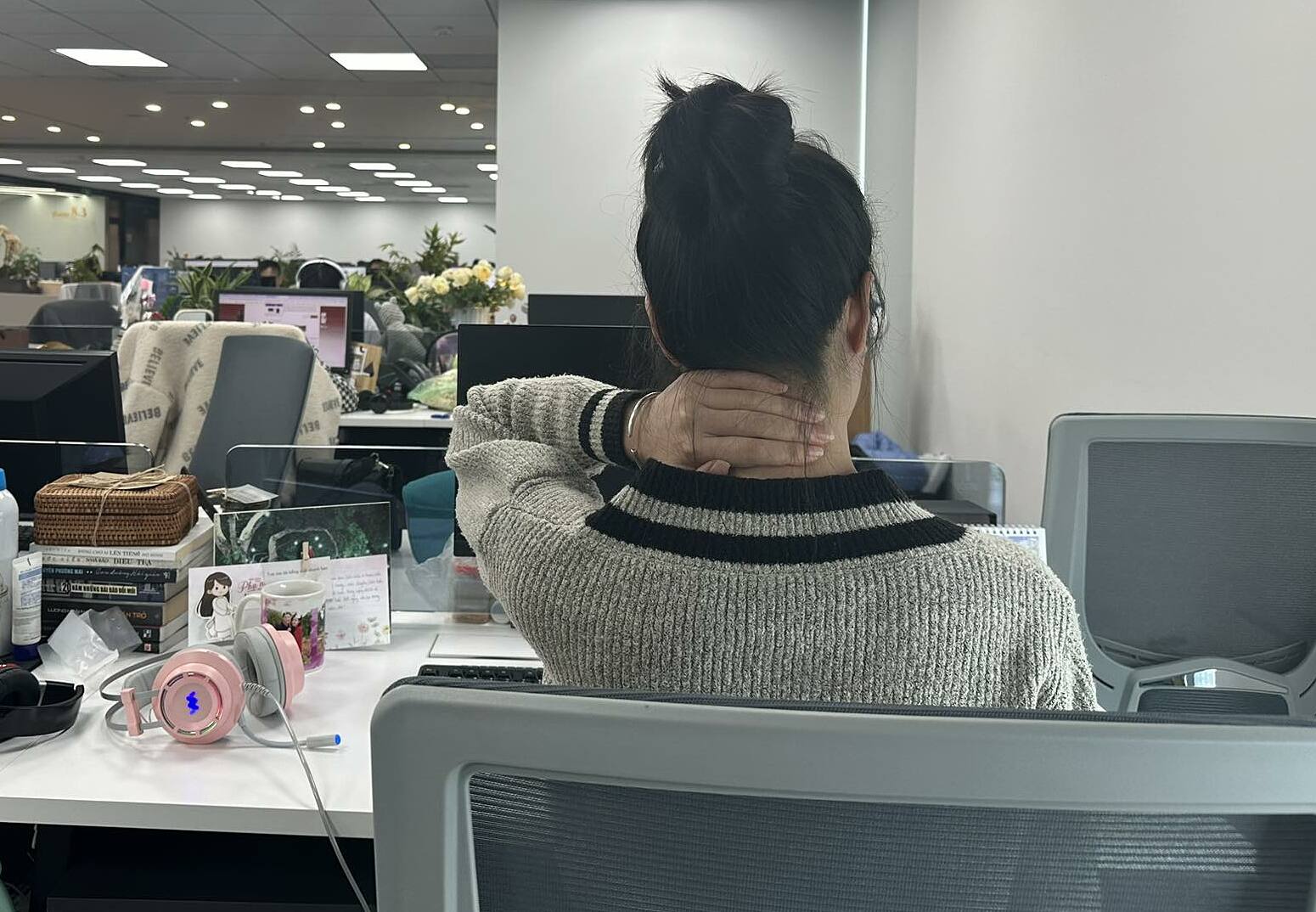 |
Sitting for too long is detrimental to health. Photo: Anh Chi |
Prolonged screen time
Continuous, long-term use of devices like computers or phones can lead to eye strain due to blue light exposure. Over time, eye function declines, causing dry eyes, fatigue, and blurred vision. Individuals may also experience headaches from stress, tiredness, and difficulty concentrating in the afternoon.
To limit this, office workers should look out a window or at a distant area (at least 6 m away) every 20 minutes. Reduce screen glare and adjust the monitor to eye level.
Forgetting to drink water
When concentrating on work for extended periods, the nervous system often ignores internal signals like thirst. Over time, this disconnect between the nervous system and body becomes a poor habit, contributing to unexplained fatigue, mood changes, and cognitive decline.
According to Very Well Health, insufficient water intake is a common cause of headaches and constipation. Dehydration also increases cravings, leading to overeating and excess calories. Placing a water bottle in sight and taking frequent small sips helps the nervous system re-recognize physical signals like thirst.
Snacking
The habit of snacking can lead to excessive daily sugar intake. Snacks high in sugar or salt can increase inflammation, promote cravings for calorie-rich foods, and result in weight gain and obesity.
Anh Chi (Compiled)