Beyond relaxation, play can stimulate neural activity and support memory. While outdoor activities primarily foster physical development, indoor games contribute to long-term brain health.
The imitation game
Imitation helps children develop motor coordination. By mimicking complex movements, children practice concentration and stimulate neural activity. In this game, one person performs slow, somewhat challenging actions, while the other imitates them like a mirror. This engaging activity hones observation, attention, and focus, all crucial for a child's brain development.
The whispering game
Participating in the "whispering game" trains children's listening and information recall skills. Passing a story through several people often results in a final message different from the original, creating a humorous element. This game encourages intentional listening, memory, and clear communication, all vital for brain development.
The tray game
A tray holding random objects is displayed for about 30 seconds. After covering the tray, one or more objects are removed, and children must identify the missing item. This simple game can enhance children's short-term memory, pattern recognition, and attention to detail.
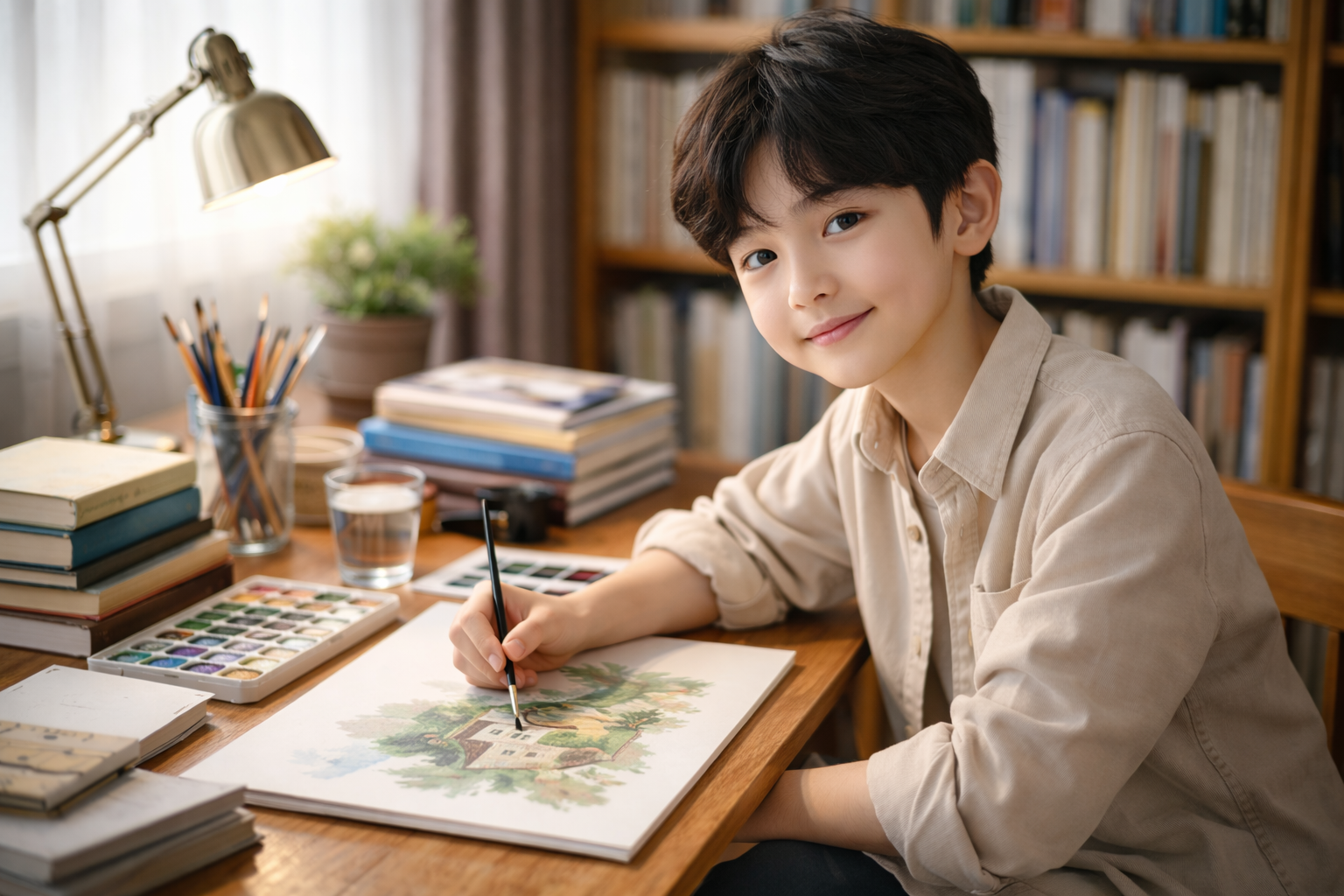 |
Drawing helps children develop their brains. Image created by AI. |
Reverse storytelling
Recounting a story in the usual sequence primarily involves reproducing information. In contrast, telling a story in reverse requires children to recall and rearrange events in inverted order, a more complex cognitive skill.
When parents tell a story and then ask children to retell it from the end to the beginning, children must remember the events and reorder them inversely. This process forces the brain to think more flexibly, thereby supporting memory, understanding chronological order, and fostering flexible thinking.
Blindfolded building
One child is blindfolded while another guides them to construct a specific shape using building blocks. This interactive exchange encourages careful listening, clear communication, and improved short-term memory.
Imagine and draw from memory
Drawing helps children develop their creativity. When children observe an object or picture for a short time and then draw it from memory, this activity trains visual recall and attention to detail. Through this process, children can gradually recognize patterns, shapes, and proportions – skills useful beyond the realm of art.
By Le Nguyen (According to The Times of India)