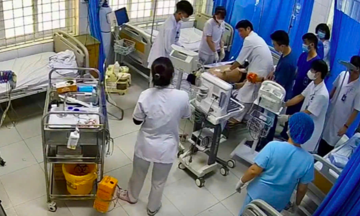
On the afternoon of 6/1/2025, in the emergency department hallway of a major hospital in Ha Noi, 22-year-old Le Thi Linh finished her training shift. The young woman reached to put her phone into her scrub pocket, a small, routine gesture that would be her last independent action for weeks. In an instant, she felt dizzy, clutched her colleague's shoulder, and collapsed into a deep coma in the very place where she normally fought for the lives of others.
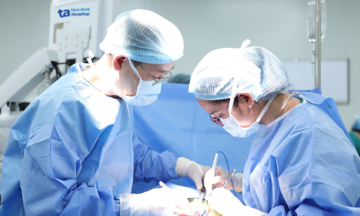
Imaging results revealed a ruptured arteriovenous malformation (AVM), causing massive bleeding and intracranial pressure. To save her fragile life, doctors performed a craniotomy to remove the hematoma. A section of Le Thi Linh's skull was removed and cryopreserved, marking the beginning of a painful journey to reclaim her life.
Her recovery spanned nearly five months, involving transfers between hospitals from Ha Noi to Thanh Hoa, marked by persistent infections and fevers. On 8/5/2025, Le Thi Linh underwent surgery to reattach the removed skull bone.
 |
Le Thi Linh after two months battling her illness. *Photo: Provided by subject*
Before the incident, Le Thi Linh admitted to an unhealthy lifestyle. During her student years, she often showered late and stayed up late. She cooked lunch but ate carelessly in the evenings, opting for "random snacks" due to working part-time from afternoon until late at night. Despite her family having no medical history, and her own preference for bland, low-fat food and regular walking, work pressure and the mindset of "being young means working hard" led her to ignore her body's signals.
"I thought stress was inherent in all professions. Whether studying or working, there was stress, so I didn't worry about it," Le Thi Linh reflected on that period.
Le Thi Linh's case is not isolated; it reflects an alarming epidemiological trend. The Lancet medical journal published research showing a significant global increase in stroke rates among people under 45. The World Health Organization (WHO) also notes that this age group now accounts for about 15% of all cases. In Vietnam, this figure ranges from 5-7%. Master of Science, Doctor Hoang Tien Trong Nghia, Head of Neurology at Military Hospital 175, warns that the root cause stems from urbanized lifestyles, including prolonged stress and complacency towards asymptomatic vascular malformations.
For 14 days in the intensive care unit (ICU), Le Thi Linh's small body was dwarfed by a maze of machines and IV lines, sustaining life at a cost of up to 30 million Vietnamese dong per day. In her hometown of Thanh Hoa, her parents sold all their cattle and chickens, and mortgaged their land. Her two older sisters, also working in medicine and pharmaceuticals, put their careers on hold, even quitting their jobs, to be at their sister's bedside.
After surgery, Le Thi Linh began tearful days of rehabilitation. Once a quick, active young woman, she now had to relearn the smallest things like breathing, eating, speaking, walking, and even numbers and letters. She continues this process today.
Dr. Nguyen Thi Dung, Head of Physical Therapy and Rehabilitation at Viet Phap Ha Noi Hospital, stated that the cost of stroke is often permanent disability. Medical data indicates that only about 25-30% of stroke patients can walk and care for themselves independently; the remainder face a dependent life, with 15-25% requiring full assistance from others. Le Thi Linh fell into the less fortunate majority, as instinctive skills like swallowing, speaking, and walking had to be relearned from scratch.
The devastation of stroke extends beyond the physical. For a young person in the prime of life, losing autonomy and social standing was a terrifying psychological shock. Le Thi Linh admitted she fell into despair, seeing herself as a burden to her family.
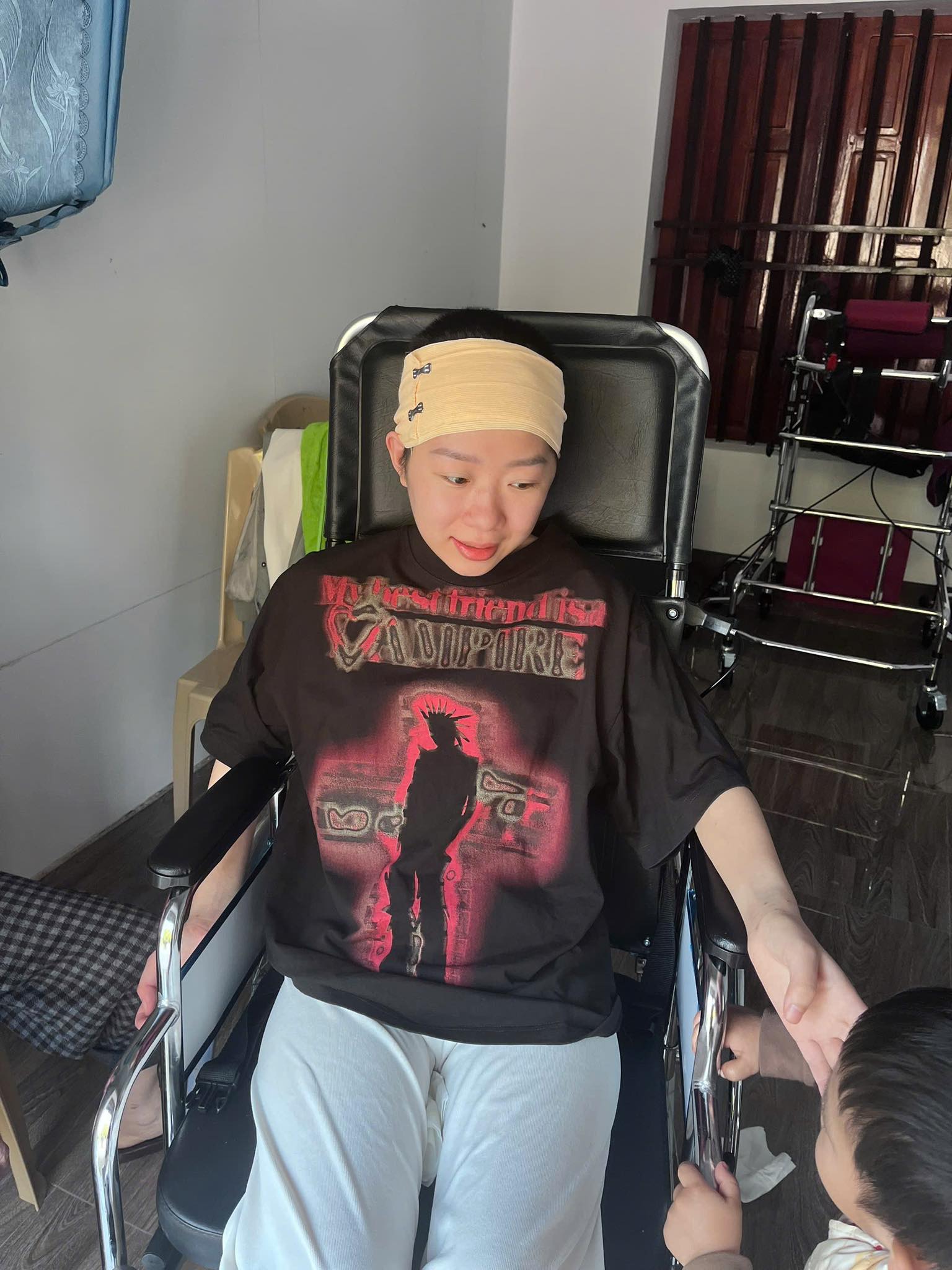
 |
Le Thi Linh currently practices speaking, writing, and restarting everything. *Photo: Provided by subject*
"I felt a pang of sadness, you know, 22 – the prime of my life, yet I was like this. There were times I was so upset I couldn't accept the complications; all I could do was cry," Le Thi Linh shared. However, seeing the sacrifices of her parents and two sisters, who diligently designed exercises and bought equipment for her, Le Thi Linh told herself she had to get up.
After facing death, Le Thi Linh has changed completely. She abandoned bad habits, maintains regular exercise, and now listens to her body. Her social circle was also "filtered", helping her realize who truly stood by her in adversity.
"Stroke spares no one, and health is not eternal. Do not get caught up chasing deadlines or social events and ignore your body's cries for help. Jobs can be replaced, but life cannot," the nurse confided.
 |
Le Thi Linh before the incident. *Photo: Provided by subject*
My Y