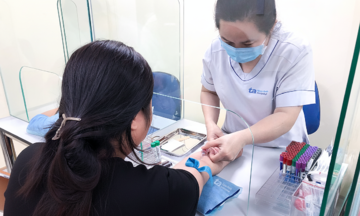
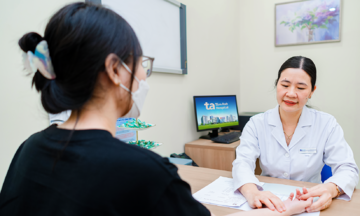
The mother of two mentioned her daily habit of scrolling social media for news. One day, she coincidentally watched a video where runner-up Thu Huong shared her cervical cancer treatment journey and how the ordeal changed her life. After watching, Thao's perspective shifted entirely from someone indifferent to health issues. She proactively sought information through official channels, read more news, and learned that high-risk HPV strains are proven to cause most cervical cancer cases. Thao decided to undergo gynecological examinations and cervical cancer screening to protect herself.
"For the first time, I felt afraid of illness, realizing this disease could affect anyone", she said.
According to Digital Vietnam 2024, Vietnam has about 72,7 million social media users, placing the country among the top 10 globally for social media penetration. This highlights social media as a widespread and direct information access channel for Vietnamese citizens. By 2025, a Digital Vietnam report indicates that 95.6% of Vietnam's population aged 18–64 uses the internet, spending an average of 6 hours 05 minutes online daily. Social media usage reaches 97.5%, trailing only mobile internet (99%).
Given this reality, many programs and campaigns to raise awareness about sexual health have been launched across multiple channels, including YouTube and TikTok, facilitating easy access to a large number of social media users.
 |
Many people access health information via social media. Photo: HPV Vietnam |
Minh Quan, 33, a media professional in TP HCM, had never heard of HPV until he watched a TV commercial featuring KOL Khoai Lang Thang on YouTube, which mentioned the risk of contracting the virus for both sexes. Quan learned that HPV is commonly transmitted through sexual contact. Although most HPV infections clear up on their own, persistent infection can lead to related diseases, pre-cancers, and cancers in both men and women, prompting him to proactively seek protection methods.
"Previously, I never thought men could get HPV. When I read that men are also at risk of health impacts from this virus, including cancer, I researched to protect myself", Quan stated.
Stories like Quan's are no longer rare. With the development of media and social networks, topics once considered private, such as safe sex and HPV prevention, are now discussed more openly and scientifically.
This shift in disease prevention awareness and proactive learning about sexually transmitted infections also stems from an increasing demand for healthcare. PwC Vietnam's 2025 Consumer Survey reveals that Vietnamese people are increasingly prioritizing health. "Health and quality of life" is a high priority, emphasizing a proactive approach to health rather than complacency. Some studies indicate that Vietnamese people define "living healthy" not merely as "absence of disease", but as the ability to "live independently, do meaningful things", balancing physical, mental, and financial well-being.
This is a positive signal, reflecting a change in community awareness about HPV. Proactively protecting reproductive health not only helps reduce the risk of virus-related diseases but also fosters long-term health self-care habits.
Yen Chi
Be proactive, not complacent, with your health and the health of your loved ones. Start with HPV protection to help limit health risks. Consult a healthcare professional immediately and learn more about HPV at hpv.vn.