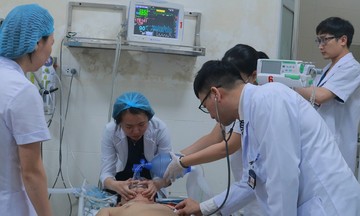
On 31/12, a representative from E Hospital reported that a patient was rushed to the emergency room after showing abnormal health signs on the pickleball court. The man collapsed from sudden cardiac arrest just as he reached the hospital entrance. The on-duty team activated a "red alert" system, performing cardiopulmonary resuscitation (CPR) and continuous defibrillation. After two electrical shocks, his heart resumed beating, and the patient gradually regained consciousness.
Electrocardiogram (ECG) and angiography results revealed the patient suffered an acute myocardial infarction, with a complete occlusion of the anterior interventricular artery caused by a blood clot. Doctors performed an intervention to remove the thrombus, reopen the blocked artery, and implant a drug-eluting stent. Financial procedures were bypassed as the patient had no money.
Following the intervention, the patient's chest pain subsided, his hemodynamics stabilized, and he could walk gently. He is expected to be discharged in a few days.
Doctor Nguyen Xuan Duong, from the Adult Cardiology Department at the Cardiac Center, stated that the hospital has recently treated numerous cases of sudden death, stroke, or injury sustained while playing pickleball. The high-speed nature of pickleball matches, involving sudden changes in direction, can force the heart to work intensely for short durations. This intense exertion can trigger myocardial infarction in individuals with pre-existing risk factors.
Sudden cardiac arrest linked to sports activities can affect patients with pre-existing cardiovascular conditions, whether known or undiagnosed. In some instances, individuals without heart disease may experience sudden death due to ventricular fibrillation, often triggered by a strong impact to the chest area. To prevent such incidents, a clear strategy is essential:
* Regular health check-ups for cardiovascular disease screening.* Developing exercise plans and intensity levels appropriate for individual health conditions, avoiding overexertion.* Adopting a healthy lifestyle, managing stress, and maintaining a balanced diet.
With the sudden shift to colder weather, it is crucial for individuals, especially the elderly and those with underlying conditions like hypertension and diabetes, to consistently take prescribed medications. They should consult medical specialists if they experience any unusual health symptoms. Enhancing community awareness and first aid skills for stroke and myocardial infarction is vital to reduce the risk of pre-hospital mortality.
If symptoms arise such as a sharp pain in the left chest (potentially spreading to the left shoulder or arm), accompanied by shortness of breath and sweating that does not subside with rest, individuals should immediately seek medical attention at the nearest healthcare facility.
*Thuy Quynh*