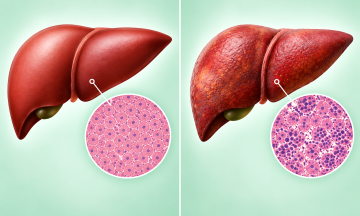
Elevated liver enzymes occur when liver enzymes, primarily ALT and AST, are higher than normal during a blood test. When liver cells are inflamed or damaged, these enzymes leak into the bloodstream in greater quantities, causing enzyme levels to rise.
Master, Doctor Dinh Thi Huong from the Department of Gastroenterology - Hepatobiliary - Pancreas at Tam Anh General Hospital Hanoi, states that elevated liver enzymes are not a disease but a sign that the liver or other organs in the body are damaged. Conditions that can affect liver enzymes include:
Fatty liver related to metabolic disorders
Fatty liver causes liver inflammation and damage, leading to elevated liver enzymes. This condition is common in individuals who are overweight, obese, have type 2 diabetes, dyslipidemia, or hypertension. Without managing weight and metabolic disorders, fatty liver can progress to fatty liver hepatitis and cirrhosis.
Viral hepatitis
Elevated liver enzymes can indicate hepatitis caused by various viruses, including hepatitis A, B, C, D, or E. However, for patients who incidentally discover elevated liver enzymes during a health check, doctors usually prioritize screening for hepatitis B and C first. These two diseases can progress silently for many years without causing obvious symptoms. In contrast, hepatitis A and E are typically acute illnesses with clear manifestations. Hepatitis D only occurs in individuals already infected with the hepatitis B virus.
 |
Blood tests help assess liver enzyme levels. Illustration: Tam Anh General Hospital.
Alcohol-related liver disease
According to Doctor Huong, ethanol in alcohol and substances produced during its metabolism can damage liver cells, causing liver enzymes to increase in the blood.
In the early stages, liver damage can often be reversed if alcohol consumption is completely stopped. However, prolonged alcohol consumption can lead to the progression from alcoholic fatty liver to alcoholic hepatitis, cirrhosis, and an increased risk of liver failure and liver cancer.
Biliary tract diseases
Biliary tract diseases such as gallstones, cholangitis, strictures or blockages of the bile ducts, and biliary tumors can also elevate liver enzymes. When bile flow is obstructed, liver cells can be damaged, and liver enzyme levels like GGT and alkaline phosphatase (ALP) typically increase.
Other accompanying symptoms include: jaundice, dark urine, pale stools, itching, abdominal pain, and fever. Ultrasound, CT, or MRI of the bile ducts are usually ordered to determine the cause.
Other medical conditions
Beyond the aforementioned causes, elevated liver enzymes can also occur in less common conditions such as autoimmune hepatitis, hemochromatosis (iron overload disorder), Wilson's disease (copper metabolism disorder), severe infections, and malaria. In some cases, elevated liver enzymes are also associated with extrahepatic conditions like muscle damage, myocardial infarction, or certain thyroid disorders.
In addition to pathological causes, elevated liver enzymes can appear after high-intensity exercise, muscle injury, or due to certain medications such as painkillers, antibiotics, anticonvulsants, or traditional Vietnamese herbal medicines and traditional Chinese medicines of unknown origin.
According to Doctor Huong, some individuals discover mildly elevated liver enzymes during routine health check-ups, but a comprehensive evaluation reveals no chronic liver disease. In such cases, monitoring or lifestyle adjustments are sufficient. Patients should not self-medicate with products advertised as "cooling the liver" or "detoxifying the liver" to lower enzyme levels without a doctor's recommendation. If liver enzymes are persistently elevated or significantly higher than the normal range, accompanied by jaundice, yellow eyes, right upper quadrant pain, or weight loss, a medical examination is necessary for a doctor to identify the cause and provide timely treatment, helping to prevent complications.
Ly Nguyen
| Readers can submit questions about digestive diseases here for doctors to answer. |