The eardrum is a thin, oval-shaped membrane separating the outer and middle ear. It serves as both a receptor for sound waves, enabling hearing, and a barrier that prevents dirt, water, and bacteria from entering deeper into the ear.
Dr. Truong Minh Thinh, a Master, Doctor, and First Degree Specialist at the Ear, Nose, and Throat Center, Tam Anh General Hospital, TP HCM, states that a perforated eardrum accompanied by infection causes the middle ear to lose its protective layer. This can lead to hearing impairment and dangerous complications.
Eardrum perforations stem from various causes, including trauma, foreign objects entering the ear, or cleaning ears with sharp objects. Untreated acute purulent otitis media, which leads to pus accumulation and increased pressure, can also result in a perforated eardrum. Additionally, sudden pressure changes during deep diving or flying, and exposure to excessively loud noise at close range, can all cause eardrum perforations.
Sudden pain typically occurs at the moment of eardrum perforation. Afterward, the pain may subside, giving way to tinnitus, hearing impairment, and a feeling of fullness in the ear. Some individuals may experience clear or bloody ear discharge. If sudden ear pain is accompanied by fever and progressively worsens, medical attention is advised, as it could indicate a severe eardrum perforation.
Some eardrum perforations can heal naturally within a few weeks with proper care and management, such as keeping the ear dry, avoiding water, and preventing accompanying infection. However, large perforations, or those caused by prolonged or recurrent inflammation, are often difficult to heal on their own.
Prolonged eardrum perforation leads to hearing loss due to ineffective sound transmission to the inner ear. If the perforation is large or accompanied by infection, hearing impairment can be more pronounced and may easily lead to chronic otitis media. Extended inflammation affects the ossicular chain in the middle ear, causing progressively worsening hearing loss.
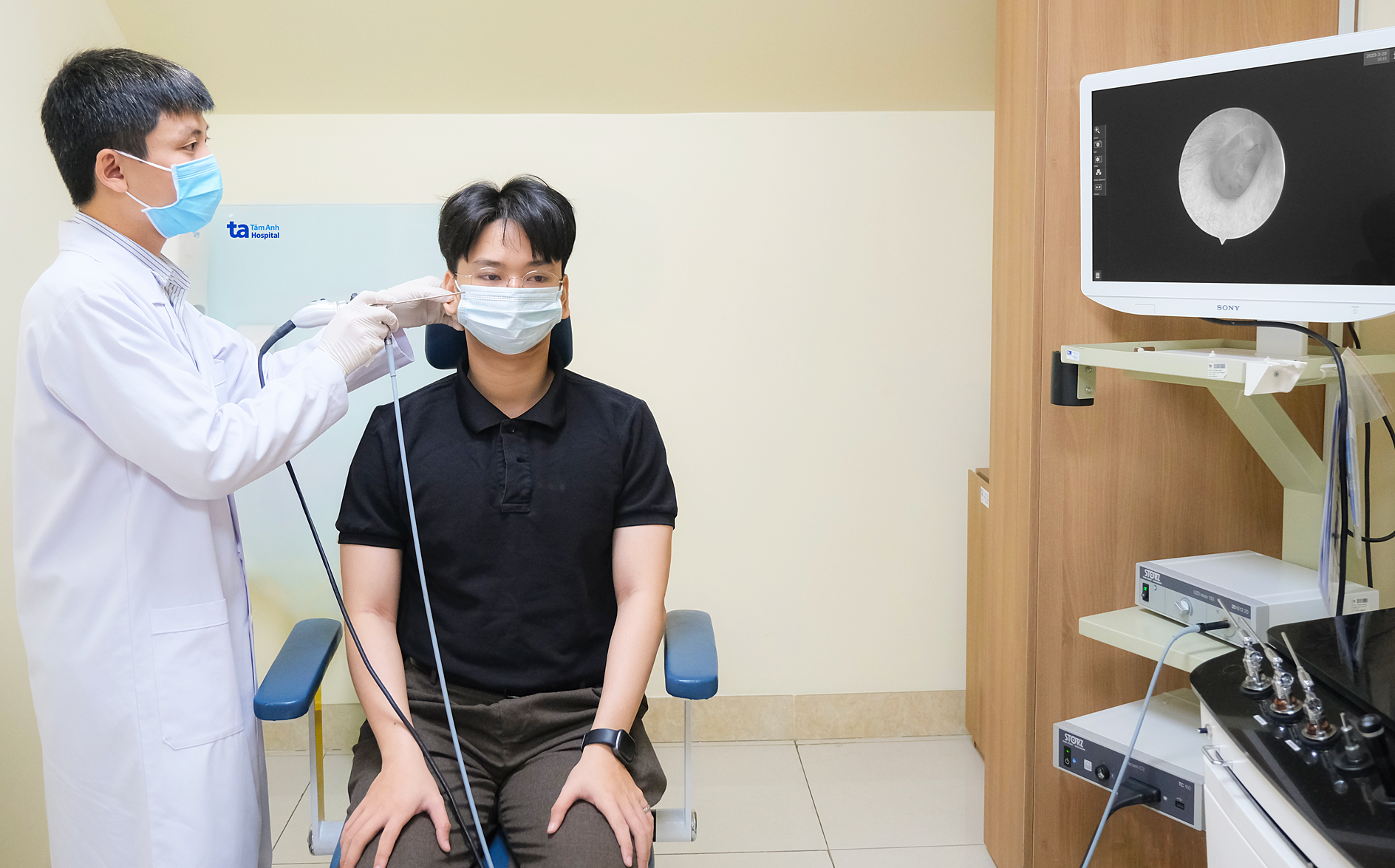 |
Doctor Thinh is performing an ear endoscopy on a patient. *Photo: Tam Anh General Hospital* |
For cases where eardrum perforations do not heal naturally, are accompanied by hearing impairment, and involve recurrent otitis media, doctors may recommend eardrum repair to prevent long-term hearing effects and the risk of mastoiditis.
To prevent eardrum perforation, individuals should practice proper ear hygiene, avoid using cotton swabs or sharp objects deep in the ear canal, thoroughly treat ear infections, and wear earplugs when exposed to loud noise. When flying, it is important to balance ear pressure effectively using simple methods such as swallowing saliva, yawning, or chewing gum.
If you suspect an eardrum perforation due to sudden ear pain, tinnitus, or ear discharge, you should visit a medical facility with an Ear, Nose, and Throat (ENT) specialty for timely treatment to prevent complications.
Uyen Trinh
| Readers can submit questions about ear, nose, and throat conditions here for doctors to answer. |