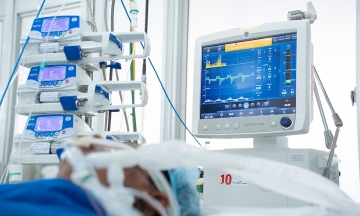
Nguyen Thong had diarrhea up to 5 times daily, poor appetite, and drank only 500-700 ml of water, less than one-half his minimum requirement. Believing it was just a digestive disorder, he monitored himself at home until he became extremely fatigued, very thirsty, dizzy, urinating little, and his urine was dark. He was then admitted to Tam Anh General Hospital Hanoi for emergency care.
Master, Doctor Nguyen Thi Kieu Linh, from the Department of Nephrology - Dialysis, diagnosed the patient with acute kidney failure due to dehydration. Nguyen Thong's prolonged diarrhea caused his body to lose water and electrolytes, reducing circulating volume. This decreased blood flow to the kidneys, affecting their filtering function and activating compensatory vasoconstriction responses, thereby reducing glomerular filtration pressure. This led to a rapid decline in the glomerular filtration rate. This is a typical mechanism of prerenal acute kidney failure due to reduced renal perfusion, which can progress rapidly if fluid resuscitation is not administered promptly.
Had Nguyen Thong not been diagnosed and treated promptly, his acute kidney failure could have worsened, potentially requiring emergency dialysis.
The medical team developed a treatment protocol prioritizing fluid and electrolyte replacement to restore body fluid volume and increase blood flow to the kidneys. Concurrently, they focused on controlling the diarrhea to prevent further dehydration. Doctors closely monitored urine output and kidney function, combining clinical assessments with diagnostic imaging to rule out urinary tract obstruction.
 |
A doctor checks the patient's health before discharge. Photo: Tam Anh General Hospital.
After one week of treatment, Nguyen Thong's condition significantly improved. His kidney function stabilized, urination returned to normal, and diarrhea was controlled; he did not require dialysis. Currently, he continues to undergo close monitoring of kidney function, fluid balance adjustments, and careful management of his underlying health conditions.
Doctor Linh stated that prolonged diarrhea and vomiting can easily cause dehydration, potentially leading to acute kidney failure if not managed promptly. When experiencing frequent bowel movements, thirst, extreme fatigue, or minimal urination, patients should rehydrate and replenish electrolytes early. They should also seek medical attention if symptoms do not improve or worsen. During recovery, patients should prioritize easily digestible, hydrating foods such as porridge, soup, and fruits, and use fans or air conditioning appropriately to limit further fluid loss.
Thu Giang
*Patient's name has been changed