While working, Ha consumed only 700-800 ml of fluids daily, relying mostly on coffee and soft drinks to stay alert. Recently, she developed dry mouth, fatigue, dizziness when standing up, poor appetite, and noticed her urine output had decreased and become darker. These symptoms prompted her to seek emergency care at Tam Anh General Hospital Hanoi.
Upon examination, doctors observed signs of dehydration, with Ha's blood pressure at 90/60 mmHg and dry mucous membranes. Her urine output was merely 400 ml over 24 hours, well below the normal 1,000-2,000 ml daily. Laboratory tests revealed a blood creatinine level of 2,9 mg/dL, nearly three times the normal range for women (approximately 0,5-1,1 mg/dL), confirming significant kidney function impairment.
Master of Science, Doctor of Clinical Specialty II Ha Tuan Hung, Deputy Head of the Nephrology - Dialysis Department, diagnosed Ha with acute kidney failure caused by prolonged dehydration. He explained that during hot weather, the body loses significant water and electrolytes through sweat. Without adequate fluid replenishment, a decrease in circulating volume reduces blood flow to the kidneys, leading to a rapid decline in kidney function and, ultimately, acute kidney failure.
 |
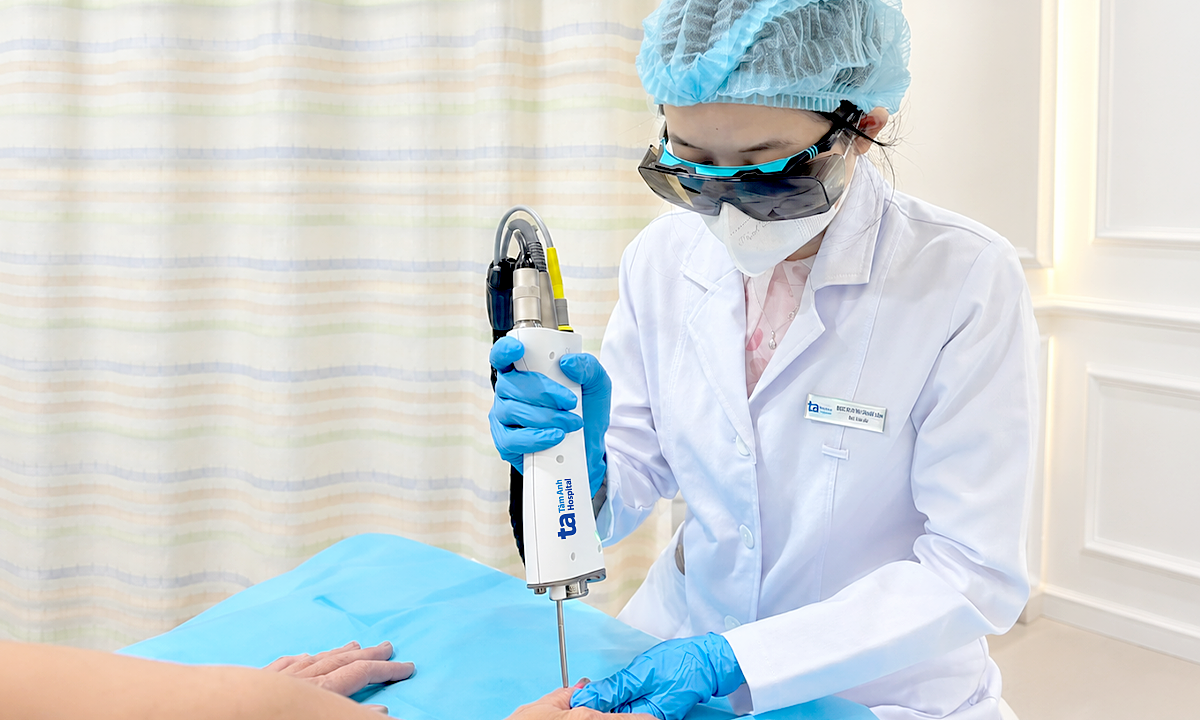
Doctor Hung examines a patient with acute kidney failure due to dehydration. Photo: Tam Anh General Hospital. |
A treatment protocol was established for Ha, emphasizing intravenous fluid resuscitation to restore her circulating volume and enhance renal blood flow. Her blood pressure, urine output, electrolyte levels, and kidney function indicators were closely monitored to evaluate treatment response across different stages. Doctors also reviewed her medication history to rule out other potential factors that could worsen kidney damage.
With timely intervention, Ha's urine output gradually increased, and her blood pressure stabilized. Daily blood creatinine levels decreased, signaling kidney function recovery after the prolonged period of reduced perfusion.
Following one week of intensive treatment, Ha's nausea subsided, her appetite returned, and her fatigue significantly lessened. Her urine output normalized, and kidney function indicators showed marked improvement. She responded well to medical treatment, thus avoiding the need for dialysis.
Doctor Hung emphasized that acute kidney failure caused by dehydration is reversible with early detection and appropriate treatment. However, he warned that patient complacency or delayed medical attention can lead to prolonged reduced renal perfusion, resulting in more severe kidney damage, increased risk of long-term kidney dysfunction, and even emergency dialysis.
During hot weather, doctors advise against waiting until thirsty to drink water, as thirst indicates the body is already dehydrated. Adults should aim for 2-2,5 liters of water daily. Individuals who regularly work or exercise outdoors may require 3-4 liters daily, supplemented with electrolytes if sweating profusely. It is crucial to drink water in smaller, frequent portions rather than consuming large amounts at one time.
Individuals working in intense heat should protect themselves and wear light-colored clothing. It is advisable to avoid entering air-conditioned rooms immediately after sun exposure to prevent heat stroke. Additionally, refrain from consuming excessively cold water while working in hot conditions; instead, opt for moderately cool water.
If symptoms like dry mouth, extreme fatigue, dizziness, dark urine, or low urine output appear, individuals should actively rest and rehydrate. For those exhibiting signs of heatstroke, including nausea, severe headache, lightheadedness, or confusion, immediate steps should be taken to cool the body, replenish fluids and electrolytes, and seek timely medical attention at a healthcare facility.
Thu Giang