Ten years ago, Mrs. Ngoc suffered a severe right knee infection that invaded her bone marrow, requiring extensive debridement. According to Master of Science, Doctor, First Degree Specialist Dang Khoa Hoc, Head of the Department of General Orthopedic Trauma at Tam Anh General Hospital, Ho Chi Minh City, her right knee had progressed to end-stage degeneration, with no remaining cartilage and quadriceps muscle atrophy. The previous surgery resulted in significant fibrous tissue and scar formation, causing joint stiffness, an inability to bend the knee, and altered joint structure, making it impossible to identify the original anatomical landmarks.
Mrs. Ngoc also had several underlying health conditions, including hypertension, ischemic heart disease, diabetes, and dyslipidemia. She suffered from chronic kidney failure due to long-term use of medication for bone and joint conditions, which severely impaired her glomerular filtration rate. Doctors opted for artificial knee replacement surgery using the Cuvis-Joint robot. This minimally invasive approach reduces pain and blood loss, helping to avoid complications such as acute kidney failure and myocardial ischemia.
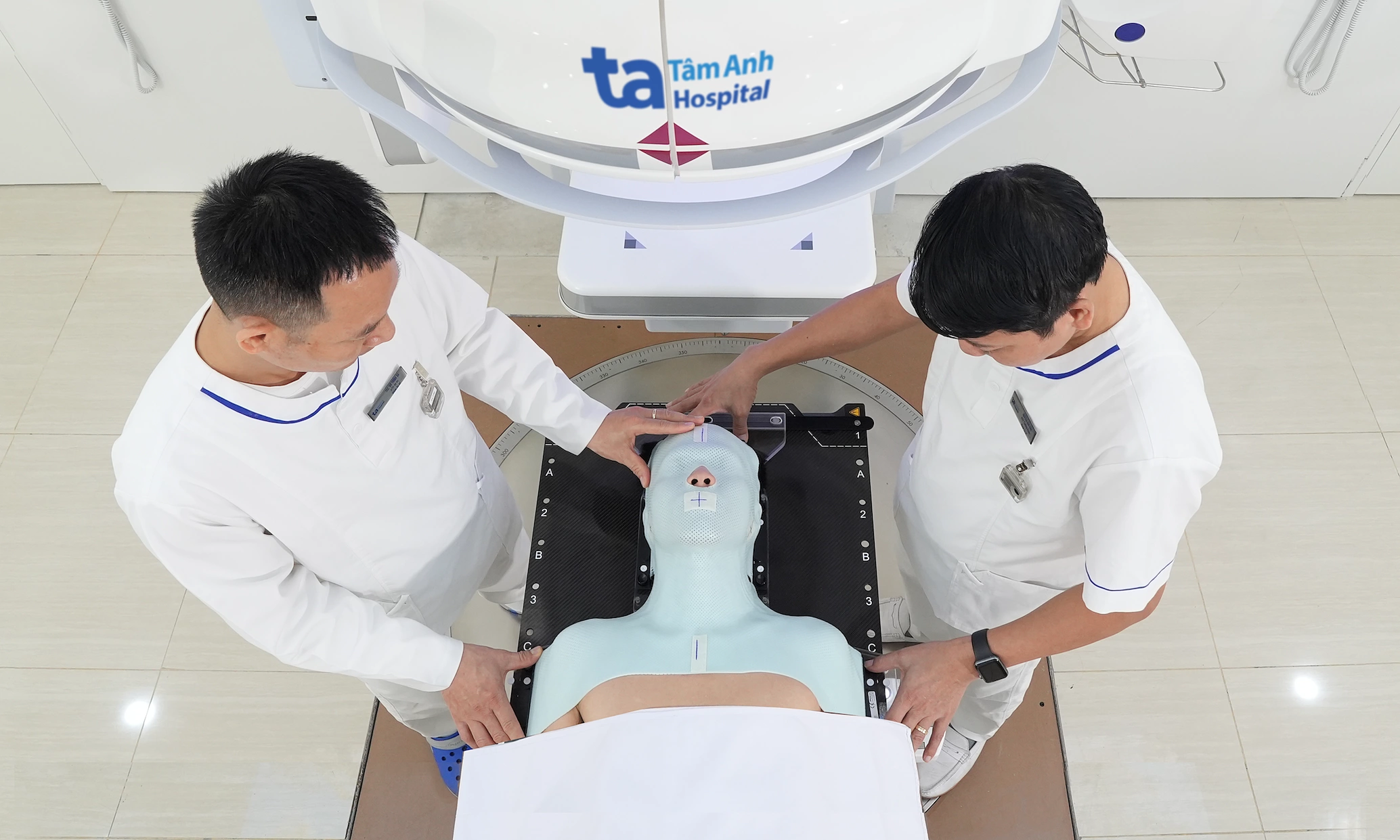
The Cuvis-Joint robot, integrated with artificial intelligence (AI), assists surgeons in analyzing and redefining Mrs. Ngoc’s bone morphology and natural knee anatomical parameters based on 3D CT images. After reconstructing the patient's original joint anatomy, doctors develop a surgical plan. This plan includes precise bone cutting positions, bone slice thickness, implant orientation, and soft tissue balancing. This ensures a quick procedure, controlled blood loss, restored limb alignment, and proper balance with the other leg.
 |
The Cuvis-Joint robot uses artificial intelligence to reconstruct the patient's original joint anatomy. Photo: Tam Anh General Hospital |
The robot's six-axis flexible arm actively performs bone cuts according to the surgical plan, requiring minimal soft tissue dissection. The artificial knee joint is precisely fitted into the patient's body without invasive intramedullary drilling. This reduces blood loss and the need for post-operative pain medication, which could otherwise affect kidney function.
Following the surgery, Mrs. Ngoc began physical therapy and walking exercises from the early days. At her two-week follow-up, she reported no pain and could walk comfortably, avoiding the risk of joint loosening or dislocation.
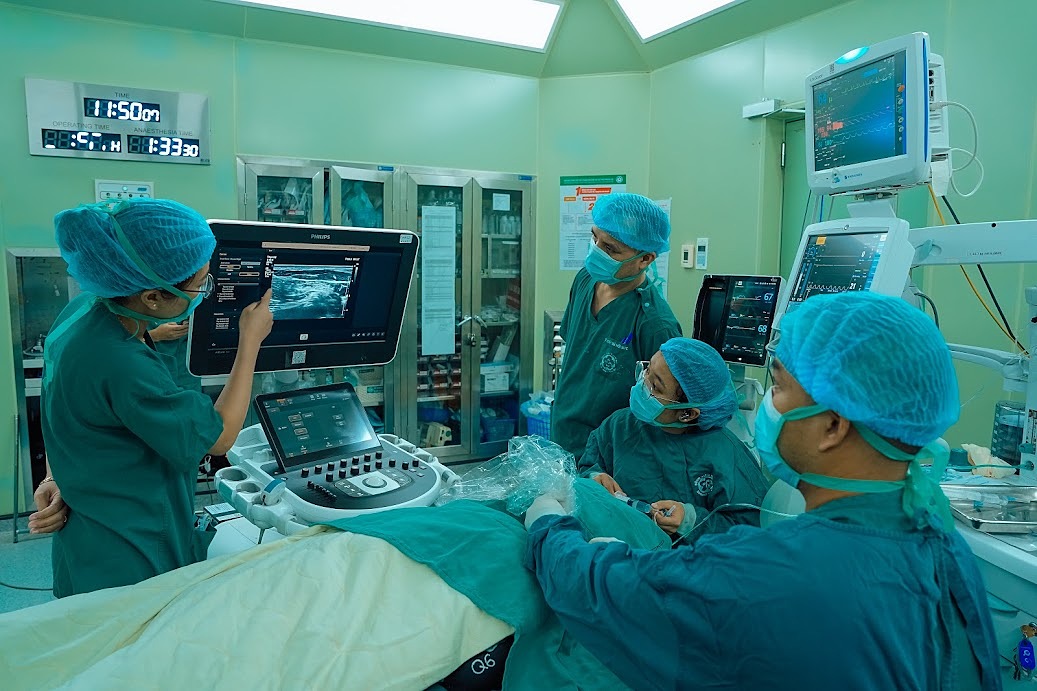
 |
Doctor Hoc (center) performs knee replacement surgery for Mrs. Ngoc. Photo: Tam Anh General Hospital |
According to Doctor Hoc, knee replacement surgery currently has a very high success rate, especially when supported by modern equipment like the Cuvis-Joint robot, which specializes in knee and hip replacement surgeries. This technology enhances accuracy and reduces invasiveness, leading to early mobility recovery for patients, even in complex cases with deformed joints and a high risk of complications. Artificial joint implants can last for over 20 years.
Phi Hong
* Patient's name has been changed
| Tam Anh General Hospital System organizes a consultation program titled "New generation surgical robots and 'super machines' support safe, accurate diagnosis and treatment, fast recovery", featuring a team of experienced specialist doctors. Readers can submit questions here for answers. |