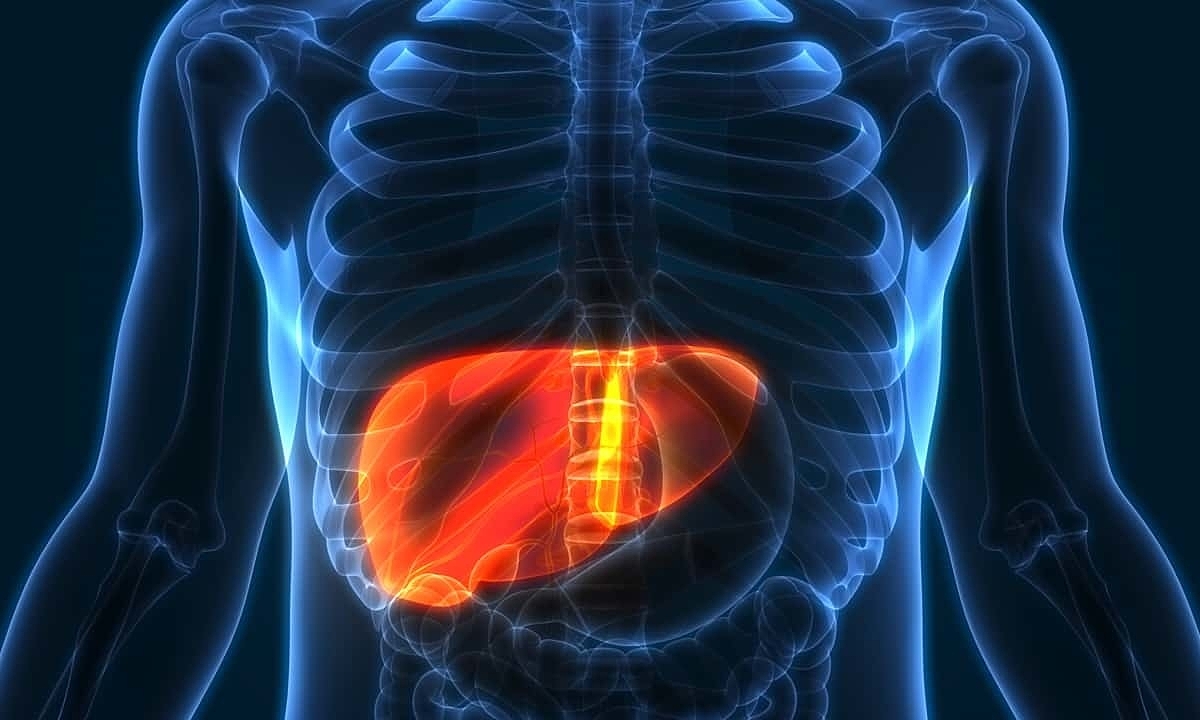
The rectum, the final segment of the large intestine, measures about 11-15 cm and connects to the anus, functioning to eliminate waste from the body. Rectal cancer develops when cells in the mucosal lining mutate, leading to uncontrolled proliferation and tumor formation. Based on anatomical location, rectal cancer is categorized into three types: high rectal cancer (tumor more than 10 cm from the anal verge), mid-rectal cancer (5-10 cm), and low rectal cancer (under 5 cm).
Master, Doctor Vuong Ngoc Duong, Deputy Head of the Radiation Therapy Department at Tam Anh General Hospital Hanoi, explained that mid and low rectal cancers are more challenging to treat because tumors are located close to the anus, within the narrow pelvic space, which contains numerous blood vessels and nerves. Previously, patients typically underwent immediate treatment involving the removal of the rectum and perineum (Miles surgery) to achieve radical cure and prolong survival.
However, this surgery removes the anus, resulting in the loss of natural bowel function. Patients then require a colostomy – an opening in the abdominal wall where a segment of the large intestine is brought out, allowing stool to collect in a bag worn on the side. Patients must wear this waste bag permanently, regularly clean the stoma, and change the bag, which causes inconvenience, impacts daily life and psychological well-being, and reduces quality of life.
Doctor Duong stated that current multidisciplinary treatment regimens, including preoperative chemoradiation and total neoadjuvant therapy (TNT), enable surgeons to remove low rectal cancer while preserving the anus for patients.
Total neoadjuvant therapy regimens for rectal cancer patients are currently individualized based on tumor location, size, invasiveness, and the patient's overall health. The primary goals are to shrink the tumor, reduce the disease stage, enable anal preservation, decrease recurrence rates, and extend survival.
For example, Mr. Viet, 74 years old, underwent a health check-up at Tam Anh General Hospital Hanoi. Doctors discovered a fungating tumor 3 cm in diameter in his rectum, diagnosing it as stage three rectal adenocarcinoma, which had invaded the muscle and metastasized to lymph nodes.
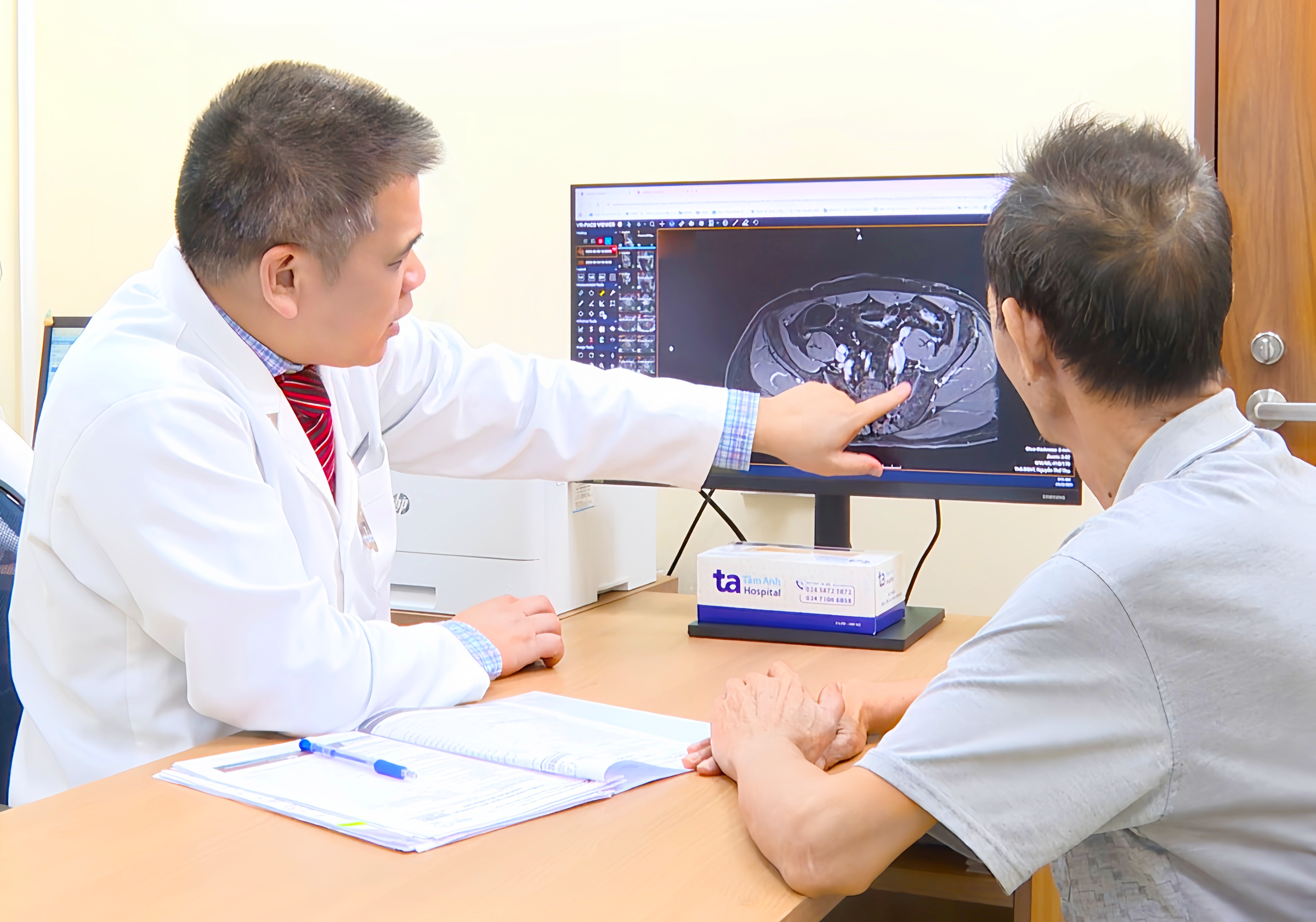 |
Doctor Duong advises a rectal cancer patient. Photo: Tam Anh General Hospital
Mr. Viet was prescribed total neoadjuvant therapy, which included chemotherapy followed by five sessions of radiation therapy. The chemotherapy helped shrink the tumor and destroy microscopic metastatic cells. Subsequently, high-energy radiation continued to target the localized tumor and regional metastatic lymph nodes.
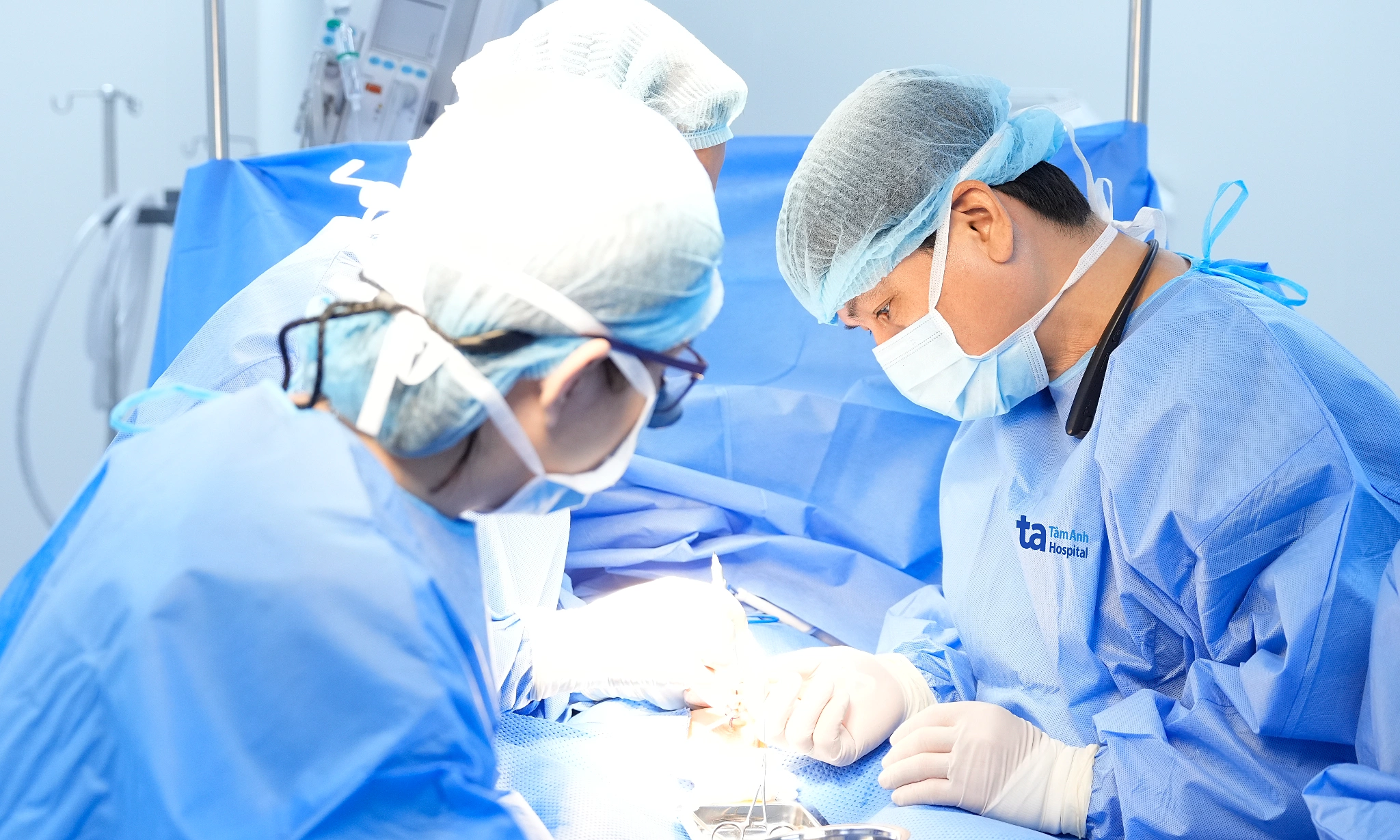
Following treatment, Mr. Viet's tumor size decreased by 95%, shrinking to just 1,2x5 mm, as small as a grain of rice. Doctors opted for laparoscopic surgery instead of open surgery, reducing invasiveness and preserving the anus. After six weeks of recovery, he underwent laparoscopic lymph node dissection, removal of the tumor-bearing rectal segment, and rejoining of the bowel to restore digestive function.
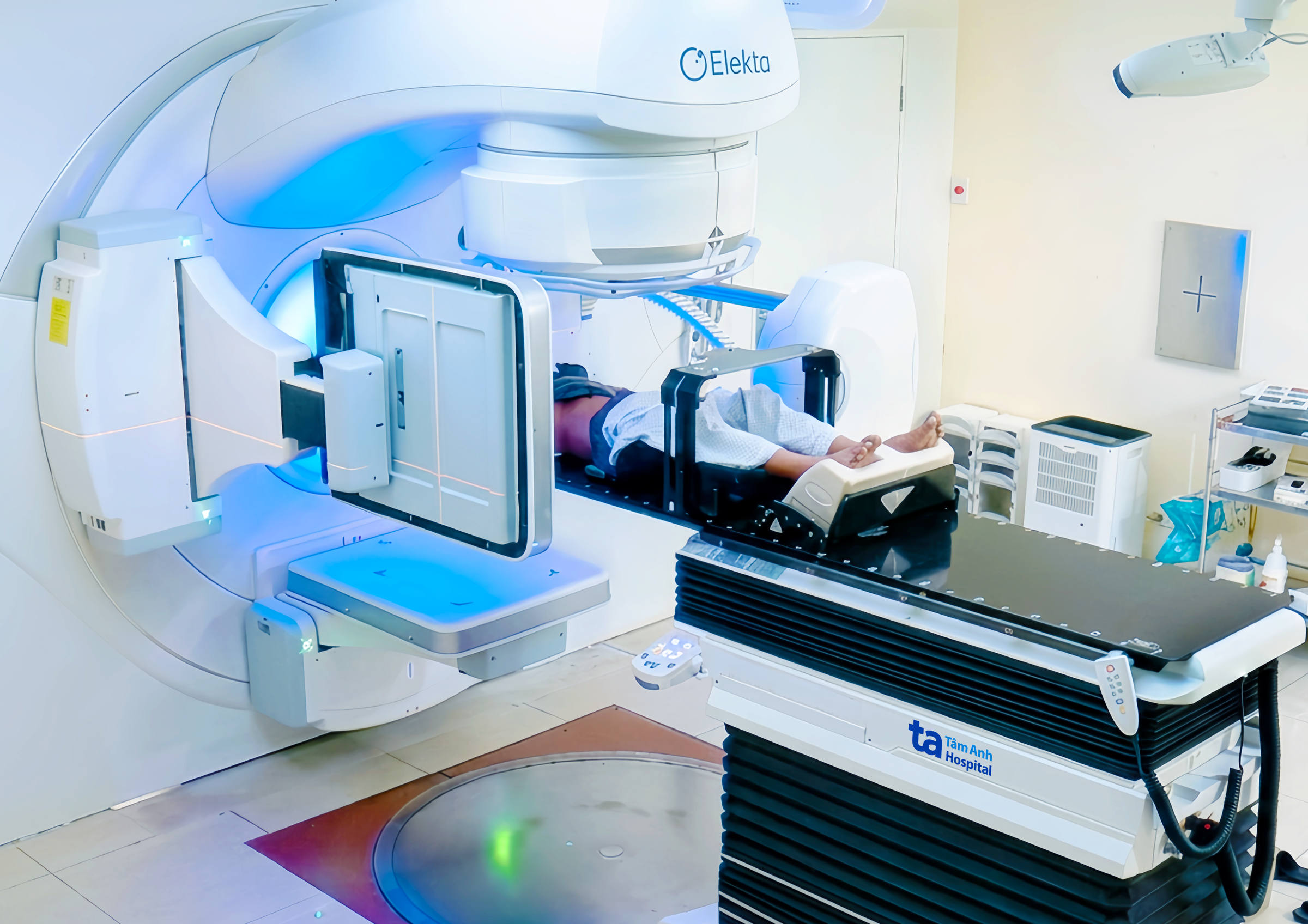 |
Mr. Viet during a total neoadjuvant radiation therapy session. Photo: Tam Anh General Hospital
Similarly, Mr. Khoa, 71 years old, was diagnosed with stage three rectal cancer, similar to Mr. Viet. However, Mr. Khoa's tumor was located lower (4-5 cm from the anal verge) and was larger, invading the serosa and metastasizing to lymph nodes, posing a risk of requiring complete anal removal.
After consultation, doctors prescribed concurrent chemoradiation therapy. Due to an underlying cardiovascular condition, the patient received specific chemotherapy and radiation medications. The radiation therapy regimen spanned 28 sessions, utilizing volumetric modulated arc therapy (VMAT) to precisely target the treatment area, shrinking the tumor away from the sphincter muscles and minimizing side effects.
According to Doctor Duong, Mr. Khoa responded well to the total neoadjuvant therapy regimen, allowing for tumor removal, preservation of the anus and sphincter, and immediate rejoining of the rectal segment in a single surgical procedure. The patient did not require a temporary colostomy, thus avoiding a second surgery for closure.
Post-surgery, both patients recovered well, able to begin rehabilitation exercises on the second day, consume liquid food, maintain stable digestion, and have easy bowel movements.
Doctor Duong stated that multidisciplinary treatment regimens, ranging from total neoadjuvant chemoradiation to sphincter and anal preservation surgery, now help many rectal cancer patients achieve radical cure, improve prognosis, and enhance their quality of life.
Rectal cancer can be prevented and its recurrence rate reduced through a healthy diet, avoiding smoking, and limiting alcohol consumption. Doctor Duong recommends that individuals aged 40-45 undergo rectal cancer screening as advised by a doctor. Cancer patients should visit a hospital for accurate diagnosis, personalized treatment plans, and comprehensive multidisciplinary therapy.
Thanh Long
*Patient names have been changed
| Readers can submit questions about cancer here for doctors to answer. |