Hung, a 35-year-old bartender, recently began experiencing unusual symptoms whenever he saw food or drinks. Initially, he avoided coffee and alcohol, then chocolate, milk tea, and sweets. Gradually, many other spices and dishes also triggered feelings of anxiety, chest tightness, sweaty hands and feet, and rapid breathing.
Dr. Pham Van Duong, a Master of Science from Tam Anh Cau Giay General Clinic, diagnosed Hung with an anxiety disorder coupled with food and drink phobia. The brain can form a misguided association between certain foods and a sense of danger. Patients do not fear the sweet or bitter taste of food but rather the symptoms like rapid heartbeat and shortness of breath that occur after eating. This avoidance behavior leads the brain to "misunderstand" these foods as dangerous, gradually extending the fear to many other dishes.
Doctors prescribed psychological therapy for Hung. In the initial stage, he received explanations about the mechanism of hyperventilation and the origin of his symptoms of anxiety and shortness of breath. He was taught breathing regulation and relaxation techniques to manage his anxiety.
Once his anxiety attacks subsided, doctors transitioned him to exposure and response prevention (ERP) therapy. Through this, he gradually started re-eating foods that previously caused him fear, beginning with very small amounts and slowly increasing them to reduce his anxious reactions and avoidance.
 |
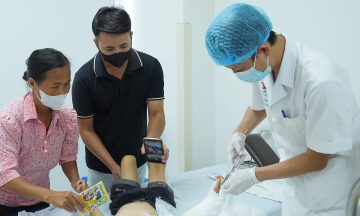
Dr. Duong guided Hung on how to gradually expose himself to food using an exposure hierarchy. *Photo: Tam Anh General Hospital*
He began with a small amount of chocolate-containing sweets. However, just holding the candy bar in his hand caused his heart to race, his chest to tighten, his hands and feet to sweat, and his breathing to become rapid. Instead of avoiding it, doctors instructed him to continue his exposure to the food, combining it with breathing regulation until the symptoms gradually decreased. Afterward, the amount of chocolate was slowly increased before moving on to milk tea, coffee, and spiced dishes.
After four weeks of treatment, Hung could eat some types of sweets that once caused him panic. He continues therapy with other food groups to gradually return to his job.
According to Dr. Duong, anxiety disorders can progressively narrow a patient's life if left untreated. Therefore, when experiencing frequent episodes of anxiety, shortness of breath, or a feeling of losing control, patients should consult a psychiatrist or psychologist for evaluation. Early intervention helps break the anxiety-avoidance cycle and improves quality of life.
Thanh Ba
| Readers can submit questions about neurological conditions here for doctors to answer. |