Associate Professor, Doctor Vu Huu Vinh, Director of the Thoracic and Vascular Surgery Center at Tam Anh General Hospital in Ho Chi Minh City, stated that the patient had multiple ulcers and atherosclerotic plaques in the descending thoracic aortic arch, below the left subclavian artery. These ulcers can initiate aortic dissection or facilitate thrombus adhesion, leading to a risk of peripheral embolism and limb necrosis.
These are warning signs that the arterial wall structure has been severely damaged. According to Associate Professor Vinh, if not treated promptly, progressing ulcers can cause localized aneurysms, pseudoaneurysms, or aortic rupture, leading to massive hemorrhage and life-threatening situations if emergency care is not provided in time.
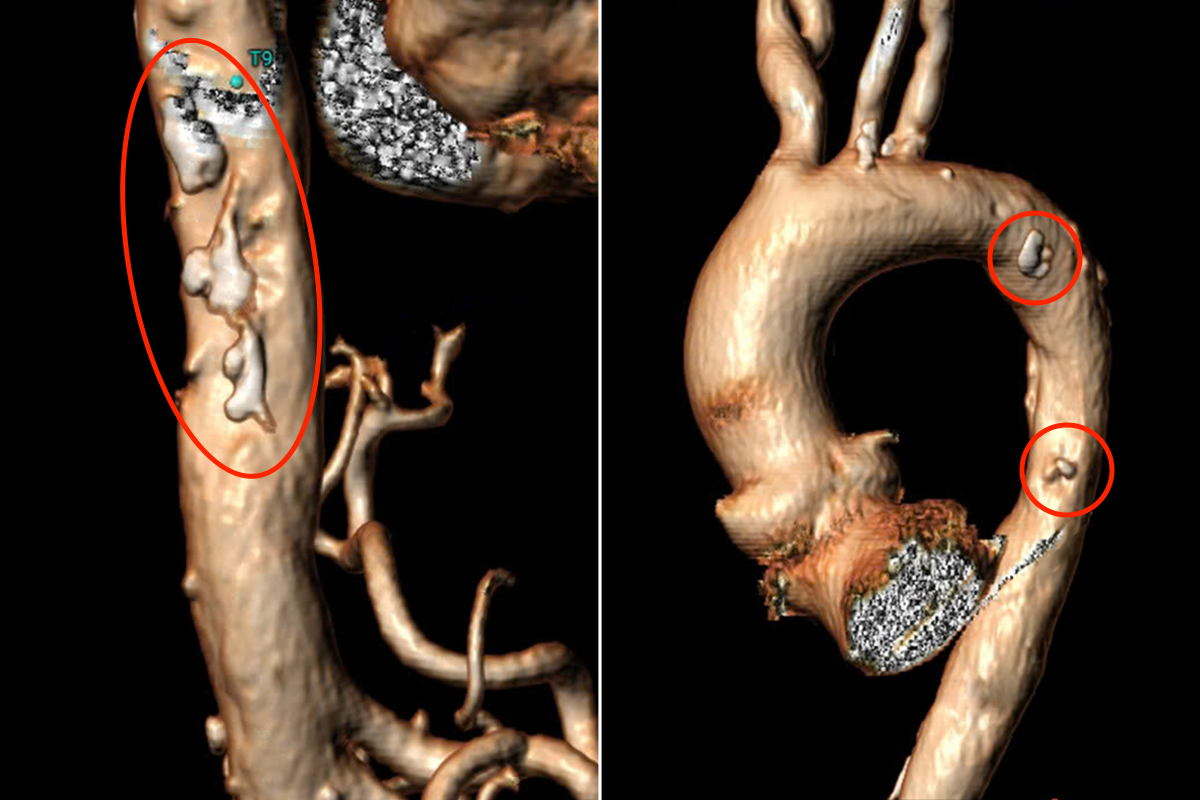 |
Computed tomography 3D reconstruction shows the patient has multiple ulcers (circled in red) in the aorta. Photo: Tam Anh General Hospital
The medical team placed a stent graft to reinforce the arterial wall, blocking blood pressure from the ulcerated areas. Guided by a C-arm system, doctors threaded a specialized catheter through the femoral artery into the vascular system, reaching the segment with the ulcer. After injecting contrast dye to precisely locate the lesion, the team deployed a stent graft, fully apposing it to the inner wall of the aorta, creating a strong protective layer that covered all ulcers and atherosclerotic plaques.
After stent placement, doctors performed angiography using a digital subtraction angiography (DSA) system to rule out complications such as embolism or internal hemorrhage.
The intervention proceeded safely. The ulcer was completely isolated from blood flow pressure, preventing future risks of aneurysm and rupture. Angiography images showed optimal stent graft expansion, good blood flow, and no signs of blood leakage into the ulcer.
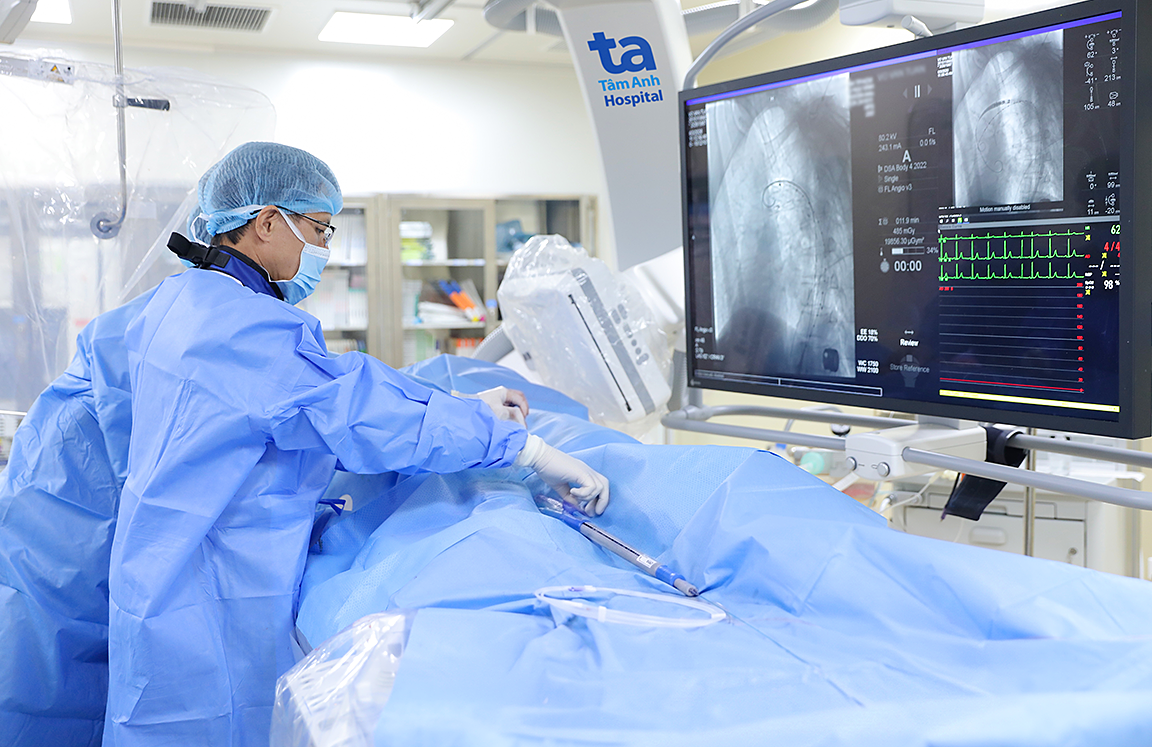 |
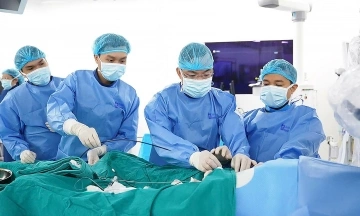
Associate Professor Vinh places a stent graft for the patient with the support of a modern angiography system. Photo: Tam Anh General Hospital
The patient recovered quickly, ate and engaged in normal activities, and was discharged after one day.
Associate Professor Vinh recommends that high-risk individuals, such as the elderly, those with high blood pressure, blood fat disorders, smokers, or those with a family history of cardiovascular disease, undergo routine health screenings, especially for vascular conditions. Early detection of lesions like penetrating aortic ulcers enables effective treatment, preventing dangerous complications.
Bao Anh
*The patient's name has been changed.
| Readers can submit their cardiovascular questions here for doctors to answer. |