A CT scan of Mr. Toan's lungs at Tam Anh General Hospital, TP HCM, revealed a 27 mm tumor in his left lung, classified as Lung-RADS 4X. Doctor Tran Quoc Hoai, from the Thoracic Surgery and Vascular Center, explained that Lung-RADS is a classification system used to evaluate lung nodules on low-dose CT scans. A 4X classification indicates a high risk of malignancy, often presenting with abnormal or suspicious imaging characteristics, necessitating further diagnostic methods such as PET/CT, biopsy, or surgery.
According to Dr. Hoai, Mr. Toan works as an electronics repairman and was likely regularly exposed to carcinogens such as lead, mercury, and cadmium.
Doctors recommended laparoscopic surgery using the Da Vinci Xi robot. Mr. Toan underwent one-lung intubation, which allowed the lung to be operated on to completely collapse, enabling the robot to perform with precision. Doctor Nguyen Anh Dung, Head of the Thoracic Surgery and Vascular Department, controlled the robot's arms, which connected flexibly to specialized surgical instruments capable of rotating 540 degrees within the chest cavity. This allowed for the dissection, clamping, and cutting of lung tissue, along with the deep dissection of mediastinal lymph nodes, without requiring patient repositioning.
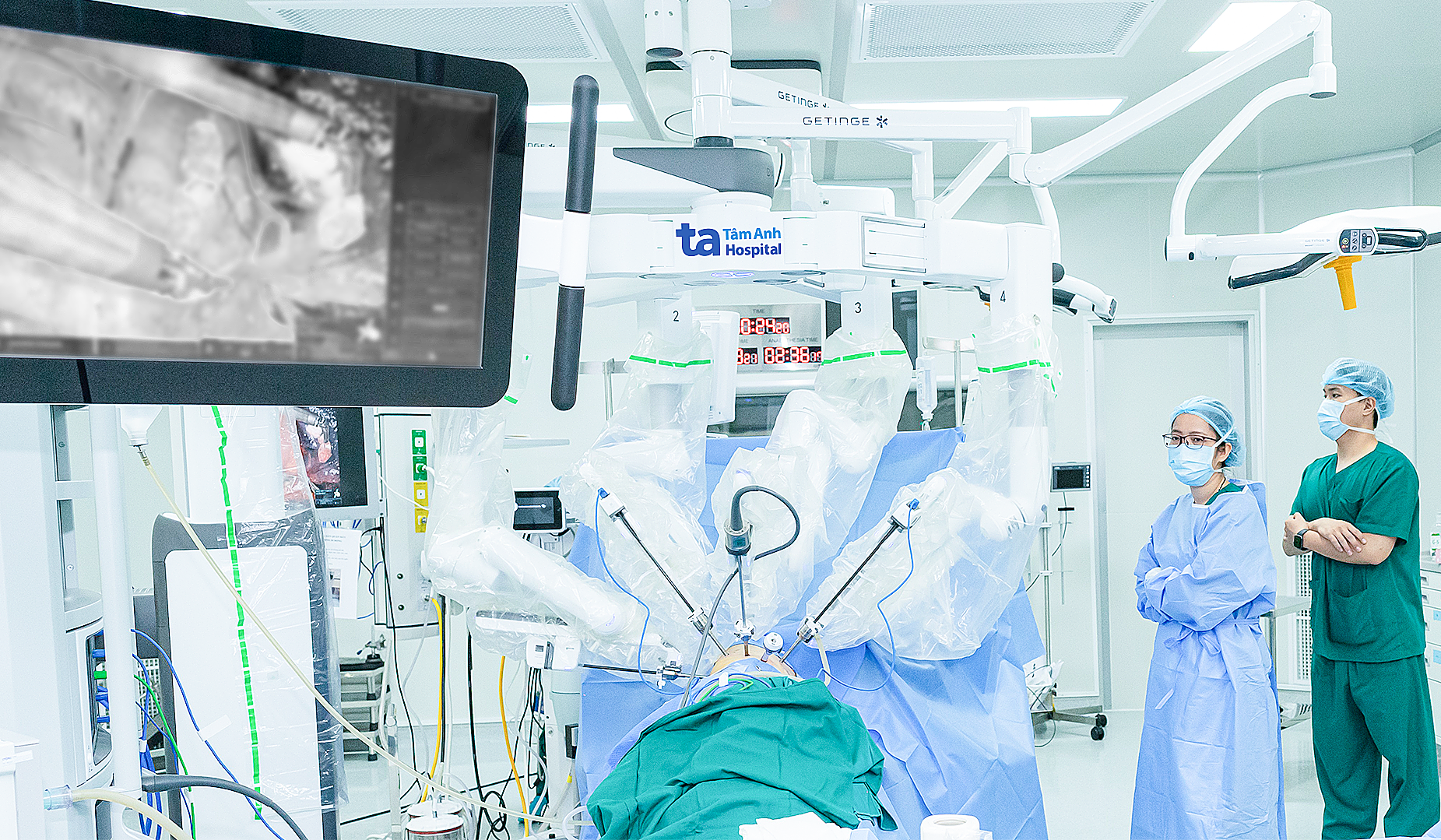 |
The Da Vinci Xi robot assists surgeons in removing lung tumors for cancer patients. *Photo: Tam Anh General Hospital* |
After three hours, the surgeons successfully removed the entire tumor along with the lower left lung lobe and cleared associated lymph nodes for pathological examination and disease staging.
Post-surgery, Mr. Toan recovered well with minimal blood loss. X-ray results indicated good lung expansion. Doctors removed the lung drainage tube and planned respiratory physical therapy to help him quickly regain lung capacity. He was discharged after nearly 6 days of treatment.
Pathological results confirmed stage 3A lung cancer due to metastatic lymph nodes found among those removed. Mr. Toan requires adjuvant therapy, including chemotherapy and targeted drugs post-surgery, to reduce the risk of recurrence.
Dr. Hoai emphasized that lung cancer is common and often progresses silently, easily mistaken for other respiratory conditions, leading to late diagnosis. If detected at stage one or two, patients can receive curative surgical treatment with a five-year survival rate of over 90%. Conversely, when the disease progresses to advanced stages, surgical options are limited, and chemotherapy and radiation therapy become costly, affecting health and quality of life.
Lung cancer screening, utilizing tumor marker tests, bronchoscopy, and low-dose lung CT scans, supports early detection. This increases opportunities for optimal, less invasive treatment and faster recovery for patients.
Nhat Thanh
*Patient's name has been changed
| Readers can submit questions about cancer here for doctors to answer |