These figures are from the "Assessment of Vietnam's Readiness for Self-Care" report, released in Hanoi in late 2025. The report was a collaboration between the Institute for Health Strategy and Policy (IHSP) under the Ministry of Health and Opella Vietnam. The study, conducted from June to December this year, involved field surveys in four localities: Phu Tho, Bac Ninh, Hue, and An Giang.
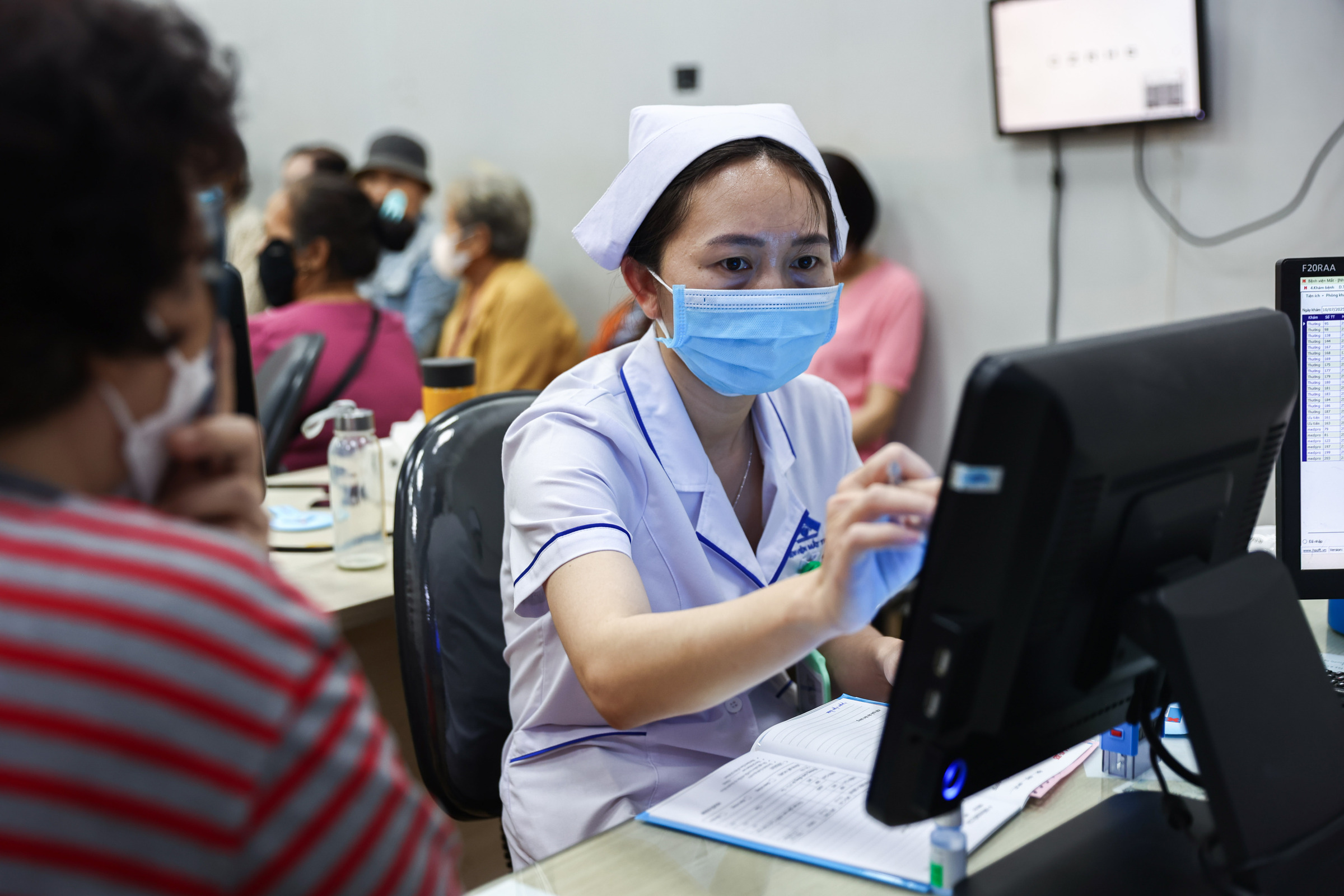 |
A healthcare worker at Ho Chi Minh City Eye Hospital examines residents. Photo: Quynh Tran
The results show Vietnam surpassed six other countries in the comparison list: India, Colombia, Mexico, Indonesia, Kenya, and UAE. The research team utilized a toolkit from the Global Self-Care Federation, analyzing data based on four factors: legal environment, patient empowerment, health policy, and stakeholder support. The legal environment achieved the highest score (3,26), followed by patient empowerment (3,06) and health policy (3,05). Stakeholder support scored the lowest, with 2,79 points.
The overall picture reveals positive signs, with 9 of 14 sub-indicators achieving good scores (from 3 to 3,75). The self-testing indicator, scoring 3,36 points, reflects residents' ease in accessing and using home health monitoring devices. Health literacy also scored well (3,26 points), helping the community identify health issues early.
Notably, the patient-doctor relationship has shown improvement. The indicator for trust in healthcare professionals reached 3,03 points, which is higher than the regional average. The survey found that 73% of healthcare staff regularly advise and guide patients on self-care measures during treatment.
However, the report also highlighted gaps that require addressing. Nearly half of consumers (49%) admitted they lack knowledge to care for themselves. Digital infrastructure supporting this goal remains limited, with access to health data scoring only 2,69 points and digital support tools at 2,91 points.
Doctor Nguyen Khanh Phuong, Director of the IHSP, noted that Vietnam has a foundation but still much potential. According to Doctor Phuong, the health sector needs to integrate electronic health records into the VNeID application soon, allowing residents to look up their medical history, test results, and prescriptions. Regulatory bodies should also consider implementing electronic labels for over-the-counter medications and piloting community self-care models.
Concurring, Doctor Valentina Becheva, General Director of Opella Vietnam and Cambodia, stated that understanding residents' barriers would help develop strategies. Enhancing self-care capabilities not only alleviates pressure on the hospital system but is also an essential step to strengthen preventive medicine and improve the quality of life for Vietnamese people.
Le Nga