On the morning of 23/1, hundreds of doctors, nurses, and students gathered at Bach Mai Hospital for the "Year-end Pink" blood drive, which runs until 25/1. Associate Professor Dao Xuan Co, the hospital's director, stated that the Tet holiday consistently presents challenges for blood supply. Demand for treatment, surgery, and emergency care does not decrease, and often increases at tertiary hospitals, while the number of blood donors declines as people prioritize rest and returning home for the holiday.
Hospital leadership stressed that blood is a unique biological product that machines cannot yet replicate. A shortage of reserves would force doctors to postpone many interventions and surgeries. In such cases, patients could lose their chance of survival in critical situations like accidents, gastrointestinal bleeding, or obstetric complications.
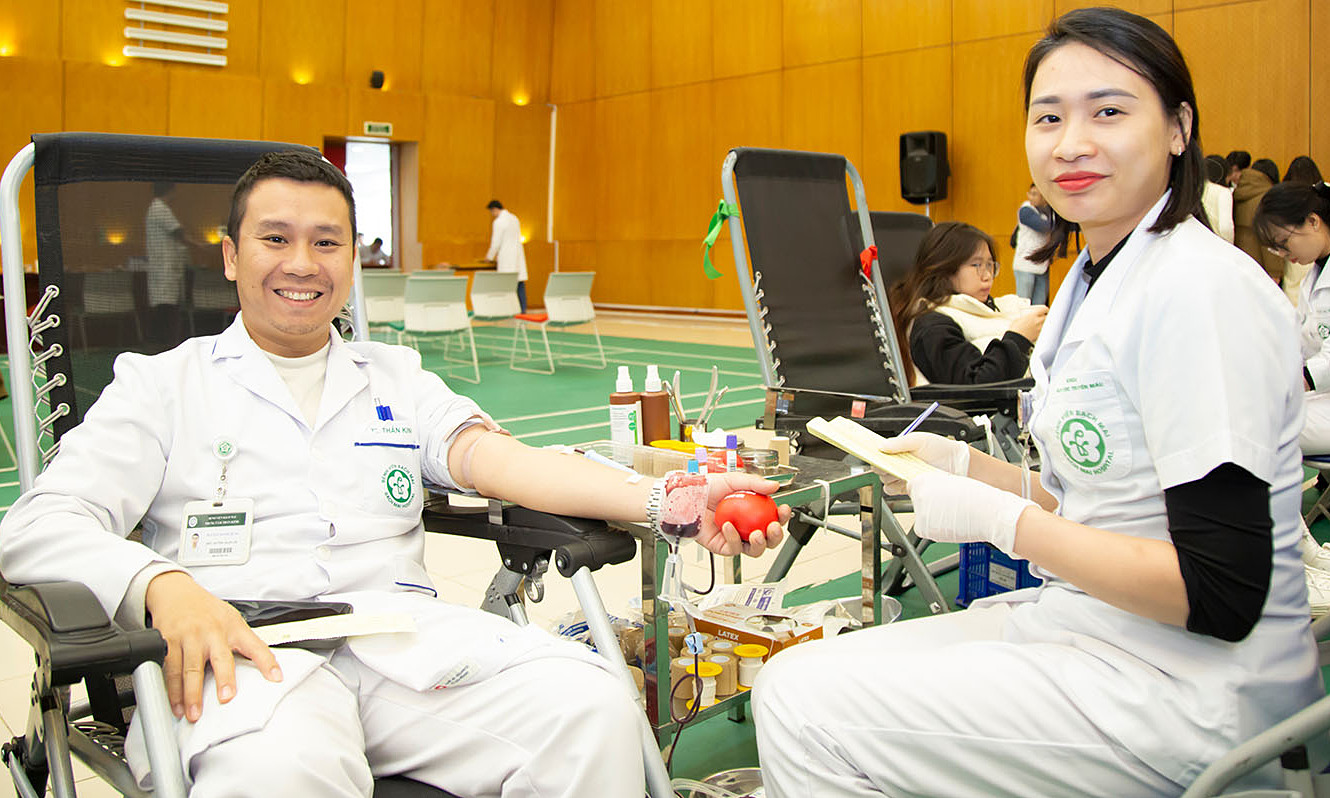 |
Bach Mai Hospital medical staff donating blood. Photo: Gia Thang |
Bach Mai Hospital medical staff donating blood. Photo: Gia Thang
During a break, Nguyen Manh Dung, a nurse from the Neurology Institute, registered to donate his 14th unit of blood. Regularly receiving blood products from the reserves for his treatment ward, he understands the critical danger of a depleted supply. He views blood donation as a professional responsibility, directly helping patients fight for their lives.
Next to him, Thanh Lam, a first-year student from Ha Noi University of Civil Engineering, arrived at the hospital with his friends immediately after class. Participating for the first time, the student admitted to feeling nervous but remained determined to contribute to the community.
According to a representative from the Center for Hematology and Blood Transfusion, properly conducted blood donation is completely safe. An adult's bone marrow possesses a rapid cell regeneration mechanism, and blood production can increase 4-10 times after donation. Studies consistently show that donor health indicators remain normal if medical guidelines are followed, with a maximum donation of approximately 9 ml per kg of body weight.
As the nation's first special-grade general hospital, Bach Mai Hospital currently holds the position of the largest tertiary hospital in the northern region, with a history spanning over 110 years. The facility operates with over 3,000 beds and includes numerous specialized institutes and centers, such as Cardiology, Intensive Care, Toxicology, and Neurology. On average, the hospital handles 6,000-8,000 outpatient visits daily and provides inpatient treatment for thousands of severe and complex cases referred from various provinces and cities. This immense patient flow results in consistently high demand for equipment, medical supplies, and especially blood reserves, reaching record levels compared to the national average.