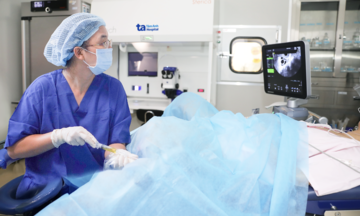
Thuy Ngan's Pomeranian, which she has owned for over two years, is treated like family. She bathes, grooms, and walks the dog daily. Ngan also allows the dog to sleep in her bed.
However, Ngan often talks, laughs loudly, or moves her limbs in her sleep. These actions startled the dog, causing it to react by biting and scratching her. Last year, she sustained a scratch on her leg but did not seek vaccination, believing her dog was healthy and fully vaccinated against rabies.
This year, she was bitten again, resulting in teeth marks and bleeding, prompting her to get vaccinated. "Many people contract rabies from their own pets. I didn't want to take any chances," Ngan stated, explaining her decision to get vaccinated this time.
 |
Quan's dog, which he has been caring for on behalf of his girlfriend for two years. Photo: NVCC |
Pham Quan, a 29-year-old sales employee in Hanoi, also experienced issues from co-sleeping with his dog. Last year, he developed severe itching, initially attributing it to insect bites. However, when his skin showed erythematous papules, blisters, and scaling, he sought medical help. He was diagnosed with scabies and a fungal skin infection, transmitted from his dog, requiring over one week of treatment. Unsure if they could be cleaned, he discarded his blankets, pillows, and bed sheets. This year, he contracted threadworms and roundworms, again from his dog, needing nearly one week of antiparasitic treatment to achieve a negative test result.
Despite these health issues, Quan cannot give the dog away, as it belongs to his girlfriend, who entrusted it to his care while she studies abroad.
"I regularly bathe and fully vaccinate it against rabies, keeping it very clean. It likely contracted diseases from other animals during its outdoor excursions," Quan explained.
According to Doctor Nguyen Van Quang, Medical Manager at VNVC Vaccination System, co-sleeping with pets is a common practice, often helping to alleviate loneliness and anxiety. However, it also increases the risk of disease transmission to owners. Pets can carry parasites such as worms, flukes, and scabies, as well as bacteria such as Campylobacter and Salmonella, which cause diarrhea, and the rabies virus. Individuals who sleep with, cuddle, or are bitten or scratched by their pets during sleep are susceptible to these illnesses.
Rabies currently has no specific cure, and once symptoms manifest, the mortality rate approaches 100%. Doctor Quang advises anyone who suspects they have contracted a disease from a dog or cat to seek early medical examination and treatment.
Individuals bitten, scratched, or licked on an open wound by a dog or cat should immediately wash the area under running water for 15 minutes using soap, then disinfect it with alcohol. Avoid applying traditional remedies. Afterward, seek medical attention at the nearest healthcare facility for consultation, rabies vaccination, and anti-rabies serum if necessary.
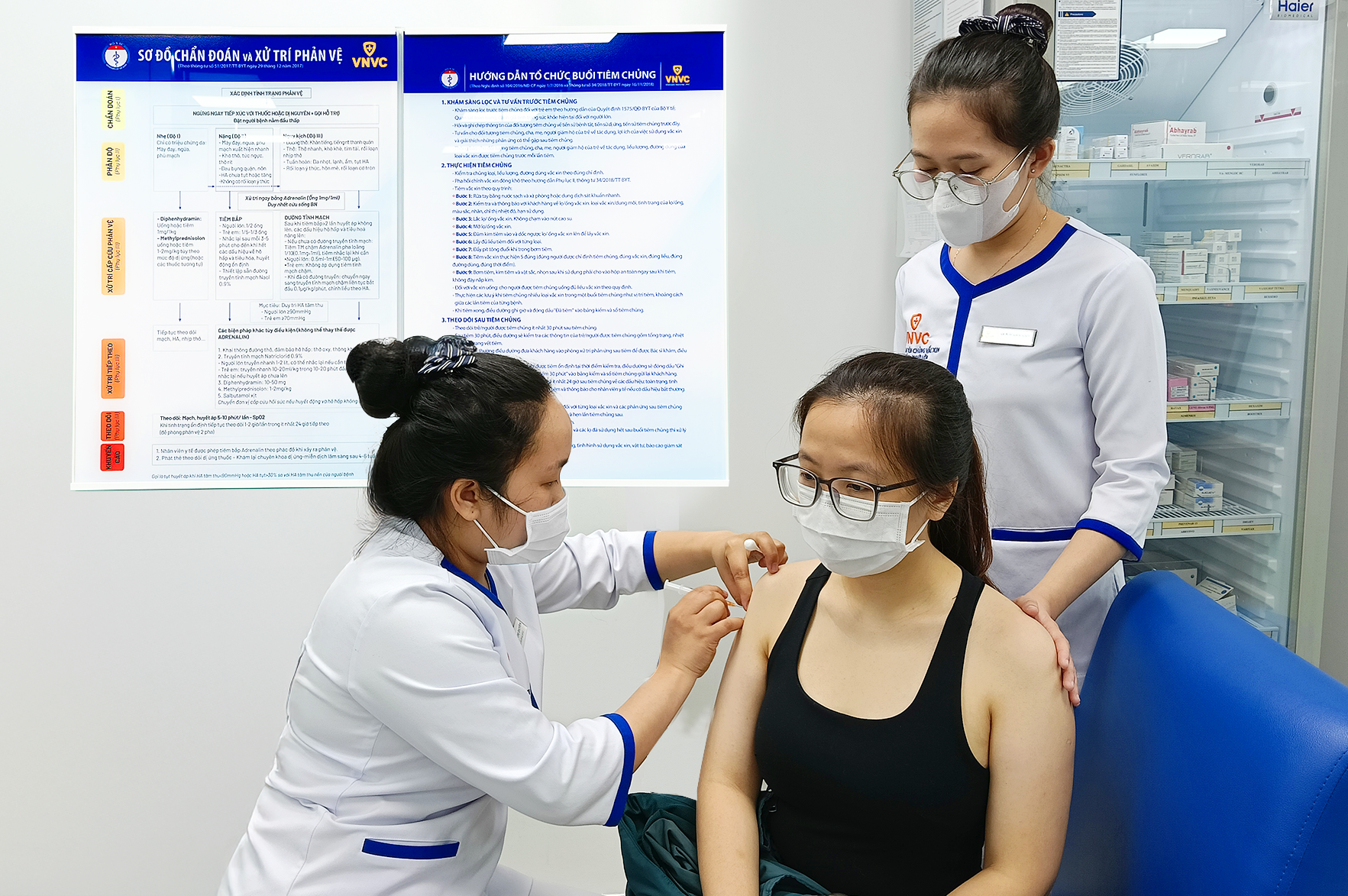 |
A woman receiving a rabies vaccine at VNVC Vaccination System. Photo: Khanh Hoa |
Doctors prescribe appropriate vaccination regimens based on the wound's severity and the patient's vaccination history. Unvaccinated individuals require five intramuscular doses on days 0, 3, 7, 14, and 28, or eight intradermal doses on days 0, 3, 7, and 28. For severe wounds (grade 3 or higher) or those located on the head, face, neck, hands, or feet, anti-rabies serum may also be administered.
Additionally, those who are bitten or scratched should monitor the animal. If it remains healthy after 10 days, a doctor may advise discontinuing further vaccinations. Individuals who have completed three preventive doses only require two additional doses on days 0 and 3 if bitten again, without needing serum. If the animal cannot be monitored or exhibits unusual symptoms, the full vaccination regimen is essential.
Doctor Quang reports that VNVC Vaccination System has seen a significant increase in people seeking rabies vaccinations after dog or cat bites and scratches. VNVC also notes a trend of individuals proactively seeking pre-exposure rabies vaccination, even without a recent bite or scratch. This group receives three doses on days 0, 7, and either 21 or 28. If these individuals are later bitten or scratched, even severely, they only require two additional vaccine doses and no serum.
Phuc An