The family did not know how long the boy was submerged. When found and pulled from the water, he was in cardiac arrest. Medical personnel administered first aid, and his heartbeat returned 3 minutes later. He was then transferred to Quang Ninh Obstetrics and Pediatrics Hospital, comatose and in acute respiratory failure, though his pupils still reacted to light.
Doctors diagnosed the patient with respiratory failure, pneumonia, and circulatory arrest from drowning, also monitoring for brain damage. Treatment involved mechanical ventilation, medication for brain swelling, body temperature control, and intravenous nutrition.
On 24/4, after 7 days of treatment, doctors reported the child's vital signs had stabilized. He recovered quickly, both physically and mentally, and was fit for discharge.
 |
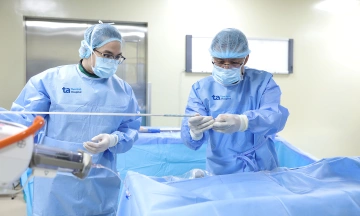
Doctors continuously monitor the patient's vital signs. *Photo: Hospital provided* |
Drowning occurs when water enters the respiratory tract, depriving organs of oxygen and halting vital body functions. This is an accident and the leading cause of death for children under 19 years old. Boys are two times more likely to drown than girls.
Most child drowning victims die or suffer brain damage due to a lack of proper first aid. Doctors stress that correct on-site first aid is crucial for a child's survival.
When a child is found drowning, immediately pull them from the water and place them in a dry, airy spot. Emergency care varies based on available resources, the child's state (conscious or comatose, with or without cardiac arrest or stopped breathing), and the specific environment (river, lake, or sea; calm or swift water; shallow or deep; near or far from shore).
If the victim is unconscious and not breathing or has no heartbeat, immediately perform mouth-to-mouth resuscitation and chest compressions continuously while en route to the hospital. If the victim is still breathing, place them on their side to prevent aspiration and quickly transport them to the nearest medical facility for monitoring.
Thuy An