Mrs. Lam's colonoscopy results at Tam Anh Cau Giay General Clinic showed multiple polyps of varying sizes along her colon. Specifically, two suspected sessile serrated lesions (SSLs), measuring 13 mm and 18 mm, were found in the sigmoid colon.
Doctors removed all polyps during the colonoscopy. For small polyps, under 10 mm, doctors used cold polypectomy instead of thermal polypectomy to reduce the risk of bleeding and bowel perforation. Medium-sized polyps were also considered for cold polypectomy depending on their location and characteristics. For lesions over 20 mm, doctors performed endoscopic mucosal resection (EMR) to remove large lesions while preserving the bowel wall.
Pathology results confirmed the lesions as sessile serrated lesions, a type of polyp with a high risk of progressing to cancer.
According to Doctor Son, colon polyps and pre-cancerous lesions often develop silently over a long period, causing few symptoms, as in Mrs. Lam's case. If not detected early, these lesions can progress over several years into colorectal cancer. Conversely, endoscopic removal of polyps in the early stages helps prevent this progression, significantly reducing the risk of developing colorectal cancer.
 |
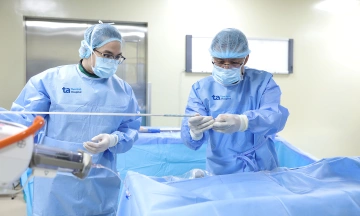
Doctors perform endoscopy and polyp removal for a patient. *Photo: Tam Anh General Hospital*
Following the intervention, Mrs. Lam will undergo regular follow-up examinations to detect any early risk of recurrence or new lesions.
Doctor Son recommends that individuals aged 45 and older undergo colorectal endoscopy, even without symptoms. Those with a family history of colorectal cancer or polyps, previous colorectal cancer surgery, or chronic inflammatory bowel disease should have an endoscopy from age 40 or earlier than the general population.
To reduce the risk of polyp formation, individuals should consume plenty of green vegetables, fruits, and whole grains for fiber; limit processed foods. It is also important to avoid smoking, limit alcohol, drink enough water, maintain a healthy weight, and exercise regularly (at least 30 minutes daily).
Patients experiencing unusual symptoms such as abdominal pain, constipation, bloody stools, anemia, or unexplained weight loss should seek medical attention promptly.
Ly Nguyen
*Patient's name has been changed
| Readers can ask questions about digestive diseases here for doctors to answer |