


Nguyen regularly waded through mud without wearing boots. Over ten days ago, his left foot became swollen, hot, red, and painful. He received antibiotic treatment at a district hospital for four days, but his condition did not improve.
Upon arrival at Tam Anh General Hospital Hanoi, the patient had a high fever, severe fatigue, and respiratory failure. His left foot was swollen, hot, and red, with a 3x3 cm wound on the top of his foot discharging white pus. Doctor Nguyen Thi Thuy Hau, from the General Internal Medicine Department, noted scattered crackles in both lungs during the examination.
Blood and pus cultures confirmed Nguyen was positive for Burkholderia pseudomallei, the bacteria responsible for "soil fever," also known as Whitmore's disease. An MRI of his left lower leg and foot revealed osteomyelitis in the navicular, cuboid, and cuneiform bones, characterized by bone resorption, thinning of the bone cortex, and diffuse edema in the muscles. A CT scan of the lungs showed multiple dense nodules in both lungs, some with ground-glass halos and central air bronchograms, indicating septic pulmonary embolism.
Doctor Hau explained that Nguyen was not only suffering from localized cellulitis but also widespread multi-organ sepsis. His poorly controlled diabetes made him particularly vulnerable to the bacteria's aggressive spread. High blood sugar impairs immunity, preventing the body from effectively controlling the infection. The bacteria entered his bloodstream from his foot, leading to pneumonia, osteomyelitis, and a high risk of secondary abscesses forming in his liver, spleen, and kidneys.
The initial symptoms of "soil fever" often resemble common cellulitis. However, the causative bacteria possess high virulence and are resistant to standard antibiotics. Accurate diagnosis is crucial for effective treatment.
"Without timely, specific antibiotic treatment, the patient could go into septic shock and die," Doctor Hau stated.
Nguyen was immediately prescribed a high-dose antibiotic regimen upon receiving the microbiology results. Doctors performed daily wound dressings, pus drainage, and cleaning to eliminate the primary source of infection.
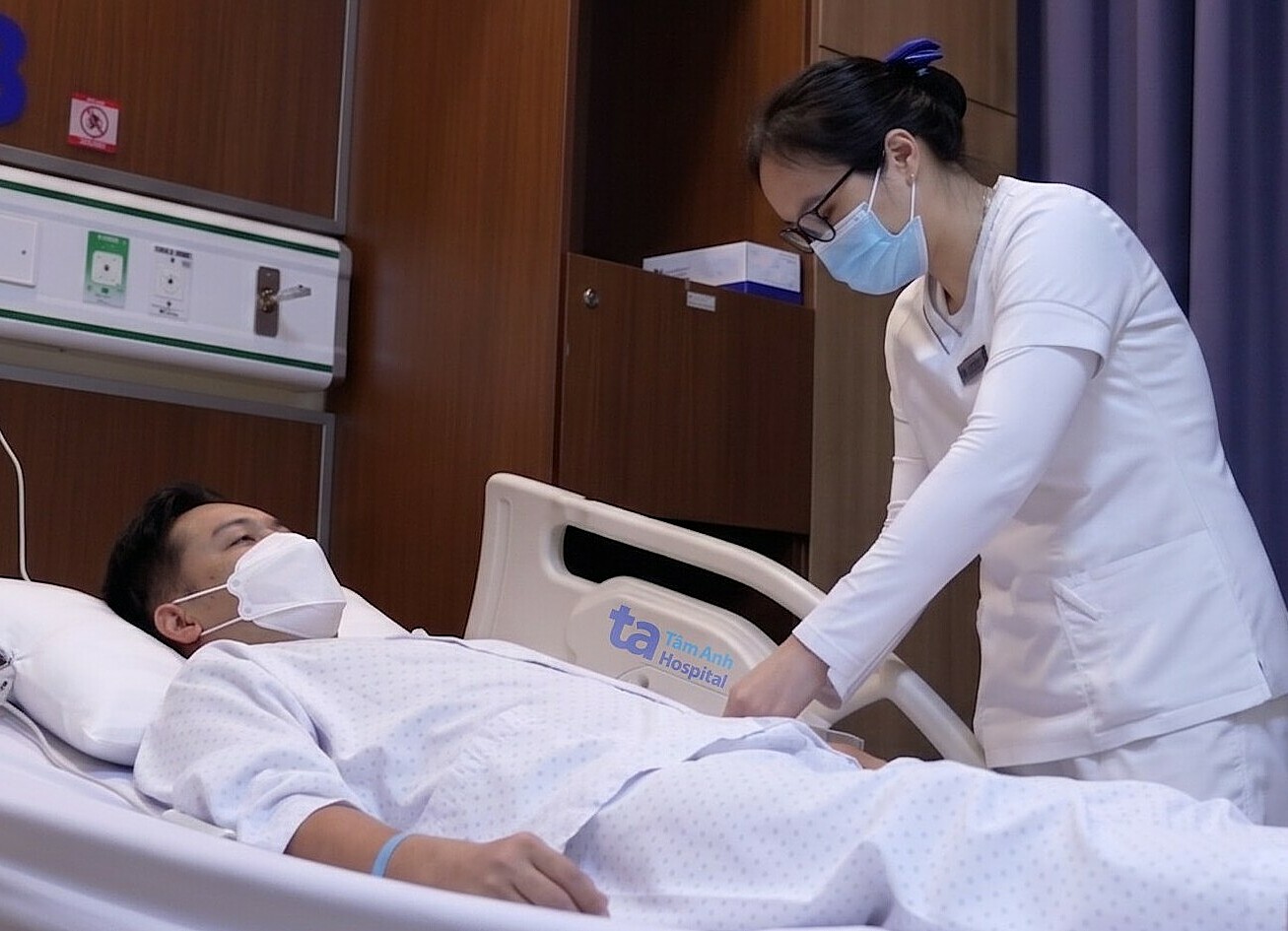 |
Nguyen is receiving antibiotics; his condition has improved after ten days of treatment. Photo: Tam Anh General Hospital |
After ten days of intensive treatment, Nguyen's fever subsided, his pneumonia improved, and the swelling in his foot decreased. His organ functions gradually stabilized. He will need to continue oral antibiotics for at least six months to prevent recurrence.
"Soil fever" is a dangerous infectious disease caused by bacteria that thrive in soil and muddy water. The bacteria can enter the body through open skin wounds, or via the respiratory or digestive tracts. The disease is common among farmers who regularly come into contact with soil and mud, especially those with diabetes, which is the biggest risk factor for severe and rapid progression of the illness.
According to Doctor Hau, "soil fever" is often mistaken for common cellulitis, pneumonia, soft tissue abscesses, or pulmonary tuberculosis due to similar findings on CT scans. Patients are frequently hospitalized only after the infection has spread to multiple sites, including the lungs, bones, liver, spleen, and kidneys.
On 20/4, Thai health officials issued a warning about "soil fever," reporting 23 deaths among over 700 cases since the beginning of the year.
Doctor Hau advises agricultural workers who frequently interact with soil and mud to wear protective boots and gloves. Individuals with open wounds on their hands or feet should strictly avoid wading in dirty water. If persistent swelling, redness, pain, and prolonged fever occur, and common antibiotic treatments are ineffective, immediate hospital care is necessary.
Thanh Ba
| Readers can submit respiratory questions here for a doctor's response |


