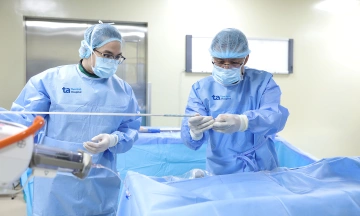
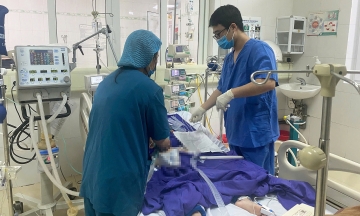
On 24/4, doctors at Phu Tho General Hospital reported that the patient was admitted with a swollen wound on the top of his right foot, which had spread to his calf. Doctors observed a necrotic lesion, approximately 1x2 cm, at the bite site.
Dr. Ha Thi Bich Van, Head of the Emergency Department, stated that due to the estimated large amount of venom, the patient required 30 vials of snake antivenom, a dose many times higher than normal. He also received tetanus vaccination and antibiotics to control infection. Currently, the patient's condition has improved, with reduced pain and swelling.
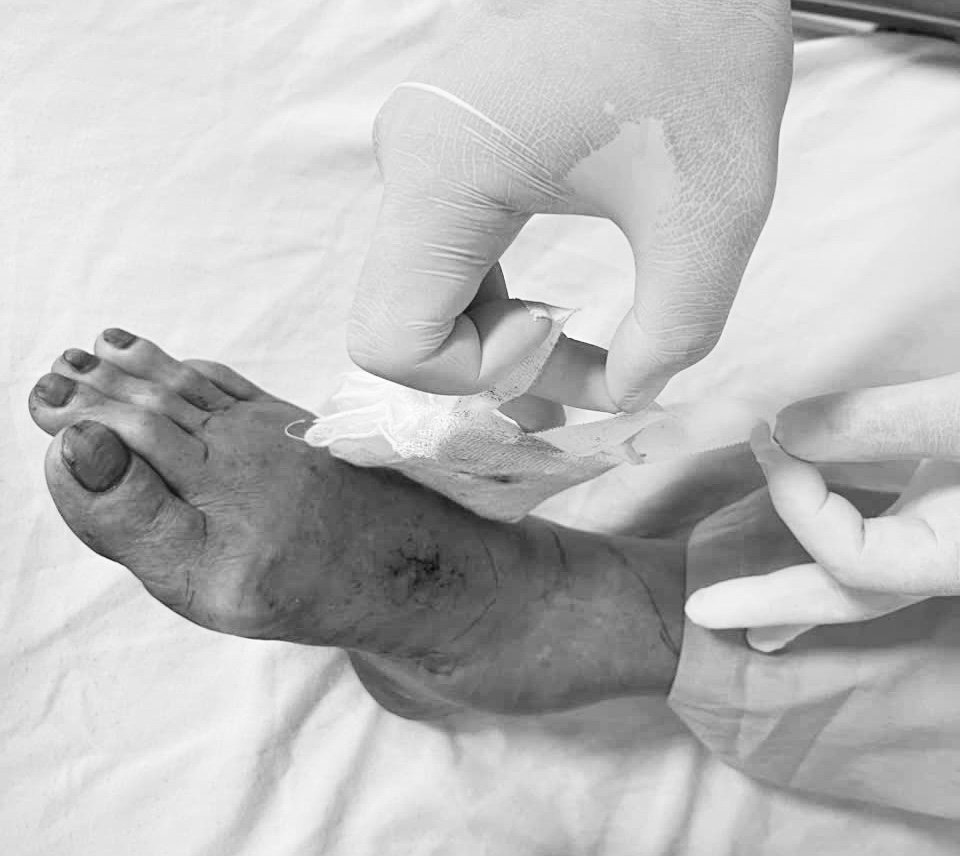 |
The wound on the patient's foot from the cobra bite. *Photo: Hospital provided*
The man's farm houses thousands of cobras, raised for their venom. This incident highlights a growing concern: since early April, the emergency department has admitted 7 cases of venomous snake bites. Four of these involved experienced snake breeders. "Even those knowledgeable about snakes can have accidents if they are complacent, especially during the snakes' breeding season," Dr. Van commented.
According to doctors, the rainy season is the breeding and development period for various snake species, particularly venomous ones. Climate change and urbanization have disrupted snakes' natural habitats, causing them to seek shelter and forage in gardens, trees, bushes, near residential areas, and even enter homes to bite people.
Each snake species possesses different venom toxicity. Cobras, for instance, are highly venomous, containing neurotoxins that cause rapid paralysis. This can lead to respiratory muscle paralysis and life-threatening respiratory failure within the first few hours. The most effective treatment is snake antivenom, best administered within the first six hours of a bite, and no later than 24 hours.
When bitten by a snake, individuals should remain calm and minimize movement; avoid running or strenuous activity to prevent the venom from spreading rapidly throughout the body. Immobilize the bitten limb and keep the bite site below the heart. Absolutely do not cut the skin, attempt to suck out venom, or apply traditional herbal remedies. Instead, transport the patient to the nearest medical facility as quickly as possible. If feasible, remember or photograph the snake to help doctors identify the species and prescribe the appropriate antivenom.
Thuy An