Arthritis is a common condition in children, often overlooked or mistaken for typical growing pains. Early detection is essential to prevent long-term impact on a child's mobility.
The most common form in children is juvenile rheumatoid arthritis (JRA), typically affecting children under 16 and lasting at least six weeks. Unlike arthritis in older adults, which often results from aging as cartilage wears down over time, childhood arthritis is an autoimmune disease, occurring when a child's immune system malfunctions. This condition triggers an inflammatory response, leading to swelling, warmth, redness, and pain in the joints, which can eventually destroy cartilage and bone.
Symptoms of childhood arthritis vary and can be hard to recognize, especially in young children who cannot yet speak or describe their pain. The most common symptom is morning joint stiffness; children often wake up with stiff limbs, difficulty moving, limping, or a clumsy gait. This typically resolves after the child has been active for about 30 minutes to one hour. Other children experience joint swelling, pain, reluctance to move, fever, rash, fatigue, or weight loss. In contrast to growing pains, which usually occur at night and subside by morning, allowing children to play normally during the day, arthritis symptoms persist.
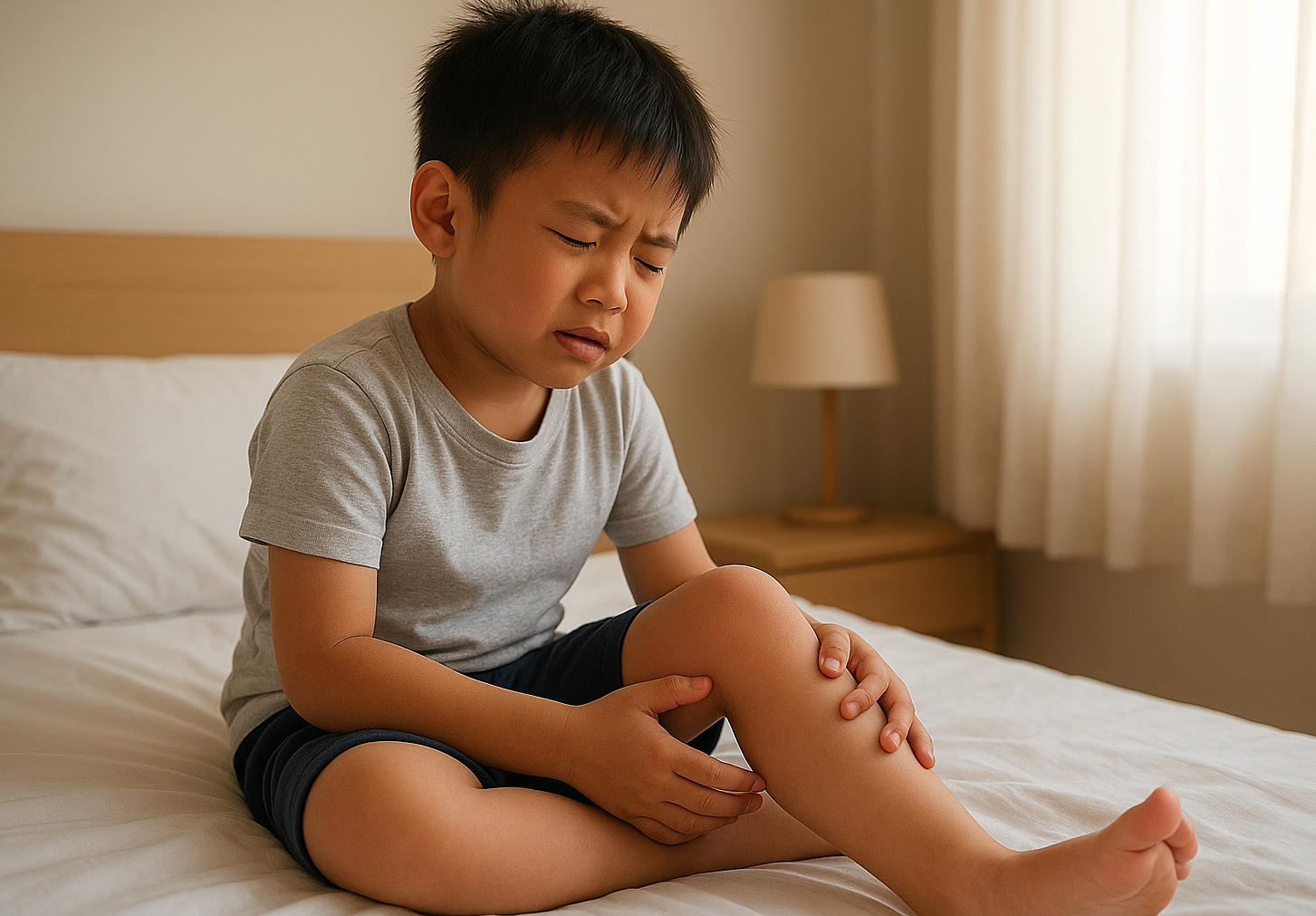 |
Children experiencing pain, joint stiffness, or slight leg swelling in the morning may show signs of arthritis. *Illustration by AI* |
Treatment for childhood arthritis aims to preserve joint function, prevent joint deformities, and help children lead normal lives. Depending on the case, doctors may prescribe pain relievers, anti-inflammatory drugs, corticosteroids, or anti-rheumatic medications, combined with nutritional guidance, lifestyle adjustments, and physical therapy.
If left untreated, the condition can cause permanent joint damage, leading to disability and joint deformities. It can also lead to growth disturbances, causing uneven bone development, such as one leg being longer than the other. Some children experience stunted growth due to prolonged corticosteroid use. The most serious complication is uveitis, a silent inflammation inside the eye, which can result in blindness.
If your child frequently complains of leg pain, limps in the morning, or has unusual joint swelling lasting over one week, you should consult a specialist. The doctor will observe their gait, check for swelling and joint range of motion, and may order blood tests, X-rays, joint ultrasounds, or an MRI to assess bone damage.
Dr. Nguyen Do Trong, Specialist Level II
Department of Pediatric Surgery
Tam Anh General Hospital, Ho Chi Minh City
| Readers can submit questions about children's health here for a doctor's response. |