For a liver tumor approximately 7 cm in size, transarterial chemoembolization (TACE) could be a suitable treatment option. However, doctors will determine the appropriate approach after a comprehensive evaluation. This assessment includes the tumor's nature, characteristics, location, blood supply, invasiveness, and potential for distant metastasis. Therefore, you should visit a hospital for examination and assessment by doctors to determine the most suitable treatment plan.
TACE is a common procedure for hepatocellular carcinoma (HCC) and certain hypervascular metastatic tumors. Other types of liver cancer are rarely indicated for embolization.
Embolization is often indicated when patients have multiple or large liver tumors, but their liver function remains good and general health is stable. Some advanced-stage liver cancer cases, when surgery, ablation, or liver transplant are not options, can also be treated with TACE. This method induces necrosis of the liver tumor through two mechanisms: cutting off its blood supply and directly destroying the tumor.
Doctors create a small incision on the patient's body to access the femoral or radial artery. Then, guided by a digital subtraction angiography (DSA) system, they selectively or super-selectively thread a catheter into the arterial branch supplying the tumor. A mixture of embolizing material and chemotherapy drugs is then injected to cut off the tumor's blood supply and destroy the tumor.
Liver cancer is categorized into primary and secondary (metastatic from other cancers). Common primary liver cancers include hepatocellular carcinoma (HCC), intrahepatic cholangiocarcinoma (ICC), or mixed types.
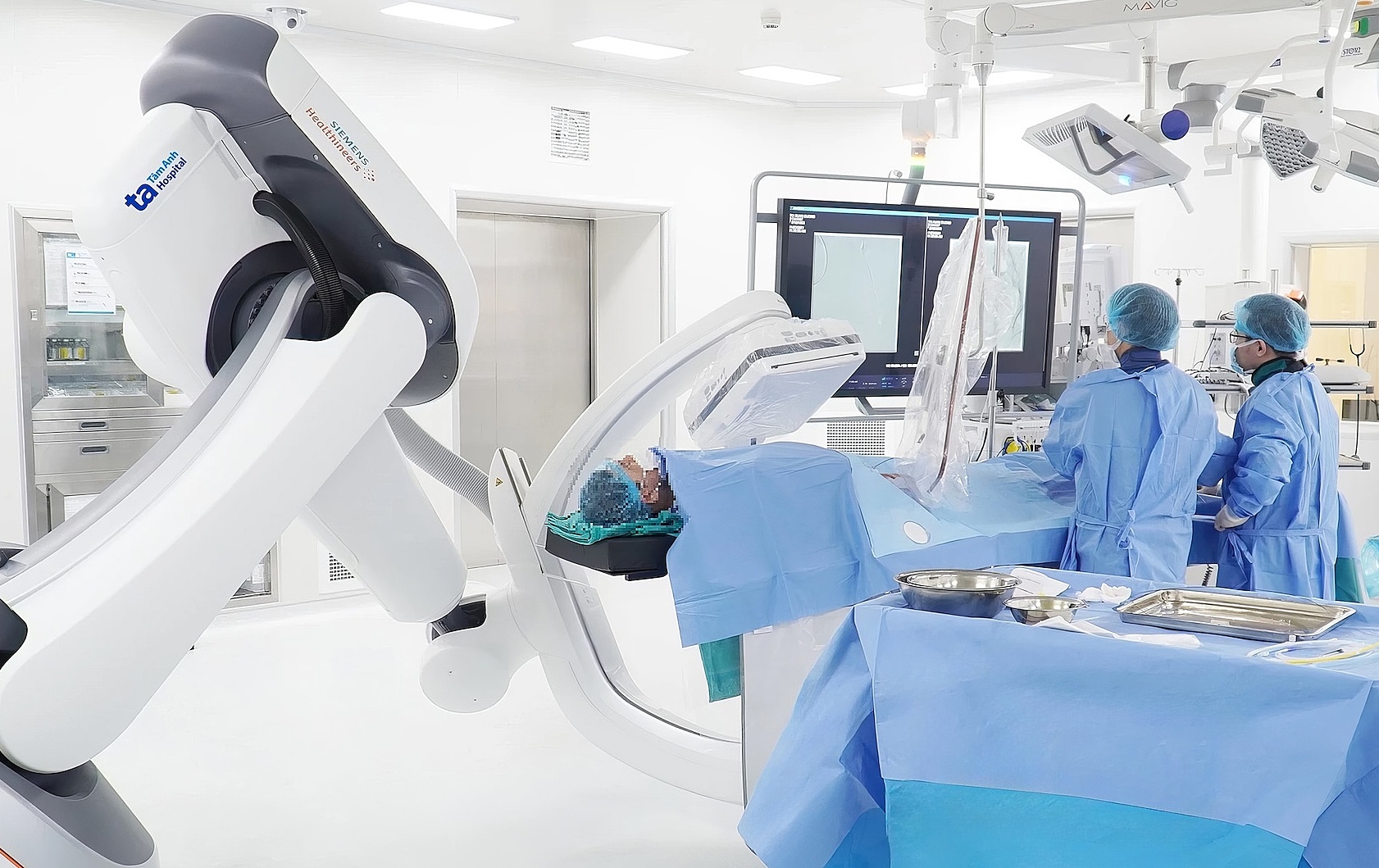 |
A team performs liver tumor embolization for a patient under the guidance of a digital subtraction angiography (DSA) system. *Photo: Tam Anh General Hospital*
Dr. Nguyen Duy Trinh
Deputy Director, Center for Diagnostic Imaging and Interventional Radiology
Tam Anh General Hospital Hanoi
| Readers can submit questions about cancer here for doctors to answer. |