Prolonged exposure to hot weather causes blood vessels to dilate, and then constrict when entering a cold environment. This continuous process of dilation and constriction places significant pressure on blood vessel walls, especially in older individuals or those with underlying health conditions, according to Doctor Nguyen Tan Sang, from the Neurology Department at the Tam Anh Neuroscience Center, Ho Chi Minh City.
For example, someone working outdoors in the sun who then suddenly enters an air-conditioned room, or vice versa, experiences sharp blood pressure fluctuations. This increases the risk of a cerebral hemorrhage. Explaining the mechanism, Doctor Sang notes that when exposed to high temperatures, the body reacts by dilating blood vessels and increasing sweat production to dissipate heat. Prolonged work or travel outdoors in the sun leads to dehydration, reducing circulatory volume. Blood often becomes thicker and circulates more slowly. These are favorable conditions for blood clots to form, which can block cerebral vessels and cause a cerebral infarction.
Additionally, exposure to hot weather forces the heart to work harder to maintain circulation and regulate body temperature. Individuals with cardiovascular disease, hypertension, or atherosclerosis are more susceptible to stroke when temperatures change suddenly, as their blood vessels are already compromised.
A 2023 analysis published in PubMed, synthesizing 20 international studies, showed that excessively hot environmental temperatures increased the risk of hospital admission for stroke by 10% and the risk of death by 9% compared to a reference temperature of around 35 degrees C.
Over the past month, Tam Anh Hospital has admitted over 10 stroke cases linked to hot weather. For instance, Ms. Hong, 58, with a history of hypertension, experienced dizziness, difficulty speaking, and weakness in her right arm after riding her motorbike for one hour on a sunny afternoon. A CT scan of her cerebral blood vessels revealed a cerebral infarction due to a vessel blockage. Doctors performed revascularization using thrombolytic drugs combined with internal medicine treatment. Following treatment, her limb muscle strength clearly improved.
Similarly, Mr. Phuc, 61, with a history of diabetes and hypertension, began experiencing headache, dizziness, and nausea after repairing a water tank on his rooftop under the scorching sun. He initially thought it was heatstroke. Approximately two hours later, he suffered left-sided paralysis and was rushed to the hospital. A CT scan confirmed an acute cerebral infarction due to middle cerebral artery occlusion.
The hospital activated its "Code Stroke" emergency protocol, performing urgent cerebral revascularization combined with resuscitation treatment. After three days of treatment, the patient was conscious and is continuing physical therapy to improve his mobility.
 |
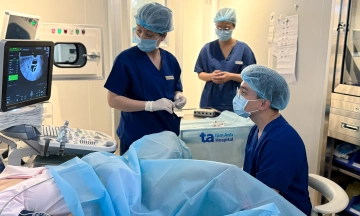
Stroke patients need early emergency care to limit the risk of death and complications. Photo: Tam Anh General Hospital |
According to Doctor Sang, stroke symptoms such as headache, dizziness, blurred vision, nausea, and numbness or weakness in the limbs after sun exposure are easily confused with heatstroke or exhaustion. This often leads to delays in treatment during the "golden hour."
Heatstroke typically causes extreme fatigue, thirst, hot red skin, sweating, or fever, but limb movements remain normal. In contrast, stroke often presents with additional focal neurological signs such as facial drooping, weakness or numbness on one side of the body, difficulty speaking, blurred vision, or loss of balance. If a stroke is suspected, a quick check can be performed by asking the person to smile, say a simple sentence, and raise both arms simultaneously.
Doctors advise everyone to limit outdoor exposure between 10h and 16h on hot days. Drink enough water daily, wear sun-protective clothing and hats when going outside, and avoid constantly moving between outdoor heat and air-conditioned rooms to prevent drastic temperature changes. Early screening for cerebrovascular diseases plays an important role in stroke prevention for at-risk individuals.
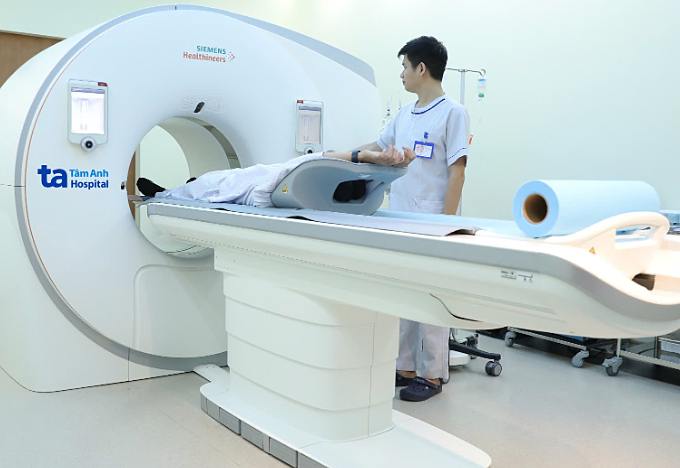 |
100,000-slice CT scans help detect early abnormalities in the brain and cerebral blood vessels, screening for stroke risk. Photo: Tam Anh General Clinic District 7 |
Abnormalities can be detected through CT and MRI using new generation machines such as MRI 3 Tesla, CT 1975, or CT 100,000-slice scanners. These help assess the degree of stenosis, aneurysm, arteriosclerosis, or the risk of thrombus formation. Early detection allows doctors to establish appropriate control and treatment regimens, reducing risks in harsh weather conditions.
Trong Nghia
| Readers can ask questions about neurological diseases here for doctors to answer |