Dr. Pham Huy Vu Tung, Deputy Head of the Ophthalmology Department at the High-Tech Eye Center, Tam Anh General Hospital, TP HCM, reported that a patient's left eye showed a large red patch on the white, with left eye vision at 4/10 and right eye vision at 9/10. The patient also experienced eye pain, fatigue, and sudden high blood pressure. A specialized examination confirmed ruptured capillaries and retinal swelling in the left eye, leading to a diagnosis of subconjunctival hemorrhage and macular edema.
Subconjunctival hemorrhage, commonly known as eye bleeding, is a frequent condition that occurs when small capillaries beneath the conjunctiva – the transparent membrane covering the white of the eye – rupture. This condition typically causes no pain or vision impairment. However, Ms. Nga's case was more serious because she also developed macular edema, which is swelling in a part of the retina, a thin tissue layer at the back of the eye.
Macular edema develops when the macula, the central region of the retina, degenerates and abnormal blood vessels in the eye leak fluid, causing the macula to swell. This condition gradually leads to vision loss, characterized by wavy vision and difficulty discerning the shapes or colors of objects. Without early treatment, there is a risk of permanent vision loss, or even blindness.
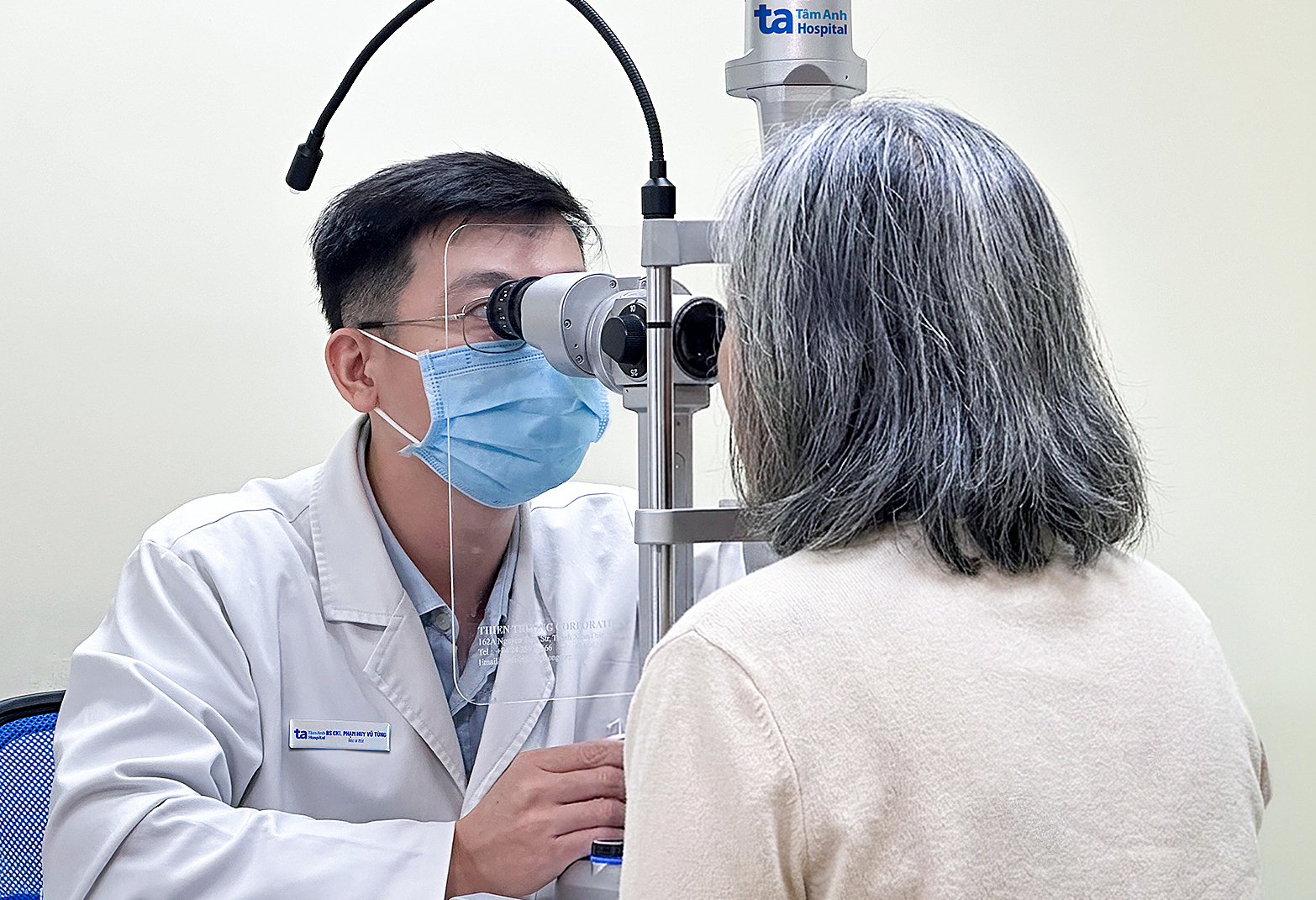 |
Doctor Tung examines Ms. Nga's eyes. *Photo: Tam Anh General Hospital* |
Treatment for macular edema varies depending on its severity and cause; doctors may administer intraocular injections to slow the disease's progression. Ms. Nga's condition was detected early, and she was prescribed medical treatment involving oral medication combined with eye drops. After one month of treatment, her macular edema was controlled, and her vision recovered to 9/10 in both eyes.
Patients require regular follow-ups and scheduled re-examinations. They should avoid rubbing their eyes, rest their eyes often, and maintain good hydration. It is crucial for patients to seek medical attention immediately if they experience blurred vision or distorted images.
According to Doctor Tung, macular edema stems from various causes, including macular degeneration, retinitis pigmentosa, uveitis, and central retinal vein occlusion. It can also arise as a complication of diabetes and hypertension. Individuals with macular edema often experience difficulty reading and driving, along with wavy and progressively blurred vision. People over 45 years old, or those with risk factors such as refractive errors, diabetes, high blood pressure, or a history of eye injury or surgery, should undergo regular eye examinations every 6-12 months for timely detection and early treatment.
Ngoc Kim Tham
*Patient's name has been changed
| Readers can submit questions about ophthalmological diseases here for doctors to answer |