**Answer:**
Most women with endometriosis do not develop malignant cancer during their lifetime. Endometriosis occurs when tissue similar to the lining inside the uterus grows outside the uterus, commonly found in the ovaries and fallopian tubes. These misplaced tissues, affected by hormones, thicken and bleed with the menstrual cycle. However, this blood has no exit, accumulating in the pelvis, causing chronic inflammation, adhesive scar tissue, and ovarian endometriomas. This often leads to menstrual pain and prolonged pelvic pain for many women. The inflammation and adhesions can also block fallopian tubes, affect egg quality, and hinder the embryo's implantation, potentially causing difficulty conceiving.
After menopause, endometriosis is less common due to declining hormone levels. If an ovarian tumor is detected at this stage, doctors usually recommend a thorough evaluation to rule out cancer risk.
Endometriosis is hormone-dependent and tends to recur. Treatment strategies require individualization, based on age, disease severity, and reproductive needs. For young women who still wish to have children, medical treatment is the preferred option. Hormonal medications such as combined oral contraceptives, progestin, or GnRH agonists help reduce endometriotic tissue activity, control pain, and limit disease progression.
For cases of severe pain unresponsive to medication, or large ovarian endometriomas, doctors recommend laparoscopic excision of the lesions. This surgery helps reduce symptoms and improve the chances of pregnancy. If women no longer wish to have children, a hysterectomy and bilateral salpingo-oophorectomy is the most definitive approach.
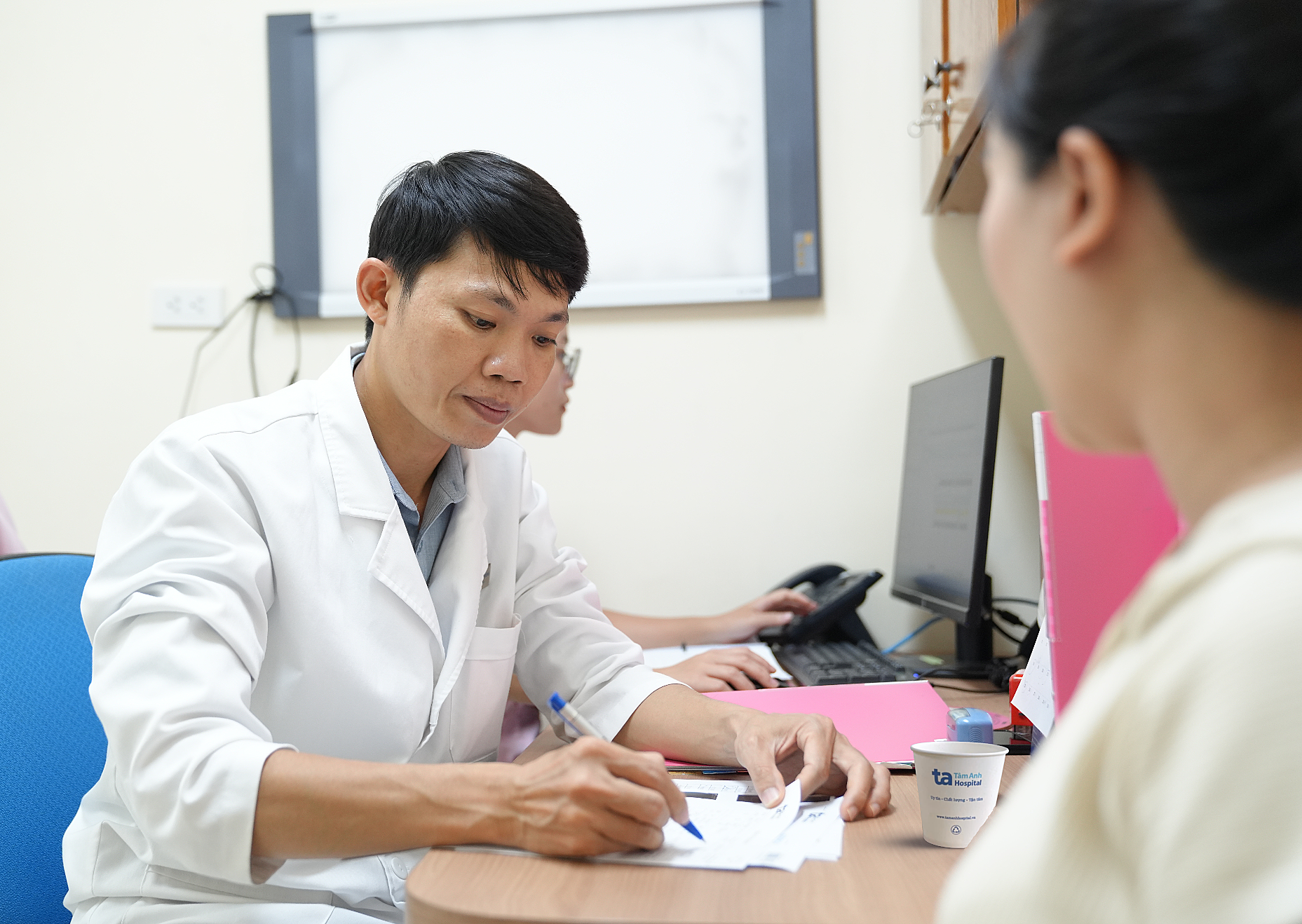 |
Doctors at the Center for Obstetrics and Gynecology are consulting a patient. *Illustration: Tam Anh General Hospital*. |
The information you provided is insufficient to conclude whether your endometriotic mass risks progressing to cancer. You should have regular follow-up appointments every 3-6 months or as directed by your doctor. Pay attention if ovarian cysts are larger than 6-7 cm, rapidly increase in size, show abnormal ultrasound changes, or if symptoms such as worsening pain, rapid abdominal enlargement, or unexplained weight loss appear.
In addition to treatment, maintaining a healthy lifestyle, managing weight, exercising regularly, and getting adequate sleep help improve inflammation and hormonal balance. If you plan to have children, discuss this with your doctor early to receive appropriate treatment.
Dr. CKI Nguyen Hoang Tung
Center for Obstetrics and Gynecology
Tam Anh General Hospital Hanoi
| Readers can submit questions about obstetrics and gynecology here for doctors to answer. |