Answer:
Meniere's disease is a peripheral vestibular and hearing disorder. It occurs in the inner ear due to an abnormal increase in endolymphatic fluid and ions. This condition is more common in adults aged 40-60, though there is a trend toward younger patients. Due to its non-specific symptoms, Meniere's disease can easily be confused with other vestibular conditions or hearing loss diseases.
Currently, the exact cause of Meniere's disease remains unclear; however, it is linked to a fluid imbalance within the labyrinth (also known as the inner ear). The labyrinth contains the balance organs—the semicircular canals, utricle, and saccule—along with the endolymphatic sac and the hearing organ, the cochlea.
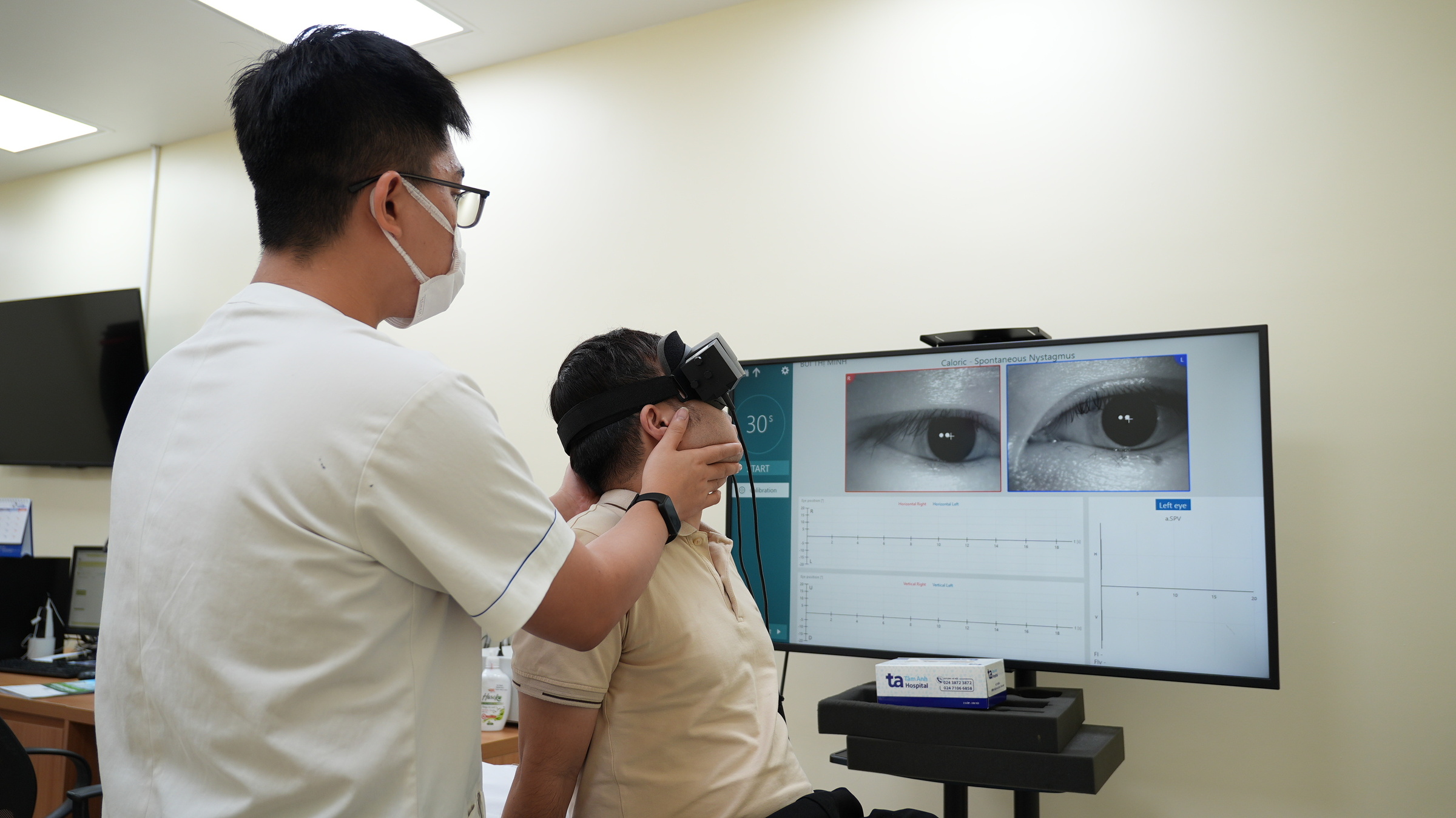 |
Patients undergo vestibular function testing using videonystagmography (VNG) technology to diagnose Meniere's disease. *Photo: Tam Anh General Hospital* |
If the disease is detected at an early stage and treated with the correct protocol, it can be well-controlled. This approach helps reduce sequelae such as hearing loss and imbalance, thereby improving the patient's quality of life. While there is currently no definitive cure for Meniere's disease, the following methods can help manage its symptoms:
Medication: The most bothersome symptom of Meniere's disease is dizziness spells, which may or may not be accompanied by nausea. Prescription medications with vestibular suppressant, anti-emetic, and sedative effects can alleviate these symptoms.
Dietary and behavioral changes: Limiting dietary salt intake to 1,500-2,000 mg per day and using diuretics can help control Meniere's disease symptoms. Patients should avoid staying up late and overworking, and quit smoking and alcohol to prevent symptom flare-ups. A healthy diet, balanced lifestyle, sufficient sleep, stress avoidance, and daily exercise support increased resistance and prevention of Meniere's disease.
Surgery: Surgery is indicated when medical treatments do not alleviate dizziness. Doctors may recommend chemical labyrinthectomy, endolymphatic sac decompression surgery, or vestibular neurectomy. The choice of procedure depends on the patient's age, overall health, and hearing level.
Cognitive Behavioral Therapy (CBT): This is a form of talk therapy that helps patients focus on how they interpret and react to life experiences. By doing so, they can develop better coping mechanisms when sudden dizziness attacks occur.
Patients should seek examination at a hospital with an Ear, Nose, and Throat (ENT) department for a specific assessment. This allows doctors to recommend the most appropriate treatment methods.
M.Sc. Doctor Dong Thi Nhu Quynh
Department of Ear, Nose, and Throat
Tam Anh Cau Giay General Clinic