Children with hand, foot, and mouth disease can recover within 5-7 days if their immune system responds well and they receive proper care. However, an immature immune system in young children makes them vulnerable to the virus easily entering and attacking the body via the blood-brain barrier, according to Dr. Pham Duc Tuan, from the Department of Pediatrics at Tam Anh General Hospital Hanoi.
When a child contracts hand, foot, and mouth disease, there is a risk of the virus directly attacking the central nervous system. This can cause the illness to escalate from a mild to a severe complication within hours. If a young child exhibits any of the following signs, parents should take them to the nearest medical facility immediately.
The first symptom warning of complications is a persistent high fever above 39 degrees Celsius that is difficult to reduce and does not respond to common fever-reducing medications. Dr. Tuan explained that the hand, foot, and mouth disease virus causes an inflammatory reaction, affecting the brain's thermoregulatory center. This renders fever reducers ineffective or only provides temporary relief. This stage indicates the virus is beginning to attack internal organs deeply. If a child has a high fever for more than 48 hours or a continuous, unremitting fever, there is a risk of encephalitis, meningitis, or myocarditis complications.
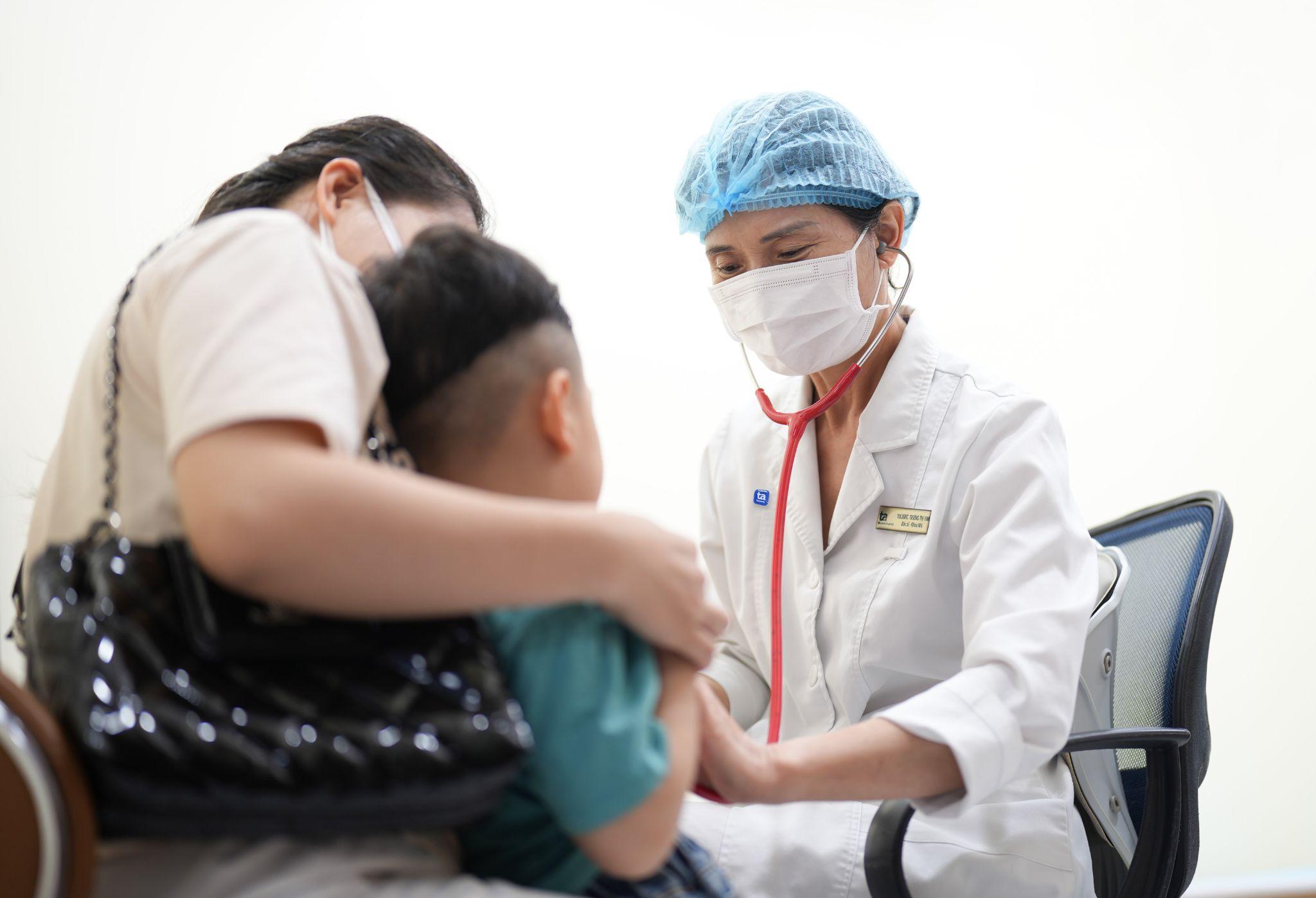 |
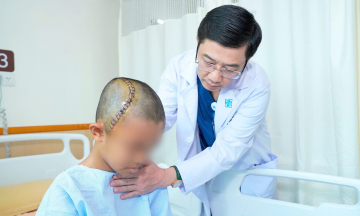
A pediatrician listens to a child patient's heartbeat. Illustration: Tam Anh General Hospital |
The second symptom is startling and flailing, manifested by short, sudden muscle spasms in the arms and legs. This is a warning sign if a child startles more than two times within 30 minutes while resting or falling asleep. This occurs because the virus directly stimulates motor neurons and central grey nuclei in the brain. "Startling and flailing are not merely natural reflexes in children; they signal a risk of encephalitis complications", Dr. Tuan stated. The more frequent the startling, the more severe the central nervous system damage.
The third group of symptoms reflects impaired brain control function and increased intracranial pressure. Children show clear disturbances in consciousness, such as lethargy, drowsiness, unexplained crying, or an unsteady gait, medically known as ataxia. The neurons attacked by the virus lose their ability to coordinate movement and regulate behavior.
Frequent vomiting is also a symptom requiring emergency resuscitation. Unlike vomiting due to digestive issues or overeating, explosive vomiting is the sudden, forceful expulsion of food or stomach fluid without warning. This condition indicates increased intracranial pressure due to encephalitis or meningitis. This symptom often accompanies changes in breathing, a rapid pulse, and limb tremors, reflecting a critical condition affecting respiration and cerebral circulation.
Hand, foot, and mouth disease in young children has four levels. Children with neurological complications, such as startling, a high fever that is difficult to reduce, lethargy, and an unsteady gait, indicate that the disease has progressed to a severe stage. Severe autonomic nervous system complications, including a rapid pulse (more than 170 beats per minute), sweating, hypertension, and abnormally rapid breathing, are recorded at level 3. Shock, acute pulmonary edema, heart failure, and widespread respiratory failure indicate the child's disease has advanced to level 4.
April saw an increase in hand, foot, and mouth disease cases due to the seasonal transition from cold to hot weather. The changes in temperature and humidity create favorable conditions for the virus, especially the Enterovirus 71 (EV71) strain, to spread and persist in the environment, according to Dr. Tuan.
Hoa Le
| Readers can ask questions about children's diseases here for doctors to answer. |