Radiation therapy uses high-energy rays (X-rays, gamma rays, electron beams, protons, heavy particles) to destroy or inhibit cancer cells, while helping to preserve healthy tissue. Doctors may prescribe radiation therapy for curative treatment or to alleviate symptoms, improving patients' quality of life.
Specialist doctor level two Bui Le Phuoc Thu Thao, Deputy Head of the Radiation Therapy Department at the Oncology Center, Tam Anh General Hospital Ho Chi Minh City, states that the three common groups of methods include external radiation therapy, internal radiation therapy, and radiopharmaceutical therapy. These methods can be applied independently or combined with surgery, chemotherapy, targeted therapy, immunotherapy, or hormone therapy, depending on the tumor stage, location, and the patient's condition.
External Radiation Therapy
This is the most common method. During treatment, a linear accelerator delivers radiation beams from outside the body, precisely targeting the tumor based on plans developed using CT, MRI, or PET-CT imaging. External radiation therapy is individualized for each patient, minimizing impact on healthy tissue through careful planning and precise patient positioning.
Modern techniques commonly used in external radiation therapy include: intensity-modulated radiation therapy (IMRT), volumetric modulated arc therapy (VMAT), stereotactic radiosurgery (SRS), and stereotactic body radiation therapy (SBRT). IMRT and VMAT can adjust the intensity and path of the beams to concentrate the dose on the tumor, reducing side effects. SRS and SBRT are high-dose radiation therapies, enhancing precision for small, localized lesions.
External radiation therapy is suitable for many types of cancer, such as: lung, breast, prostate, liver, brain, stomach, bone, rectum, and anus.
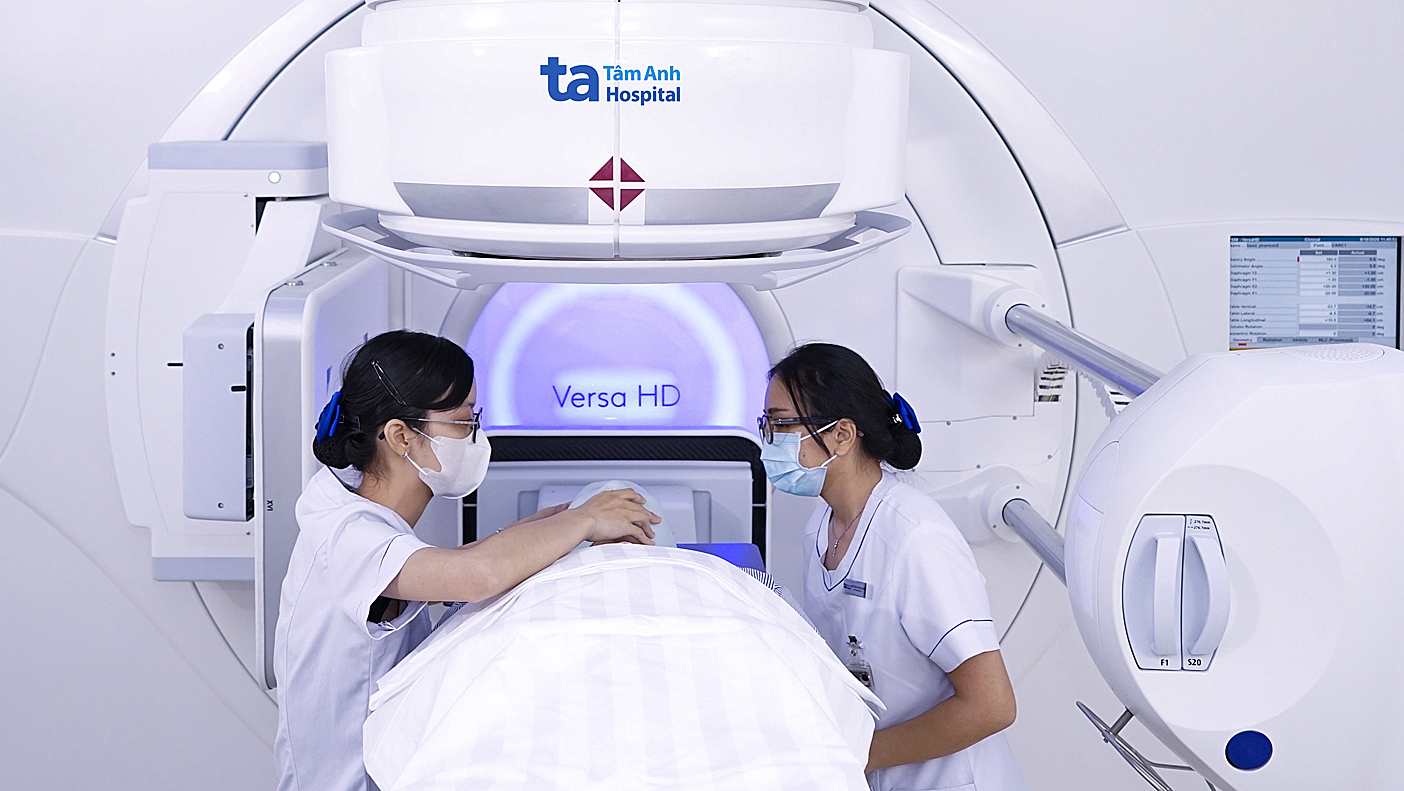 |
Patients are positioned before radiation with a Versa HD linear accelerator. *Tam Anh General Hospital*.
Internal Radiation Therapy
Doctor Thao explains that internal radiation therapy, also known as brachytherapy, involves placing a small radioactive source inside or near the tumor, delivering a high, concentrated dose of radiation directly to the site. Advantages of this method include: shorter treatment times, high efficacy for localized tumors, and reduced impact on surrounding healthy tissue.
Internal radiation therapy is often used to treat: cervical cancer, prostate cancer, head and neck cancers (tongue, mouth), eye cancers (choroidal melanoma, conjunctival melanoma), and breast cancer (in some cases after breast-conserving surgery).
Radiopharmaceutical Therapy
Radiopharmaceuticals (drugs tagged with radioactive isotopes) are introduced into the body orally or via injection. These drugs target specific tissues or receptors (for example, thyroid tissue, somatostatin receptors, PSMA) and then emit radiation to destroy cancer cells from within.
This therapy is often indicated for the treatment of: differentiated thyroid cancer (I-131 after surgery to destroy residual thyroid tissue and treat metastases), neuroendocrine tumors (for tumors with somatostatin receptors), and metastatic prostate cancer.
Doctor Thao emphasizes that each patient has a different treatment regimen and radiation dosage. Therefore, during hospital visits, doctors will clearly discuss the treatment goals, procedures, potential side effects, and post-radiation self-care instructions with patients before treatment begins.
By Nhat Minh