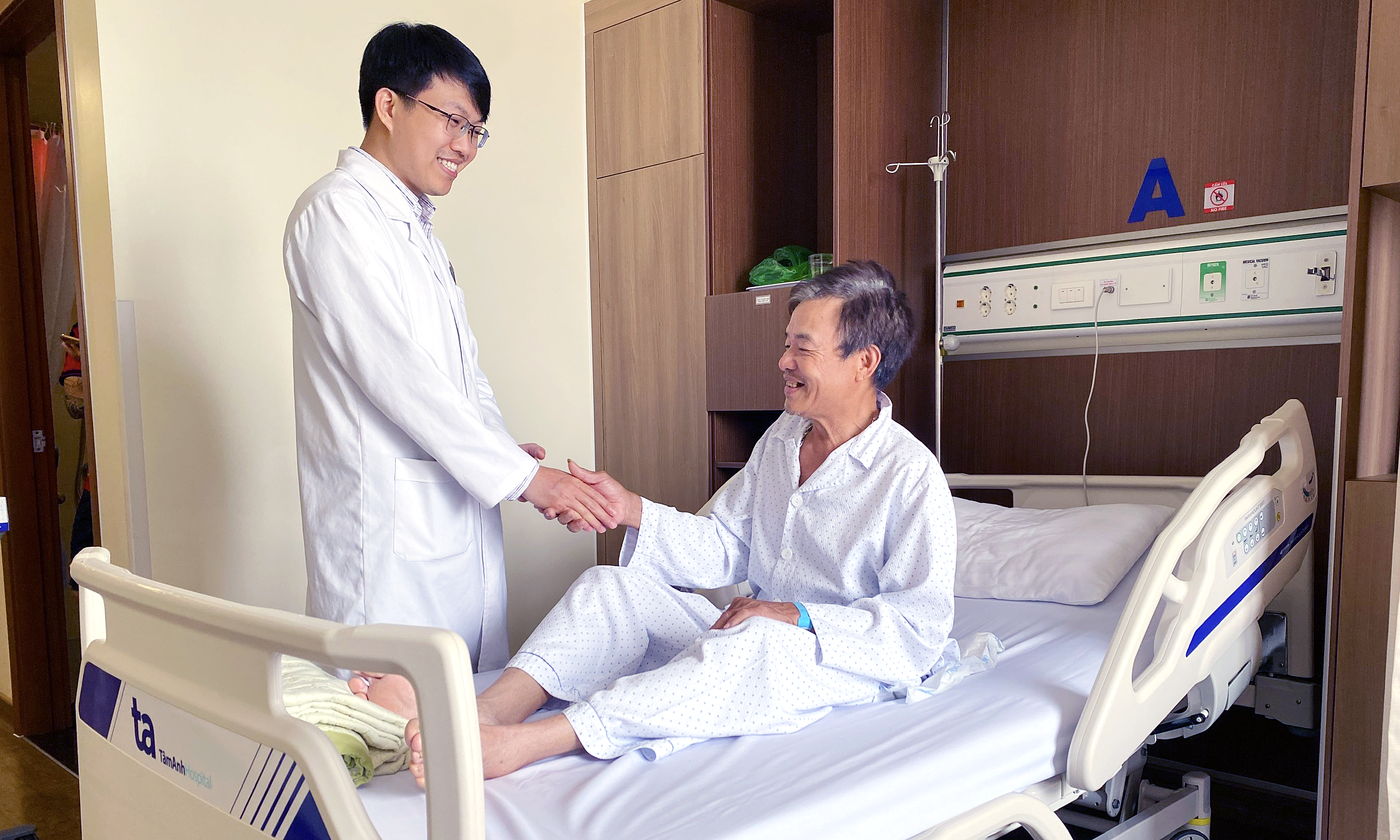
Upon admitting the patient, Dr. Nguyen Thi Nhung, from the Cardiology Department at the Heart Center, Tam Anh General Hospital, Ho Chi Minh City, noted symptoms indicative of a brain stroke. A CT scan revealed a cerebral hemorrhage measuring 15x8x10 mm in the right thalamic region.
"This type of stroke occurs when blood vessels in the brain leak or rupture suddenly, causing bleeding inside the brain and inhibiting the transport of oxygen and nutrients to brain cells," Dr. Nhung explained. She added that this condition can cause brain damage and threaten a patient's life.
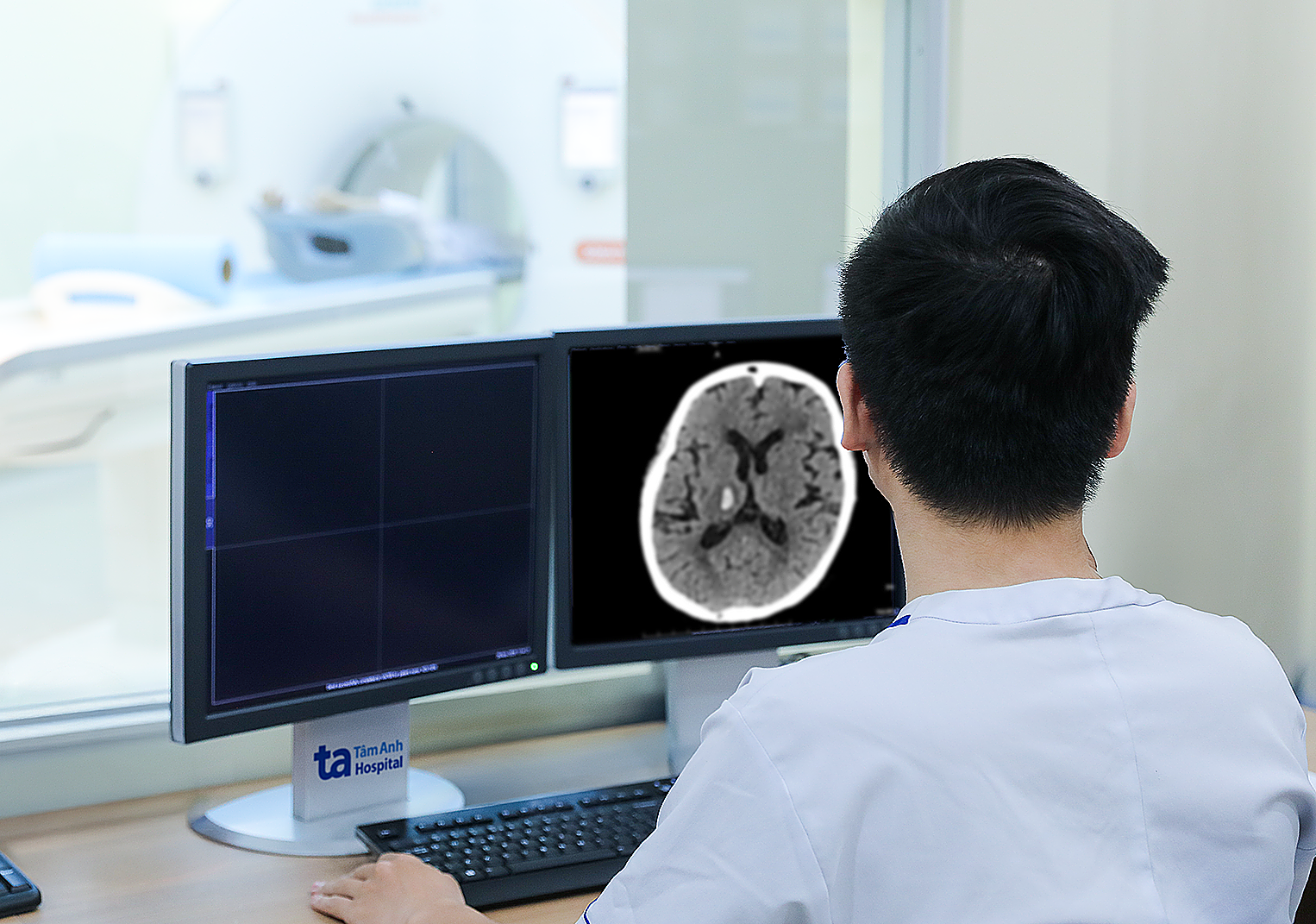 |
The patient underwent a brain CT scan, which detected a stroke. *Photo: Tam Anh General Hospital* |
The causes of cerebral hemorrhage are diverse, including head trauma, hypertension, brain aneurysm, arteriovenous malformation, and blood clotting disorders.
In Ms. Hoa's case, Dr. Nhung suggested that many years of untreated hypertension likely increased the pressure of blood flow on vessel walls. Brain blood vessels, subjected to high pressure for an extended period, become weakened, and their endothelium can crack. This increases the risk of brain blood vessels bulging. Continuous high-pressure blood flow to these bulging areas makes them prone to rupture, causing brain bleeding. When blood pressure rises suddenly, the risk of hemorrhagic stroke is higher. If the cerebral hemorrhage spreads, significant brain cell damage can occur, leading to symptoms such as hemiplegia, difficulty speaking, facial distortion, coma, and even respiratory failure.
Ms. Hoa was treated for hypertension and closely monitored. After five days, her symptoms improved, and blood pressure returned to normal levels. She needs to take medication regularly to prevent a second stroke.
Dr. Nhung recommends that to reduce the risk of brain stroke, patients should adhere to their doctor's medication instructions and actively monitor their blood pressure daily. High blood pressure often has no immediate obvious symptoms. Therefore, even when feeling well, patients should not arbitrarily change their dosage or stop medication.
Everyone should adopt a healthy lifestyle by eating plenty of vegetables and fish, limiting red meat, reducing salt and fats, avoiding processed foods, quitting smoking, and moderating alcohol consumption. Regular exercise helps strengthen cardiovascular health, stabilize blood pressure, reduce blood fat, and decrease the risk of cerebrovascular accidents. Keeping the body warm when the weather turns cold is also important to avoid sudden exposure to cold.
Elderly individuals exhibiting suspected stroke symptoms such as headache, dizziness, confusion, hemiparesis, nausea, vision changes, or loss of consciousness should seek early medical examination for timely treatment.
Thu Ha
*Patient's name has been changed*
| Readers can submit cardiovascular questions here for doctors to answer. |