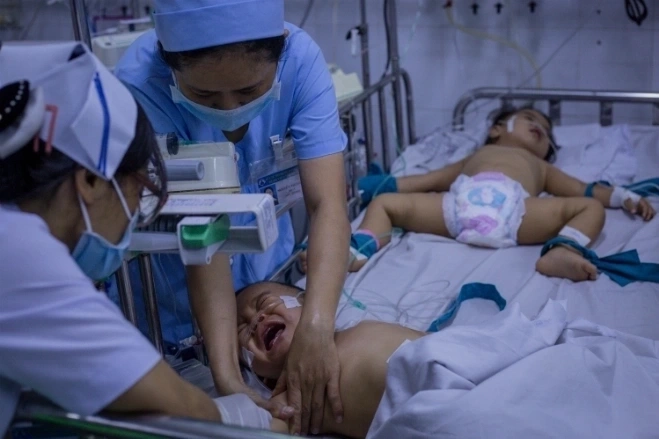
Ho Chi Minh City is experiencing a sharp increase in hand, foot, and mouth disease (HFMD) cases. In the first 12 weeks of the year, the Ho Chi Minh City Center for Disease Control (HCDC) recorded over 11,000 HFMD cases, doubling the figure from the same period last year. The rate of severe cases, classified as grade 2B or higher, increased fivefold compared to last year, primarily due to the EV71 strain, which causes dangerous complications. Health officials project cases will peak in May-June, aligning with a three-year epidemic cycle and the re-emergence of the highly virulent EV71 virus strain.
Children with mild hand, foot, and mouth disease can receive home care and treatment under a doctor's guidance. However, some families do not fully understand the illness, leading to improper care. Dr. Bach Thi Chinh, Medical Director of the VNVC Vaccination System, highlighted several common mistakes in caring for children with HFMD at home:
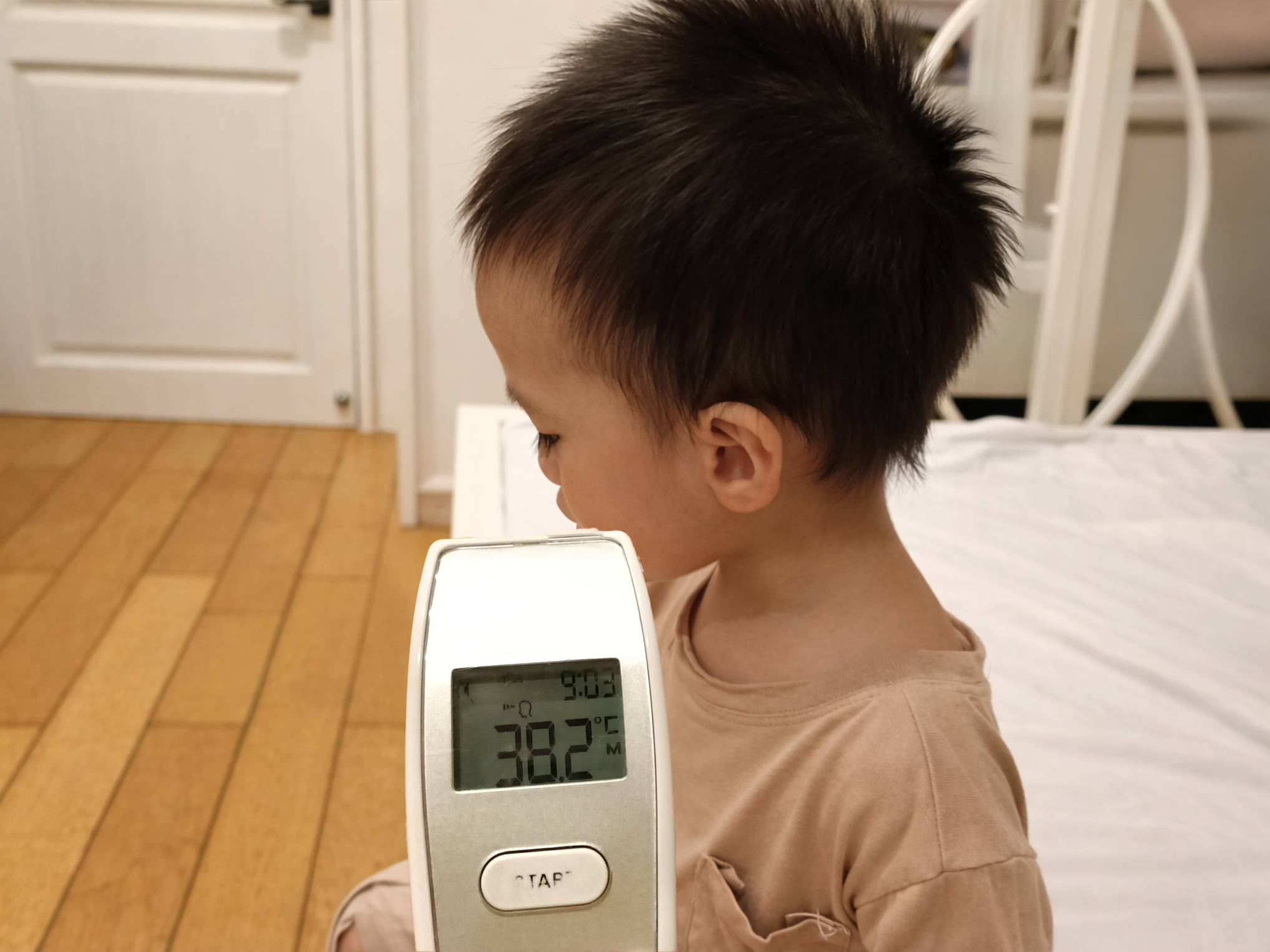 |
Parents need to monitor their child's body temperature and symptoms when caring for a child with hand, foot, and mouth disease at home. *Photo: Hoang Duong*
**Failing to monitor closely at night**
The disease often begins with a mild fever, fussiness, and a sore throat. These non-specific symptoms are easily mistaken for a respiratory viral infection. However, fever can rapidly escalate to 39-40 degrees Celsius, with recurring fever after it subsides. Children may also experience prolonged high fever alongside symptoms such as startling, lethargy, limb tremors, and vomiting. These symptoms often become more pronounced at night and are easily overlooked. Therefore, Dr. Chinh advises parents to closely monitor their child's body temperature, breathing rate, and any unusual signs, especially during the night, to detect risks early.
**Underestimating startling symptoms**
Many parents believe a child startling during sleep is a normal physiological reflex. For hand, foot, and mouth disease, however, this can be an early warning sign of neurotoxicity. Dr. Chinh explained that at this stage, the virus may have begun affecting the central nervous system, causing motor and consciousness disturbances, which lead to startling during sleep. If these occur with dangerous signs such as limb tremors, unsteady gait, vomiting, lethargy, mottled skin, cold sweats, or startling two or more times within 30 minutes, families must seek immediate medical attention.
**Mistaking healed mouth sores for recovery**
Hand, foot, and mouth sores typically have a diameter of 2-3 mm, with a white or pale yellow center and a red border, causing pain. This condition usually lasts 7-10 days. When the sores heal, children eat better, leading parents to mistakenly believe they have recovered. In reality, the disease can still progress and lead to complications. A child is considered recovered only when they are fever-free, alert, eating normally, and no longer experience startling, vomiting, or other unusual signs.
**Incorrect disinfection practices**
Many parents puncture blisters, use cotton swabs with saline, or bathe children in herbal water. These actions worsen the lesions, increasing infection risk. Bathing with herbal water also poses risks, as it may contain dust or chemicals that cause irritation. Additionally, improper care causes children pain, loss of appetite, and reduced treatment effectiveness. Correct care involves having the child rinse their mouth with saline after eating, before bed, and upon waking to clean the oral cavity. Families should change clothes and bathe the child daily with warm water and a mild body wash, avoiding vigorous scrubbing that could rupture blisters. Bath time should last 5-7 minutes, followed by drying the body and applying antiseptic solution as directed by a doctor.
**Self-administering antibiotics, intravenous fluids**
Hand, foot, and mouth disease is caused by a virus, so antibiotics are ineffective. Inappropriate antibiotic use can disrupt the microbiome, increase antibiotic resistance, and cause unnecessary side effects. In special cases requiring antibiotics, follow a doctor's instructions and prescriptions. Similarly, intravenous fluid administration is a medical intervention requiring strict control. Improper fluid administration can lead to circulatory overload, electrolyte imbalance, and even worsen the disease.
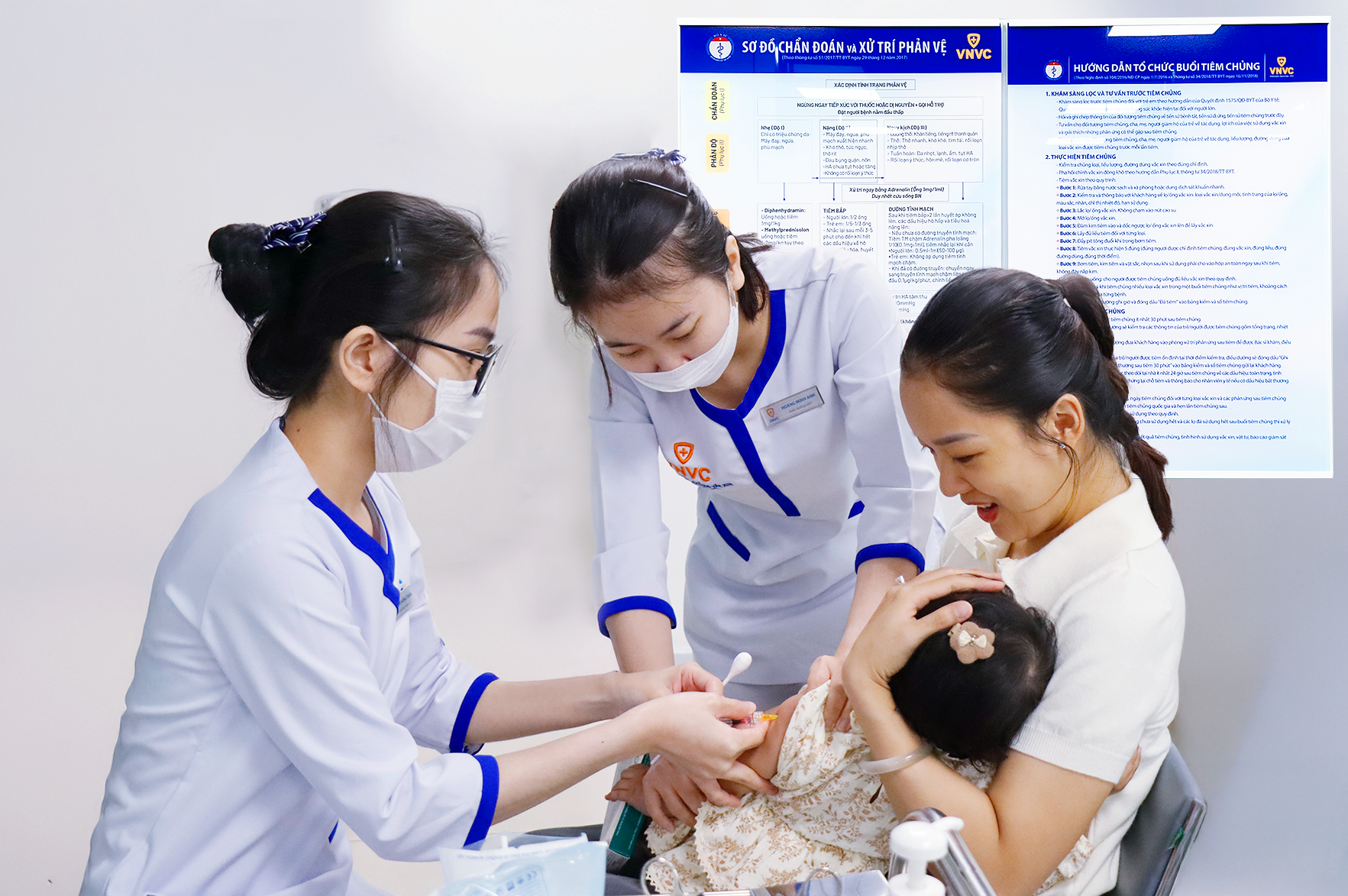 |
Young children receiving a vaccine at the VNVC Vaccination System. *Photo: Binh An*
Currently, there is no specific treatment for HFMD; care is primarily supportive, focusing on monitoring, general care, and symptom management. The Drug Administration of Vietnam has licensed the first hand, foot, and mouth disease vaccine in Vietnam for children aged two months to under six years old. The VNVC Vaccination System is proactively engaging with the vaccine owner and accelerating implementation steps to make the vaccine available soon. Beyond hand, foot, and mouth disease, other illnesses such as measles, flu, meningococcal disease, chickenpox, dengue fever, and respiratory syncytial virus (RSV) are also at risk of increasing. Parents should ensure children receive full vaccinations, wash hands frequently, sanitize toys, and limit contact with sick individuals.
Binh An