Doctor Tran Ngoc Van Anh, a Master of Science from the Center for Reproductive Assistance at Tam Anh General Hospital - District 8, reported that Huong's ovarian reserve index (AMH) was only 0.77 ng/mL, significantly below the normal level of above 2.0 ng/mL. An ultrasound revealed a left ovarian dermoid cyst measuring approximately 7 cm.
Doctor Van Anh explained that while this is a benign tumor, its substantial size encroaches on healthy ovarian tissue, leading to a reduction in ovarian reserve. Additionally, a dermoid cyst can alter the structural relationship between the fallopian tube and the ovary, affecting the fimbria's ability to capture eggs.
When undergoing in vitro fertilization, a single round of ovarian stimulation would yield very few eggs, resulting in a low success rate. To increase the probability of obtaining viable embryos, Doctor Van Anh devised a protocol for oocyte collection before embryo creation.
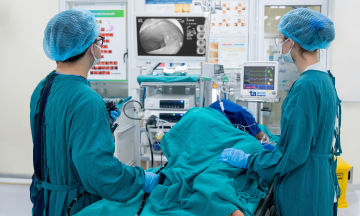
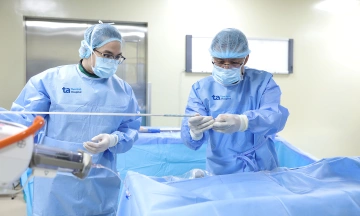
Removing the cyst and performing cauterization could destroy the remaining healthy ovarian tissue, potentially leading to complete ovarian failure for the patient. Therefore, Doctor Van Anh decided to proceed with egg retrieval despite the presence of the cyst, aiming to collect Huong's last remaining eggs. Under ultrasound guidance, the doctor carefully navigated the needle's path to avoid the tumor and access the follicular sites for retrieval.
Over three cycles, Huong successfully collected 11 oocytes, which were then in vitro fertilized with her husband's sperm. The embryos were cultured for an extended period in an ISO 5 laboratory, utilizing a Time-lapse system integrated with artificial intelligence (AI). This technology allowed specialists to continuously observe and evaluate the embryos 24/7. Ultimately, seven day-5 and day-6 embryos were obtained and cryopreserved.
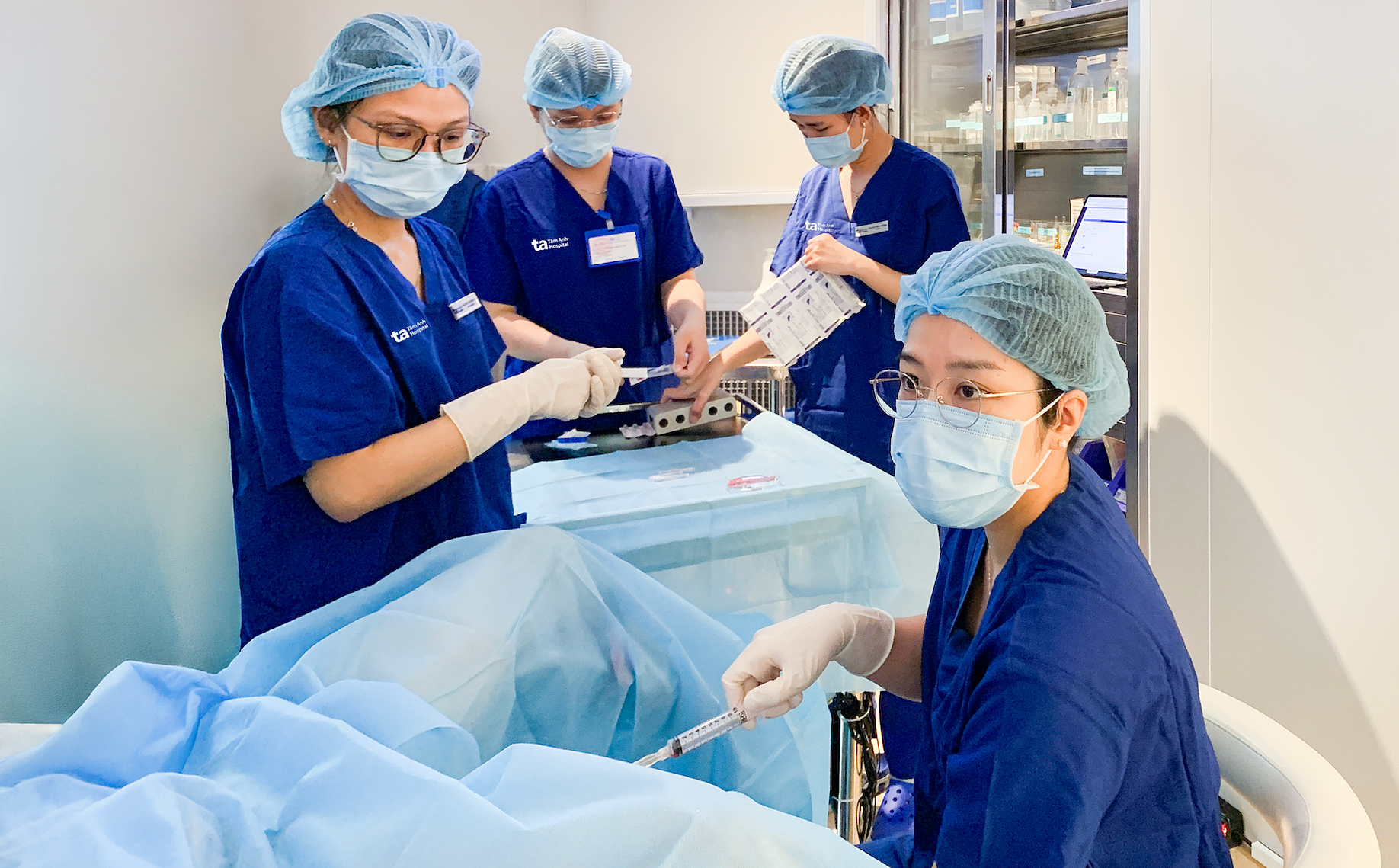 |
Doctor Van Anh (foreground) performing egg retrieval for a patient. *Photo: Tam Anh General Hospital - District 8*
After preparing the uterine lining and allowing hormone levels to return to a natural physiological state, the doctor transferred a good quality day-5 embryo into Huong's uterus. However, this resulted in a naturally regressed ectopic pregnancy. The doctor then prepared the uterine lining for a second embryo transfer, which proved successful.
Huong is currently 12 weeks pregnant, with her pregnancy and the dermoid cyst being monitored at the Obstetrics and Gynecology Center. It is anticipated that the cyst will be removed either during her C-section delivery or in a subsequent procedure after birth.
Ovarian dermoid cysts are common benign tumors in women of reproductive age. They often do not cause pain in their early stages, with many women discovering them incidentally during routine examinations. Doctor Van Anh advises women to seek medical attention if they experience menstrual irregularities, pelvic pain, lower abdominal distension, or if they have had regular, unprotected intercourse for 12 months without conceiving.
The appropriate treatment method is determined on a case-by-case basis. For women who have not yet conceived and have small cysts, regular monitoring may be sufficient. Cysts larger than 5 cm are typically recommended for laparoscopic cystectomy to prevent ovarian torsion. If there are signs of ovarian decline, patients may consider egg freezing before treatment to preserve their future fertility.
Dinh Lam
*Patient's name has been changed