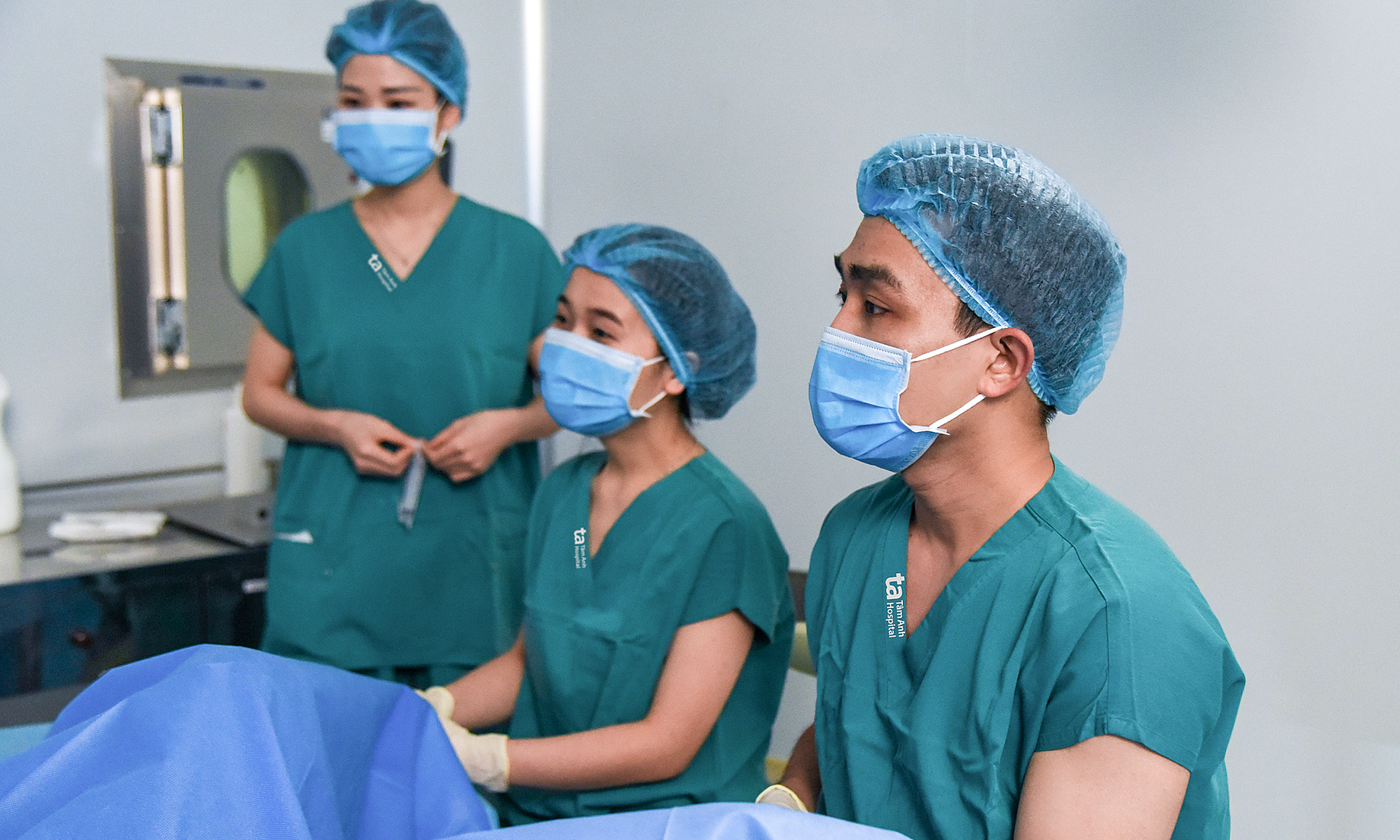
Doctor Tran Thi My Linh, specializing in Dermatology and Aesthetic Dermatology at Tam Anh General Hospital, Ho Chi Minh City, diagnosed Ms. Phu with post-inflammatory hyperpigmentation on a background of atopic dermatitis. This common condition occurs when inflammation stimulates melanocytes to increase melanin production, simultaneously disrupting pigment distribution in the affected skin.
The doctor explained that the epithelial layer of the lips is naturally thin, and its skin barrier is weaker than other skin areas, making inflammation, dryness, and irritation prone to recurrence. With repeated inflammation, melanin tends to deposit in the epidermis and can descend into the superficial dermis, darkening the lip color and making it difficult to improve with simple topical brightening methods.
Doctor Linh prescribed Ms. Phu 6-8 sessions of pico laser treatment. This technology uses ultrashort pulses, creating a photomechanical effect that breaks down melanin particles into tiny fragments, causing minimal thermal damage to surrounding tissues.
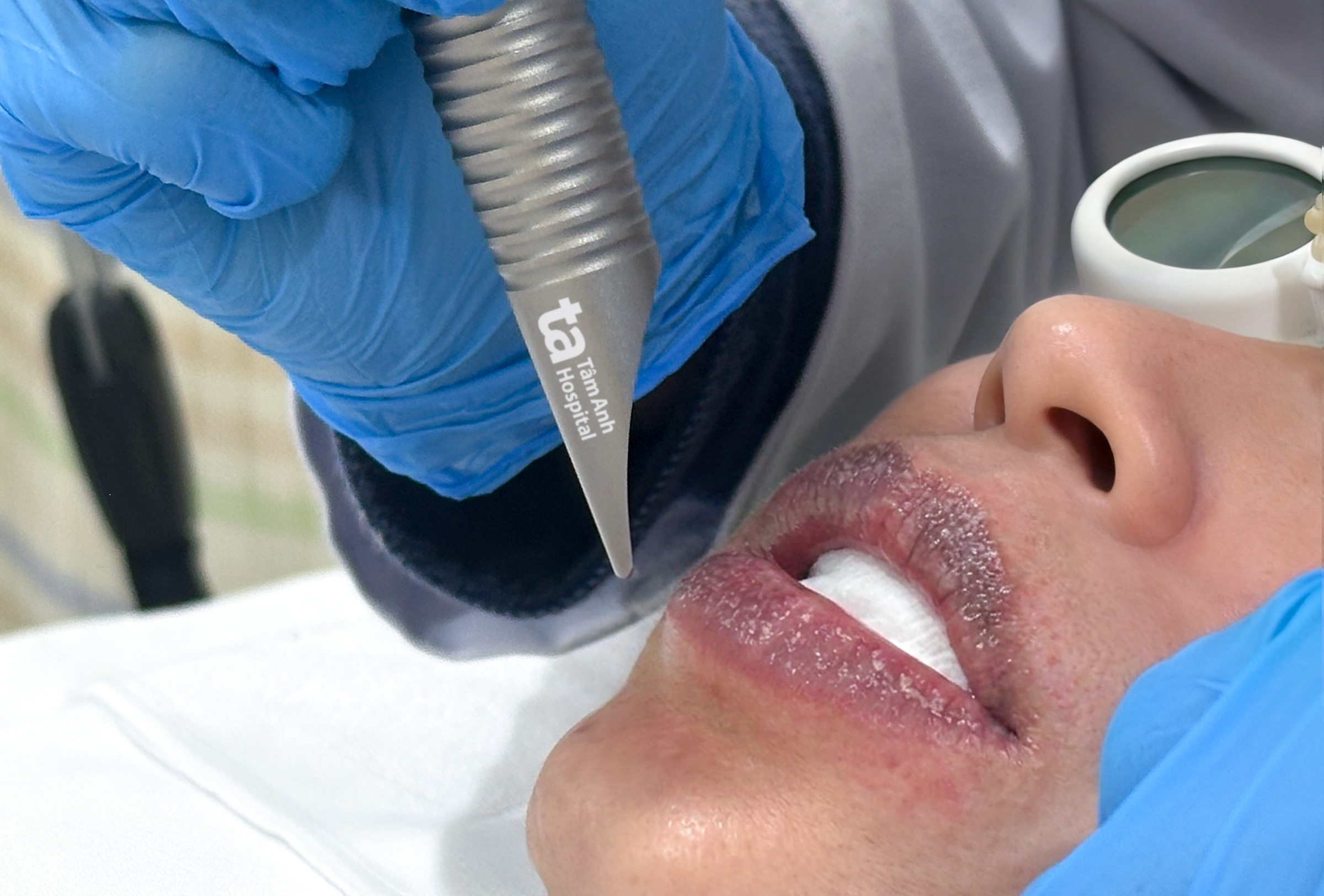 |
The doctor uses a long-pulse 6D laser to naturally pink Ms. Phu's lips. *Photo: Tam Anh General Hospital* |
Wavelength and energy parameters are individualized to ensure precise targeting of pigment melanin, limiting the risk of secondary post-inflammatory hyperpigmentation – a complication that can occur in thin and sensitive semi-mucosal areas like the lips.
After the pigment treatment phase, Ms. Phu received a combined 6D laser regimen to support tissue regeneration, improve microcirculation, and restore the lip skin barrier. This combined treatment not only brightened the lip color but also improved tissue moisture and elasticity.
After 6 treatment sessions, Ms. Phu's lip color became brighter and more even, with reduced dryness, flaking, and irritation. She was advised to continue care and monitoring to limit the risk of atopic dermatitis recurrence.
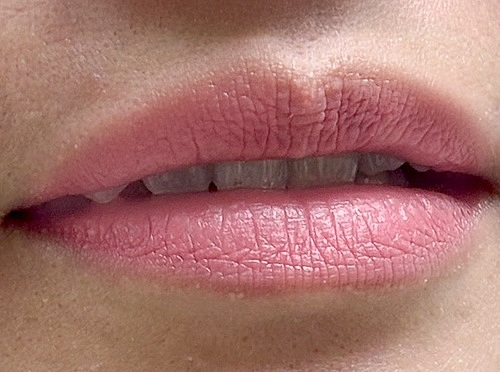 |
Ms. Phu's lip color is pinker after 6 treatments with pico laser and 6D laser. *Photo: Tam Anh General Hospital* |
Dark lips can result from atopic dermatitis, allergic or irritant contact cheilitis, or repeated mechanical trauma. Among these, post-inflammatory hyperpigmentation is a common mechanism but is easily confused with other causes. In cases with chronic inflammatory factors, inflammation needs to be controlled, not just focused on brightening, to prevent pigment disorders from recurring and affecting long-term efficacy.
Doctor Linh advises patients not to self-administer unverified lip-pinkening products containing irritants like corticosteroids or high-concentration acids, as these can worsen inflammation. Prioritize moisturizing products that restore the skin barrier, avoid mechanical trauma, peeling, or excessive exfoliation. Protecting lips from UV rays with an SPF lip balm helps limit hyperpigmentation.
Minh Huong
*Character name has been changed