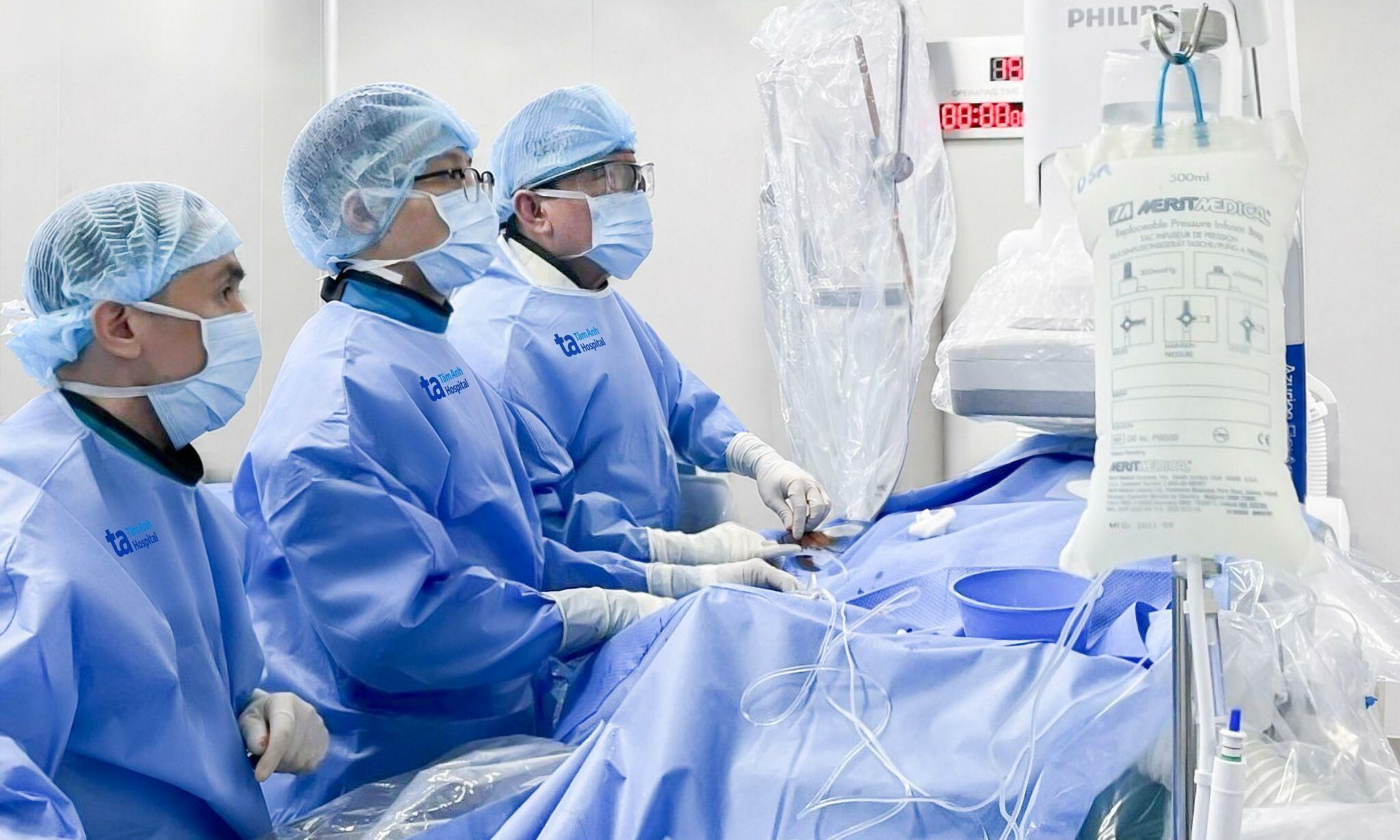
Stomach polyps are lesions that protrude from the surface of the stomach lining. They comprise various types, each with distinct histological characteristics and differing risks of progressing to cancer.
Master of Science, Doctor Nguyen Van Son, from the Department of Gastroenterology, Hepatology, and Pancreatology at Tam Anh General Hospital Hanoi, states that most stomach polyps are benign. The risk of a polyp progressing to cancer depends on its type, size, and the degree of cellular abnormality.
Fundic gland polyps are the most common type, usually benign, with a low risk of cancer progression. These polyps can occur due to genetic factors or in individuals using proton pump inhibitors (PPIs) long-term, which reduces stomach acid levels and causes hypertrophy of the fundic glands.
Hyperplastic polyps often link to chronic inflammation of the stomach lining, especially Helicobacter pylori (HP) infection. While primarily benign, a small percentage can develop dysplasia or cancer, with the risk increasing for larger polyps.
Gastric adenomas require careful attention as they are considered precancerous lesions with the potential to progress to gastric adenocarcinoma. The risk of cancer increases when polyps are larger than 2 cm or already show signs of dysplasia.
Patients with gastric adenomas are advised to undergo endoscopic removal, regardless of size, to eliminate and prevent dysplasia and early stage stomach cancer.
According to Doctor Son, in addition to the three common types mentioned, there are several less common types, such as hamartomatous polyps, pyloric gland adenomas, oxyntic gland adenomas, and gastric neuroendocrine tumors.
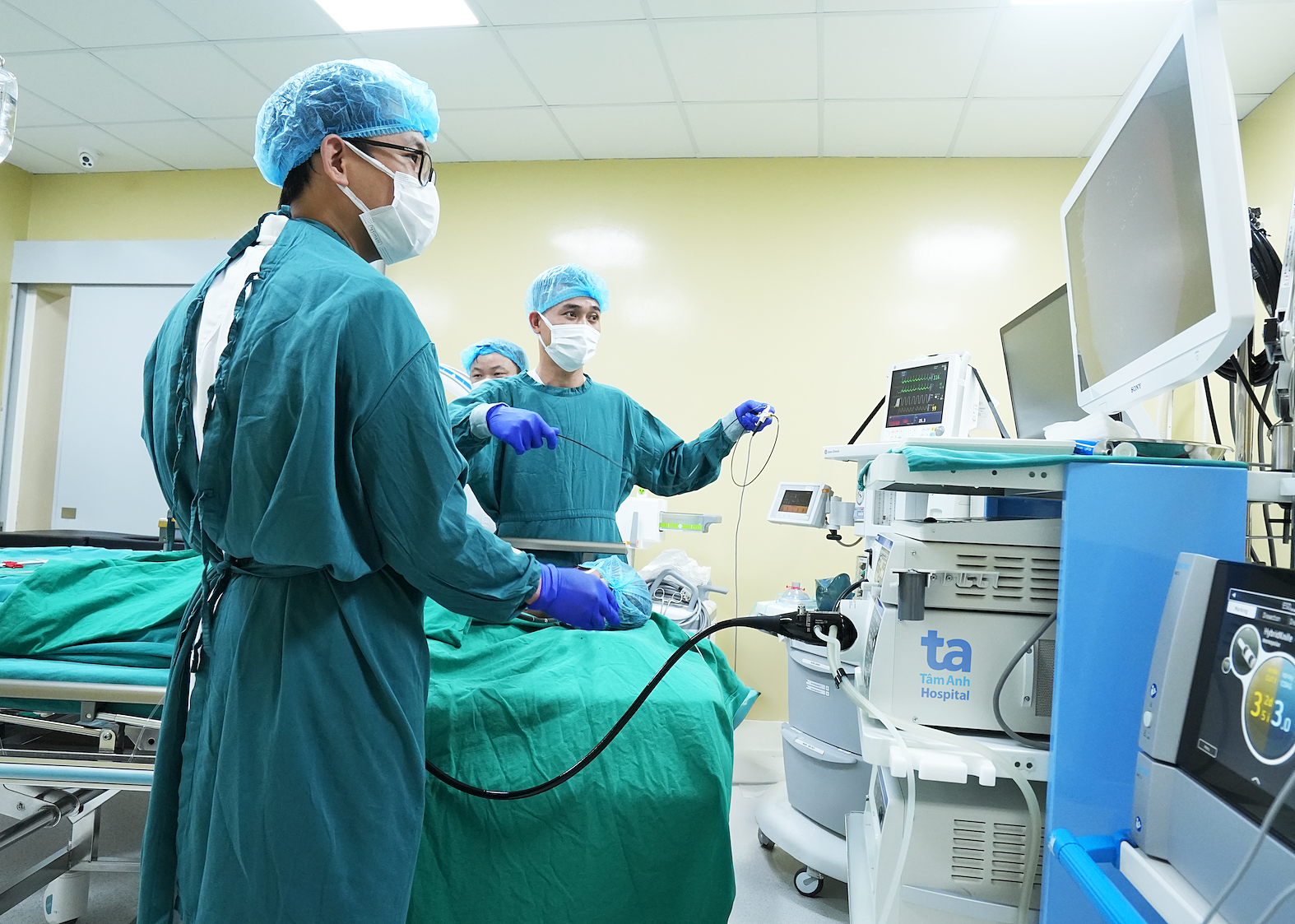 |
The endoscopy team performs a gastroscopy for a patient. Photo: Tam Anh General Hospital |
Stomach polyps often cause no symptoms and are discovered incidentally during endoscopy. If a polyp is large or accompanied by other lesions, patients may experience epigastric pain or discomfort, nausea, gastrointestinal bleeding, or anemia.
Gastroscopy allows doctors to clearly observe the surface, structure, and blood vessels of polyps, helping identify suspicious lesions. It also assesses the surrounding stomach lining to detect abnormalities that increase cancer risk, such as atrophic gastritis or intestinal metaplasia.
Most polyps can be completely removed during endoscopy when indicated. For lesions suspected of dysplasia or early cancer, doctors select an appropriate endoscopic intervention method based on the lesion's characteristics and professional recommendations.
Doctors recommend regular health check-ups to detect any abnormalities early, allowing for timely treatment and improved outcomes. Individuals in high-risk groups, such as those with a family history of stomach cancer (parents, siblings, children), a history of atrophic gastritis or intestinal metaplasia of the stomach lining, HP infection, or certain genetic syndromes, should undergo endoscopy as advised by their doctor.
To reduce the risk of stomach cancer, individuals should maintain a balanced diet rich in green vegetables, fruits, and high-fiber foods. Limit high-salt dishes, smoked, cured, fermented, or improperly preserved foods. Avoid smoking, limit alcohol consumption, and maintain a healthy weight.
Ly Nguyen
| Readers can send questions about ear, nose, and throat conditions here for doctors to answer |